
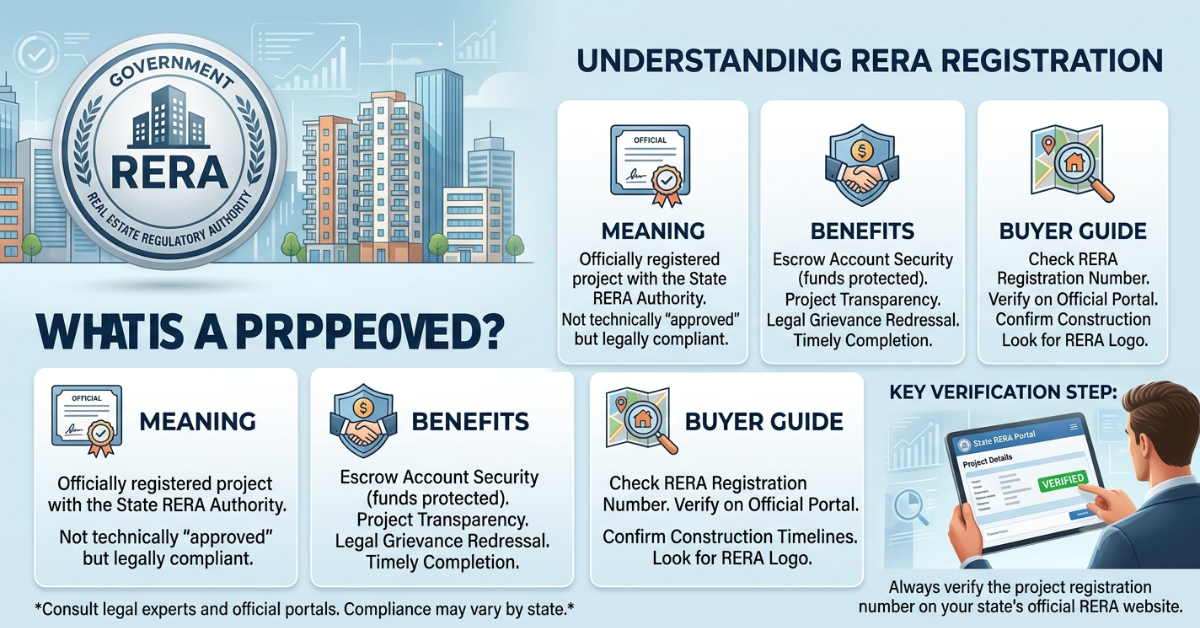
Buyers often ask what is RERA approved before choosing a property. RERA stands for the Real Estate Regulation and Development Act, 2016. The government passed this law to protect homebuyers from fraud and delays. It brought transparency and accountability to India’s real estate sector. When people say a project is RERA approved, they usually mean it is registered with the state RERA authority.
The term RERA approved is common in marketing materials and property listings. However, the correct legal term is RERA registered, not RERA approved. Developers use RERA approved as an informal phrase to describe compliance. Buyers should always verify actual registration status on the official portal.
Understanding What is RERA Approved Project
A RERA approved project refers to a development registered under the RERA Act. This registration applies to residential and commercial projects above a certain size. Most states require registration for projects covering more than 500 square metres. Projects with more than eight units also need mandatory registration.
Every registered project receives a unique RERA registration number. This number allows buyers to track project details on the state portal. It confirms layout plans, land title, and promoter information are verified. Buyers can check completion timelines and legal clearances using this number.
A RERA registered project must display the registration number in all advertisements. This rule prevents developers from marketing unapproved or non-compliant projects. Builders cannot sell, book, or advertise units without valid registration. This protects buyers from investing in projects lacking legal standing.
Why RERA Registration Matters for Buyers
Before RERA, buyers often faced project delays without any recourse. Developers changed floor plans and specifications without informing buyers. Escrow protection did not exist, so funds were misused across projects. RERA changed this by introducing strict financial and legal accountability.
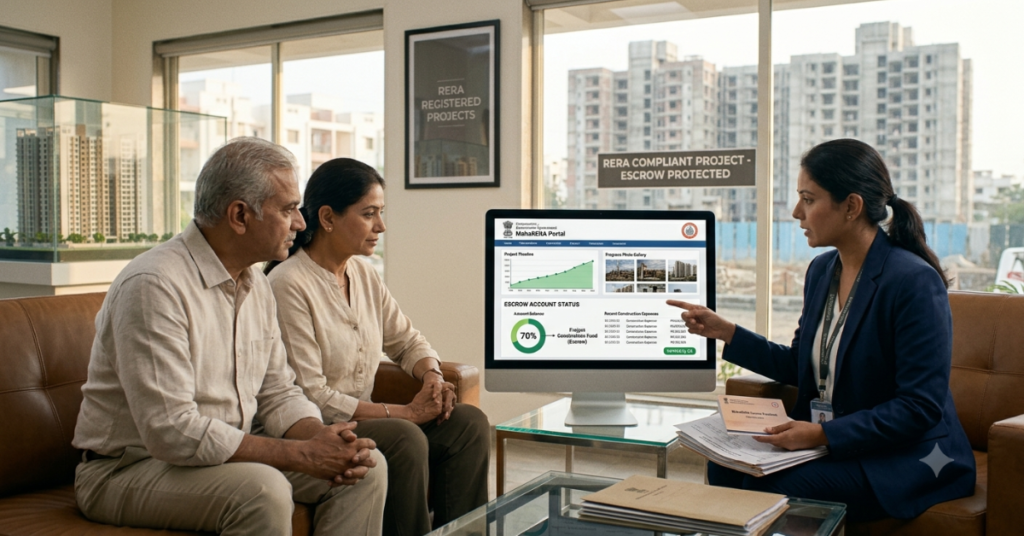
Registered developers must deposit 70 percent of buyer funds in escrow. This amount can only fund construction of that specific project. It stops developers from diverting money to other unrelated projects. This single rule has improved timely delivery across many states.
RERA also mandates regular project updates on the official portal. Developers must update construction progress, approvals, and any project modifications. Buyers can verify these updates before making a purchase decision. This transparency reduces the risk of fraud significantly.
Read More: What is RERA Carpet Area
Key Benefits of Choosing a RERA Registered Project
Choosing a RERA registered project offers several practical advantages for buyers.
- Legal protection through a formal grievance redressal mechanism
- Escrow account security that prevents fund misuse
- Accurate carpet area disclosure instead of misleading super area figures
- Structural defect coverage for five years after possession
- Standardised agreements that protect buyer interests
- Access to verified project timelines and completion dates
These benefits make RERA registration essential for safe property investment. Buyers gain confidence knowing their money is protected under law. Developers also gain credibility by maintaining transparent and compliant records.
How to Verify What is RERA Approved Project Status
Buyers should never rely only on brochures or verbal promises. The safest method is checking the state RERA website directly. Every state maintains its own RERA portal for project verification. Buyers can search by project name, promoter name, or registration number.
Follow these steps to verify RERA registration accurately.
- Visit the official RERA website for your state
- Search using the project name or developer name
- Match the registration number with promoter and project details
- Check sanctioned layout plans and land title documents
- Review the promised completion date and current construction status
This process takes only a few minutes and prevents costly mistakes. Buyers who skip this step risk investing in unregistered or delayed projects.
RERA Approved vs RERA Registered: Know the Difference
Many buyers confuse RERA approved with RERA registered terminology. RERA registered is the accurate legal status recognised under the Act. RERA approved is often used loosely to imply extra scrutiny. In practice, both terms usually point to the same registration process.
Some marketing materials use RERA approved to suggest additional government clearance. This is misleading, since RERA itself does not issue separate approvals. Registration under RERA is the actual compliance step buyers should confirm. Always ask developers for the official registration number, not just the label.
Documents Verified During RERA Registration
RERA registration involves detailed scrutiny of project documents.
- Authorities check land ownership records before approving registration.
- They also review sanctioned building plans from local development authorities.
- Environmental clearances and other statutory approvals are verified as well.
- Developers must submit promoter details, including past project history. This helps buyers assess the developer’s track record and reliability.
- Financial statements and project cost estimates also undergo review.
This thorough process ensures only credible projects receive registration.
Common Mistakes Buyers Make While Checking RERA Status
Many buyers trust broker claims without checking official records. Some assume a project is compliant just because it has a name board mentioning RERA. Others skip verifying the registration number against the correct project phase. Large developments often have multiple phases with separate registration numbers.
Buyers should also check the validity period of the registration. RERA registration has a defined validity linked to project completion. An expired registration can indicate delays or non-compliance issues. Always cross-check the current validity status before finalising any purchase.
Why RERA Registration Matters More in 2026
Real estate transactions have grown more complex with rising digital listings. Fraudulent projects sometimes mimic legitimate branding to attract buyers. RERA registration remains the most reliable indicator of legal compliance. It protects both first-time buyers and experienced investors from fraud.
With property prices increasing steadily, verification has become more important than ever. A RERA registered project offers legal cover and financial security. It ensures your investment goes toward a legitimate and accountable development. Buyers who prioritise this verification make safer long-term decisions.
Conclusion
Understanding what is RERA approved helps buyers make informed decisions. The correct step is verifying actual RERA registration, not just marketing claims. A RERA registered project offers escrow protection, transparency, and legal recourse. Always check the registration number on the official state portal before investing.
For more information on RERA registered projects, contact us.
FAQs
1. What is RERA approved in simple terms?
RERA approved commonly refers to a project registered under the RERA Act. The accurate legal term is RERA registered, not RERA approved.
2. What is RERA approved project eligibility criteria?
Projects above 500 square metres or with more than eight units need registration. Smaller projects may be exempt depending on state rules.
3. How can buyers verify RERA registration?
Buyers can check the project name and registration number on their state RERA portal. This confirms promoter details and project compliance.
4. Is it safe to buy a RERA registered property?
Yes, RERA registered properties offer legal protection, escrow security, and standardised agreements. This significantly reduces investment risk for buyers.