
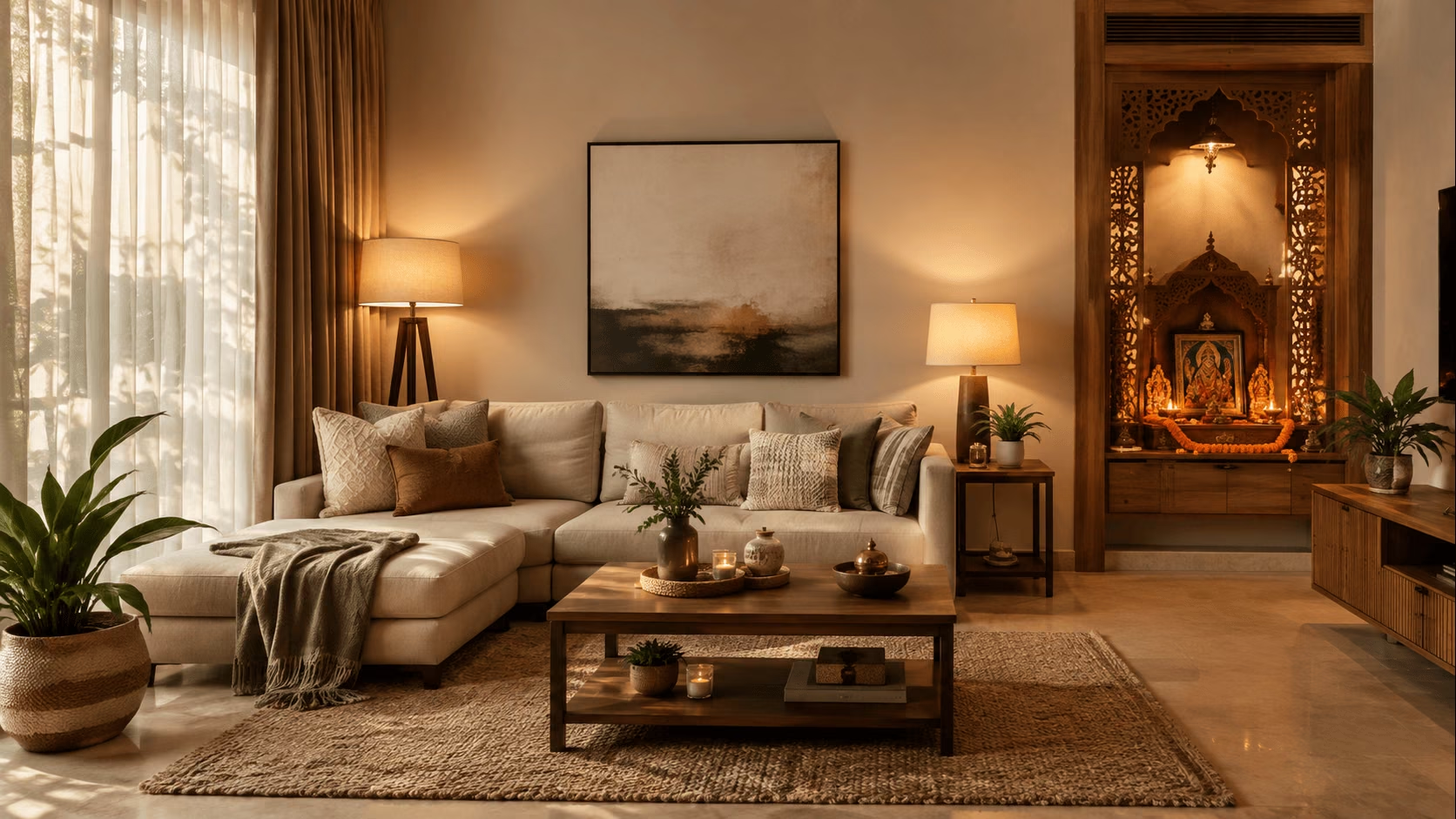
A living room does not need a fat renovation budget to look like it belongs in a design magazine. Most homeowners assume an expensive look demands an expensive spend, but the truth is simpler. A few smart, low-cost changes can transform a dull sitting area into a space that feels curated, calm and genuinely upscale. This guide walks through five Cheap Living Room Upgrades that deliver a visible difference without draining your savings.
Whether you live in a rented flat, a first home, or a house you have owned for years, these ideas work because they focus on the details that people actually notice first: colour, light, texture and order. Read on to discover practical Cheap Living Room Upgrades you can start this weekend, along with a bonus section on placing a pooja corner correctly if your living room doubles up as a prayer space.
Why Small Changes Create a Big Visual Impact
Interior designers often say that a room looks expensive not because of what is in it, but because of how well everything works together. Cluttered, mismatched, poorly lit rooms feel cheap regardless of how costly the furniture is. On the other hand, a room with good proportions, layered lighting and a calm colour palette looks polished even with budget furnishings. This is exactly why Cheap Living Room Upgrades focused on colour, light and texture tend to outperform expensive but disconnected purchases.
Keep this principle in mind as you go through the five upgrades below. None of them requires a contractor, and most can be finished over a single weekend, which is exactly what makes these Cheap Living Room Upgrades so practical for busy households.
How Much Should You Budget for These Upgrades
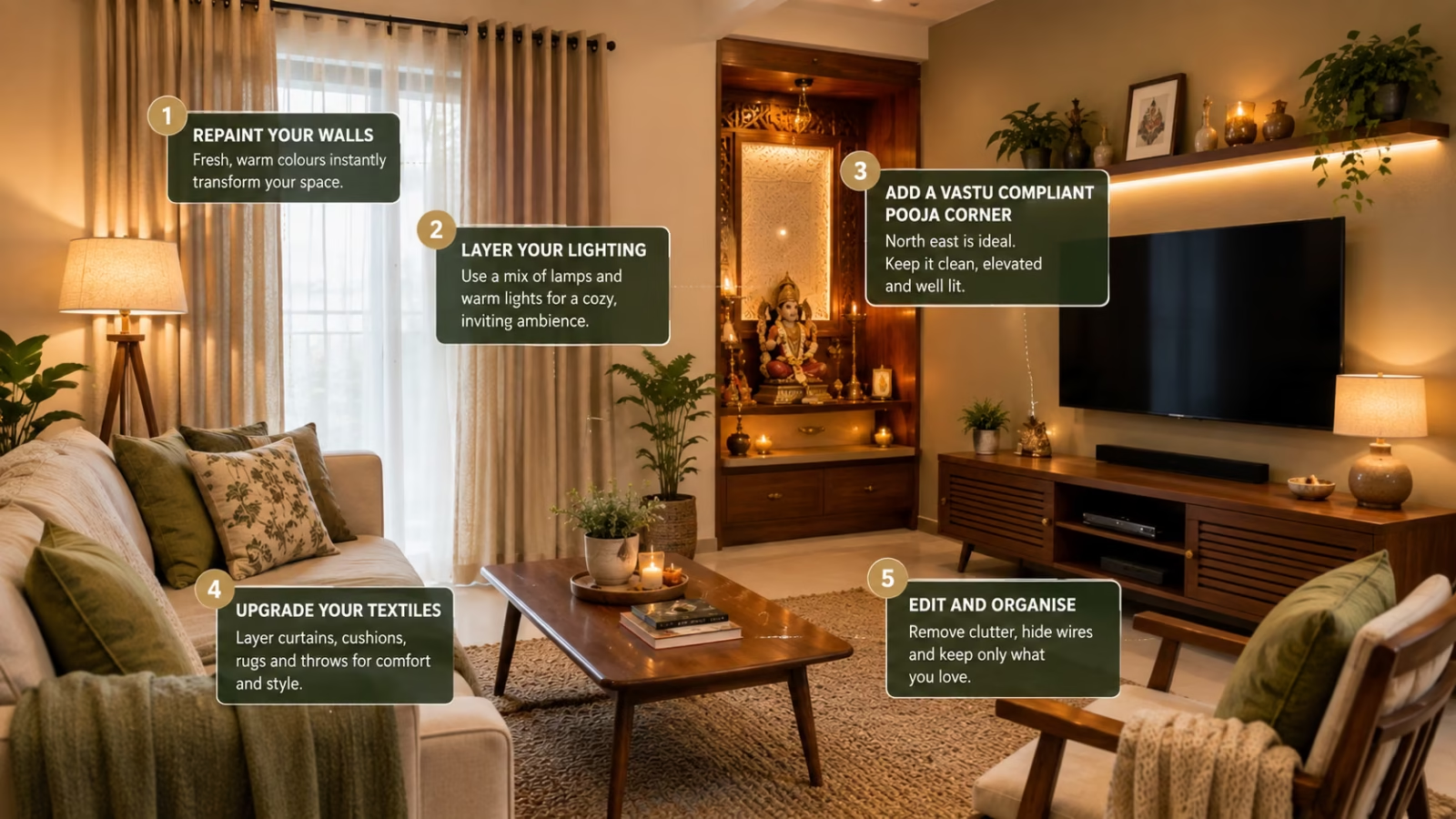
One reason people avoid updating their living room is the assumption that it will cost a fortune. In reality, most of the Cheap Living Room Upgrades covered in this guide can be completed for a modest sum, often less than what a single new sofa would cost. A gallon of quality emulsion paint, a pair of floor lamps, a mid-range rug and two sets of cushion covers together typically cost far less than replacing a single piece of furniture, yet the combined visual impact is considerably greater. Setting aside a small, dedicated budget and working through the list in order, starting with paint and finishing with decluttering, tends to give the best results for the least spend.
1. Repaint Your Walls With a Considered Colour Palette
Paint remains one of the most effective Cheap Living Room Upgrades because it changes the entire mood of a room for a fraction of the cost of new furniture. A fresh coat instantly hides scuffs, stains and years of wear, giving the space a clean, new-build feel.
Choose soft, warm neutrals such as greige, warm white, sage green or muted terracotta rather than stark white or bright, saturated shades. These tones read as sophisticated and timeless, and they also make ceilings appear higher and rooms feel larger. If a full repaint feels excessive, paint just one feature wall behind the sofa or television unit in a slightly deeper shade of your base colour. This creates depth without overwhelming the room.
Matt and eggshell finishes generally look more expensive than high-gloss paint, since they diffuse light softly rather than creating harsh reflections. Pair your new wall colour with white or off-white skirting boards and door frames for a crisp, finished look that mirrors high-end interiors.
Before you begin, always test a small patch of the chosen shade on the wall and view it at different times of day, since natural light changes how a colour reads between morning and evening. Painting is consistently ranked among the most impactful budget-friendly changes because the cost per square foot is low while the transformation is immediate and highly visible to anyone who walks into the room.
2. Layer Your Lighting Instead of Relying on One Bulb
Poor lighting is the single biggest reason a living room looks flat and budget rather than warm and expensive. Most Indian homes rely on one central ceiling light, which creates harsh, even light and flattens every surface in the room. Professional interiors almost always use layered lighting: a mix of ambient, task and accent sources at different heights.
Add a floor lamp beside the sofa, a table lamp on a console or side table, and, if your budget allows, a string of warm LED fairy lights tucked behind a shelf or curtain. Switch every bulb to a warm white colour temperature between 2700K and 3000K, since cool white or daylight bulbs make a room feel clinical and cheap. Dimmable bulbs are inexpensive now and let you shift the mood from bright and functional during the day to soft and inviting in the evening.
This single change is arguably the most underrated of all Cheap Living Room Upgrades, because lighting affects how every other element in the room, from paint colour to furniture, is actually perceived.
3. Add a Vastu Compliant Pooja Corner Without Overcrowding the Room
Many Indian homes, particularly compact flats, place the pooja room as per Vastu within a corner of the living room rather than as a separate room. Done thoughtfully, this can actually elevate the space rather than clutter it, provided the corner is neat, well lit and correctly aligned.
According to traditional guidance on Pooja Room Direction as per Vastu, the north east corner of the home, known as Ishan kon, is considered the most auspicious placement for a pooja unit, since it is associated with positive energy and spiritual clarity. If the north east is not available in your living room, east or north facing walls are generally treated as good alternatives. When placing the pooja room as per Vastu, avoid positioning it under a staircase, directly opposite the main entrance, or against a wall shared with a bathroom or kitchen, since these placements are traditionally considered unfavourable.
It also helps to keep the pooja corner slightly raised from the floor, using a small wooden platform or plinth rather than placing idols directly on the ground, since elevation is traditionally associated with respect and reverence in Vastu Shastra. Avoid placing the unit directly under an exposed ceiling beam, and where possible, keep the space free of mirrors facing the idols, since mirrored reflections of the pooja area are generally considered inauspicious. A small curtain or wooden door that can be closed when not in use is a practical addition for a living room pooja corner, since it lets the space feel more private and separate from everyday household activity.
For the actual seating and idol placement, Pooja Room Direction as per Vastu guidance suggests that the person praying should ideally face east or north, while idols themselves are often placed facing west or south so that the devotee naturally faces east or north while praying. Keep the unit compact, use a simple wooden mandir or a floating wall shelf, and add a small warm light or diya holder rather than bright overhead lighting. A tidy, correctly aligned pooja corner blends into the room’s overall design instead of looking like an afterthought, and it remains one of the more meaningful Cheap Living Room Upgrades for families who want both function and faith reflected in their main living space.
4. Upgrade Your Textiles: Curtains, Cushions and Rugs
Soft furnishings do more heavy lifting than most homeowners realise. Thin, mismatched curtains and a bare floor are one of the fastest ways to make even a well-furnished room look unfinished. Swapping these out is among the most cost effective Cheap Living Room Upgrades available, since fabric is significantly cheaper than furniture yet has an outsized visual effect.
Hang curtains as close to the ceiling as possible, well above the window frame, and let them fall just past the floor. This trick alone makes ceilings look taller and windows look larger. Choose heavier, floor length fabrics in linen or cotton blends over sheer, flimsy panels, since heavier drapes fold and hang in a way that reads as more expensive.
A rug anchors the seating area and adds warmth underfoot, particularly on tile or marble flooring common in Indian homes. Pick a rug large enough that at least the front legs of your sofa and chairs sit on it, rather than a small mat floating in the middle of the room. Finish with two or three cushion covers in complementary but not matching textures, such as a linen weave paired with a subtle jacquard pattern, rather than a full matching set, which tends to look mass produced.
Throw blankets add another inexpensive layer of texture. Drape one loosely over the arm of a sofa or the back of an armchair rather than folding it neatly, since a slightly relaxed drape reads as lived-in and considered rather than staged. When choosing fabrics across curtains, cushions and throws, stick to a consistent colour family so the room feels coordinated rather than assembled from unrelated pieces bought at different times. Natural fibres such as cotton, linen and jute generally photograph and feel more premium than synthetic blends, and they are increasingly available at reasonable prices from local markets and online home stores alike.
Read More: Sheer Curtains Design Ideas to Elevate Your Home
5. Edit and Organise Before You Decorate Further
The final and often free upgrade is simply removing what does not belong. Expensive looking rooms are rarely full; they are edited. Clutter, whether it is stacked papers, tangled wires, or too many small decorative objects, is one of the fastest ways to undercut every other improvement you make.
Walk through your living room and remove anything that does not serve a clear purpose or bring genuine visual pleasure. Group remaining decorative items in odd-numbered clusters of three or five rather than scattering them evenly, since asymmetry tends to look more curated than perfectly matched pairs. Use closed storage, such as a console with drawers or a lidded basket, for remote controls, chargers and everyday clutter, keeping only a few intentional objects on open surfaces.
Pay close attention to wires and cables as well, since visible tangles behind the television or beside sofas are one of the quickest visual cues of an unfinished room. Cable clips, a simple trunking channel along the skirting board, or a slim console designed with cable routing can hide this clutter almost entirely for a very small outlay. Once the room is edited, step back and view it from the doorway, since this is the vantage point from which most people, including guests, first form an impression of the space.
This kind of editing costs nothing, yet it is one of the most transformative Cheap Living Room Upgrades on this list, because it allows the paint, lighting and textiles you have just upgraded to actually be seen and appreciated.
Common Mistakes That Undermine Cheap Living Room Upgrades
Even well-intentioned changes can backfire if a few common mistakes creep in. Overcrowding a small room with too many decorative pieces, choosing cool white bulbs instead of warm white ones, or hanging curtains too close to the window frame are among the most frequent errors that make a freshly updated room still feel unfinished. Mixing too many colours or patterns at once is another common trap, since expensive-looking rooms typically rely on a restrained palette of two or three complementary tones rather than a rainbow of accents.
Rushing the process is another mistake worth avoiding. Cheap Living Room Upgrades work best when they are planned in sequence, starting with the foundational elements such as paint and lighting before moving on to accessories like cushions and wall art. Skipping straight to decorative extras while ignoring the base layer of colour and light tends to produce a room that looks busy rather than genuinely elevated.
Seasonal Refresh Ideas to Keep the Room Feeling New
Once the five core changes are in place, small seasonal swaps can keep the room feeling fresh throughout the year without any further spend. Rotating cushion covers between warmer tones in winter and lighter, breezier fabrics in summer is a simple way to refresh the space. Swapping a table runner, adding fresh or artificial greenery in a simple planter, or rearranging a few accessories on a shelf every few months prevents the room from feeling static, and it means the results of your budget refresh continue to feel intentional rather than like a one-time effort.
Also Read: Wall Panel Design Ideas
Bringing It All Together
None of these five changes require structural work, a large budget or professional help. A considered paint colour, layered warm lighting, a correctly aligned pooja room as per Vastu, upgraded textiles and a properly edited layout can transform how a living room feels within a weekend. Together, these Cheap Living Room Upgrades prove that an expensive looking home is a matter of thoughtful choices rather than a large renovation budget.
Start with whichever change feels most achievable this month, whether that is a can of paint or a new pair of curtains, and build from there. Small, consistent improvements compound quickly, and before long your living room will look like it belongs to a home worth far more than you actually spent on it. The goal is not perfection in a single weekend, but steady, considered progress that adds up to a room you genuinely enjoy spending time in.
Planning your next home upgrade or want to understand Vastu-compliant layouts before you buy or renovate? Explore more practical home decor, Vastu and real estate guides on Zen Nest Living, and turn your house into a home you love. Contact us to get the best budget planning for your upgrade.
Frequently Asked Questions
1. Which single upgrade gives the biggest visual improvement for the lowest cost?
Repainting the walls in a soft, warm neutral shade generally offers the best return, since it changes the entire feel of a room for the cost of a few paint tins and a weekend of effort.
2. Can a pooja room as per Vastu really be placed inside the living room?
Yes, provided it is positioned correctly. The north east corner is traditionally preferred for the pooja room as per Vastu, and the unit should be kept compact, tidy and away from staircases, bathrooms or the main entrance.
3. What is the correct Pooja Room Direction as per Vastu for seating while praying?
Most traditional guidance recommends facing east or north while praying, with idols often placed so that devotees naturally end up facing one of these two directions.
4. Do I need to change my furniture to make a living room look expensive?
Not necessarily. Layered lighting, better textiles, a tidy layout and a fresh coat of paint often create a bigger visual shift than replacing furniture, and they cost considerably less.
