
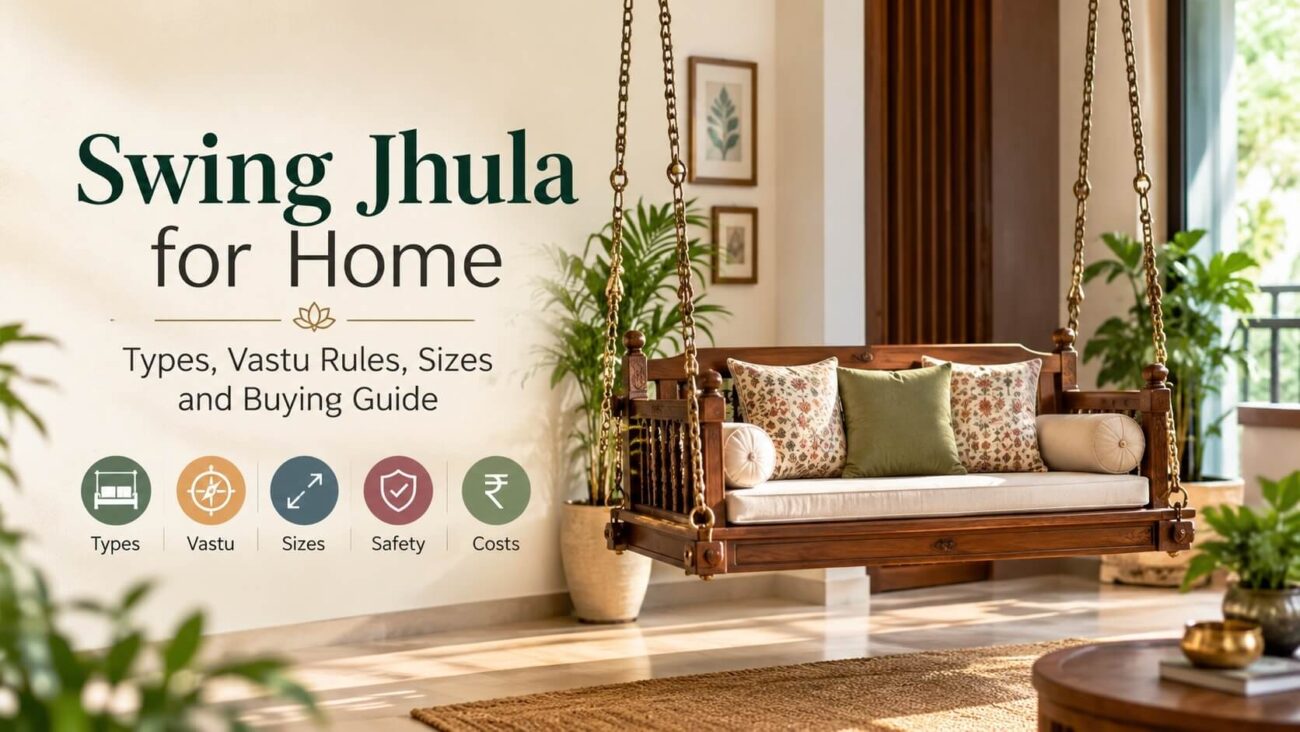
Every Indian family has a jhula memory. Someone read a book on it. Someone shared a secret on it. Someone slept on it during a long monsoon afternoon.
A well-chosen Swing Jhula for Home brings that feeling back into your flat or house. It also adds seating, style, and calm in one corner.
Today, builders plan ceiling hooks in new apartments. Designers place a jhula beside bookshelves and bay windows. This guide covers types, sizes, Vastu rules, safety checks, and costs. Keep a measuring tape nearby. You will need it before you order anything.
Why a Swing Jhula for Home Is Back in Indian Homes
Small flats drive this trend. Living rooms now do many jobs. A jhula gives you a reading nook, a guest seat, and a style statement in one footprint.
There is an emotional pull too. Gentle back and forth motion helps many people unwind after a long workday. Small studies on rocking motion link it with easier relaxation.
Festivals add to the charm. Teej, Sawan, Raksha Bandhan, and Janmashtami all celebrate the swing. Many families now keep one up all year. So a Swing Jhula for Home also ties your decor to your culture.
One Swing, Many Names Across India
The jhula has no single identity. Each region built its own version. Knowing these helps you pick a style that feels authentic.
| Region | Local name | Traditional build | Usual spot |
|---|---|---|---|
| North India | Jhula | Wood plank with iron chains | Courtyard or verandah |
| Gujarat and Rajasthan | Hindola | Carved wood with brass fittings | Living hall or haveli porch |
| Kerala and Tamil Nadu | Oonjal | Teak or rosewood with brass chains | Central hall |
| Andhra and Telangana | Uyyala | Polished wood with metal chains | Front room or verandah |
A Kerala oonjal usually has a deep, high-backed seat. A Gujarati hindola often looks lighter and more ornate. Choose the proportions that suit your room, not just the name on the label.
Types of Swing Jhula for Home
Not every home can take a ceiling-hung swing. So the market offers five main formats. Pick the one that matches your structure first. Pick the look second.
| Type | Best for | Width needed | Install effort |
|---|---|---|---|
| Ceiling-hung wooden jhula | Living rooms, verandahs | 6 to 8 ft | High, needs slab anchors |
| Stand-based metal jhula | Rented homes, terraces | 5 to 7 ft | Low, assemble only |
| Hanging chair or egg swing | Balconies, bedroom corners | 3 to 4 ft | Medium |
| Cane or rattan swing | Sunrooms, covered balconies | 4 to 6 ft | Medium |
| Swing bench with canopy | Gardens, large terraces | 6 to 8 ft | Low to medium |
Ceiling-hung wooden jhula
This is the classic choice. It suits owners who can drill into the slab. A wooden Swing Jhula for Home looks best in living rooms with high ceilings.
Stand-based metal jhula
Tenants love this format. You skip the drilling. You also move it when you shift homes. Choose a wide base for stability.
Hanging chair or egg swing
This option fits tight balconies and bedroom corners. It seats one person. Add a thick cushion and a small side table.
Cane or rattan swing
Cane brings texture and a light, airy mood. Keep it away from rain and direct afternoon sun. Covered balconies work best.
Best Rooms for a Swing Jhula for Home
Placement decides whether you use the swing daily or ignore it. Think about light, privacy, and traffic.
- Living room: This is the most popular spot. Place the jhula along a window wall. Keep the walking path clear.
- Balcony: A balcony gives fresh air and morning light. Check the railing height and weather exposure first.
- Bedroom corner: A small hanging chair turns an unused corner into a reading spot. Avoid hanging it over the bed.
- Courtyard or verandah: Independent houses win here. A long swing bench suits family evenings with tea.
- Kids room: Use only a soft, low seat with proper supervision. Skip hard wooden benches in a child’s room.
Vastu Rules for a Swing Jhula for Home
Vastu guidance varies between practitioners. Still, a few points appear often. Treat them as a starting checklist, not a strict law. Your home layout, family habits, and budget also matter.
| Direction | Common Vastu view | Practical note |
|---|---|---|
| North or East | Preferred for a swing | Good morning light, pleasant breeze |
| Northeast | Considered positive | Keep the area light and uncluttered |
| West or Northwest | Acceptable | Works well for balcony swings |
| South or Southwest | Usually avoided | Heavy energy zone, as per many experts |
| Centre of the home | Avoid | Keep this zone open |
Many practitioners also suggest that the swing should move along the east-west axis. Others prefer north-south. Check with your Vastu consultant if this matters to you.
Never leave an empty swing rocking on its own. Fix creaking sounds quickly with a few drops of oil. Vastu followers see noise as a sign of neglect. For more guidance, read these powerful Vastu tips for home before you finalise the spot.
A soft wind chime near a balcony swing adds sound without clutter. This guide on wind chimes for home explains safe placement.
Measure Before You Buy a Swing Jhula for Home
Most buyers measure the swing. Few measure the swing arc. That mistake causes bumped walls and bruised shins.
Follow these simple rules.
- Leave at least 2 feet of free space at the front and back of the swing.
- Keep the seat height between 17 and 19 inches from the floor.
- Leave 6 inches of clear space on each side of the frame.
- Keep a 3 to 4 feet path between the swing and any door.
Here is a worked example. Suppose your ceiling is 10 feet high. You want a seat height of 18 inches. That leaves roughly 102 inches. Subtract the seat thickness and the hook fittings. You will need about 90 to 95 inches of chain.
Share this number with your vendor. A good vendor adjusts the chain length before delivery.
Ceiling and Safety Checks for Your Swing Jhula for Home
A swing carries more force than its static weight. Swinging motion adds dynamic load. So the anchor point matters more than the seat design.
Follow these checks.
- Anchor into the RCC slab or beam. Never use a false ceiling or plaster.
- Ask a structural engineer to approve the point, especially in older buildings.
- Use through-bolts or chemical anchors. Skip plastic wall plugs.
- Choose hooks and chains rated well above the combined weight of users. Many installers apply a safety factor of four.
- Check your housing society rules before drilling.
- Inspect bolts, chains, and welds every six months.
Keep a thick rug under the swing. It softens falls and reduces floor noise. Choose a flat weave, because thick piles can catch the seat edge. This also protects polished surfaces. If you plan new flooring, this guide on vitrified tiles helps you pick a durable finish.
Material Guide for a Swing Jhula for Home
Material shapes the price, weight, and upkeep. Compare before you buy.
| Material | Strength | Watch out for | Care level |
|---|---|---|---|
| Teak | Durable, termite resistant | Higher price | Low to medium |
| Sheesham | Rich grain, good value | Can darken in sun | Medium |
| Mild steel with powder coat | Strong, budget friendly | Rust if scratched | Medium |
| Wrought iron | Heavy and sturdy | Needs a strong anchor | Medium |
| Cane or rattan | Light, textured look | Weak in rain | High |
| Stainless steel chain | Rust resistant | Cost | Low |
For humid regions, pick teak or stainless steel. For dry cities like Delhi NCR, sheesham works well. Dust is the bigger enemy there.
How to Style a Swing Jhula for Home
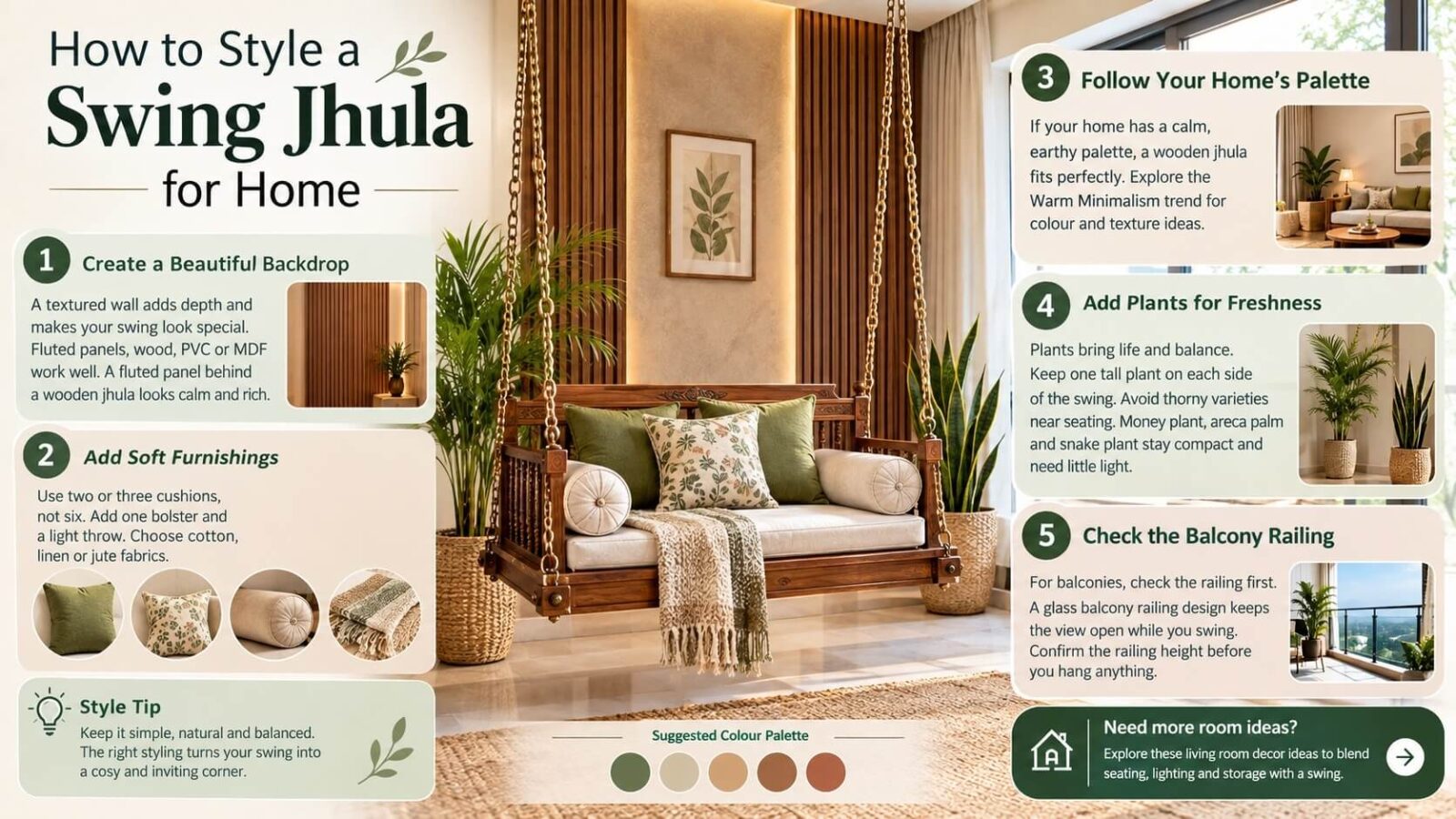
A swing needs a backdrop. Without one, it floats awkwardly in the room.
- Start with the wall behind it. A textured surface adds depth. This guide to wall panel design ideas shows options in wood, PVC, and MDF. A fluted panel behind a wooden jhula looks calm and rich.
- Layer soft furnishings next. Use two or three cushions, not six. Add one bolster and a light throw. Pick fabrics in cotton, linen, or jute.
- Tie the swing to the rest of the room. If your home follows a calm, earthy palette, a wooden jhula fits perfectly. Explore the Warm Minimalism trend for colour and texture ideas.
- Plants help too. Keep one tall plant on each side of the swing. Avoid thorny varieties near seating. Money plant, areca palm, and snake plant stay compact and need little light.
- For balconies, check the railing first. A glass balcony railing design keeps the view open while you swing. Confirm the railing height before you hang anything.
Need more room ideas? These living room decor ideas show how to blend seating, lighting, and storage with a swing.
Budget Guide for a Swing Jhula for Home
Prices vary by city, brand, and finish. Treat these ranges as indicative figures. Always collect two or three quotes.
| Type | Indicative price range |
|---|---|
| Hanging chair or egg swing | ₹5,000 to ₹20,000 |
| Stand-based metal jhula | ₹8,000 to ₹25,000 |
| Cane or rattan swing | ₹10,000 to ₹35,000 |
| Wooden ceiling-hung jhula | ₹20,000 to ₹80,000 |
| Custom carved teak oonjal | ₹80,000 and above |
| Installation by a professional | ₹1,500 to ₹5,000 |
Spend more on the anchor and chain than on the cushions. Cushions are easy to replace. A weak anchor is not.
Maintenance Tips for a Swing Jhula for Home
A little care adds years to the swing. Set a quarterly reminder.
- Wipe wooden surfaces with a dry cloth every week.
- Polish wood twice a year to prevent cracks.
- Oil the chain links every three months.
- Tighten bolts after the first month of use.
- Wash cushion covers monthly during monsoon.
- Cover the swing during long trips.
Dust gathers faster on balconies. A soft brush works better than water on cane. Dry any wet surface quickly during monsoon, because trapped moisture swells joints and loosens screws.
Mistakes to Avoid When Buying a Jhula
- Buying the swing before checking the ceiling type.
- Ignoring the swing arc and the door path.
- Choosing a decorative chain with no load rating.
- Hanging the seat too high for comfortable feet contact.
- Using thin plastic cushions that slide off.
- Skipping the vendor visit for heavy wooden models.
Quick Buying Checklist
Before you pay, answer these five points. Where will it hang? How many people will sit? What does the slab allow? Which material suits your climate? Does the colour match your room?
If you answer all five, you will buy once and buy well. Write the answers down and carry them to the showroom. Vendors respond better to clear numbers.
Final Thoughts
A jhula is more than furniture. It slows your day down. It gives your family one shared spot with no screens. Plan the space carefully. Respect the anchor. Match the style to your room. Then enjoy the first slow swing of the evening.
Create a Home That Moves With You
Zen Nest Living shares practical guides on home decor, Vastu, real estate, housing schemes and topics of entertainment. Explore our latest home decor stories today. Turn your living space into a calm, stylish, and well-planned retreat with practical ideas that suit Indian homes and real budgets.
Frequently Asked Questions
1. Is a Swing Jhula for Home safe in a flat?
Yes, if you anchor it into the RCC slab or beam. Avoid false ceilings. Ask your structural engineer or builder to approve the point first.
2. What is the best direction for a Swing Jhula for Home as per Vastu?
Many Vastu practitioners prefer north, east, or northeast. They usually avoid the south-west and the centre of the home.
3. How much space does a Swing Jhula for Home need?
Leave 2 feet of free space at the front and back. Add 6 inches on each side. A three-seater needs about 6 to 8 feet of width.
4. Can I use a Swing Jhula for Home on a balcony?
Yes. Use a stand-based or covered-balcony model. Choose weather-resistant material like teak, powder-coated steel, or stainless steel chains.
