
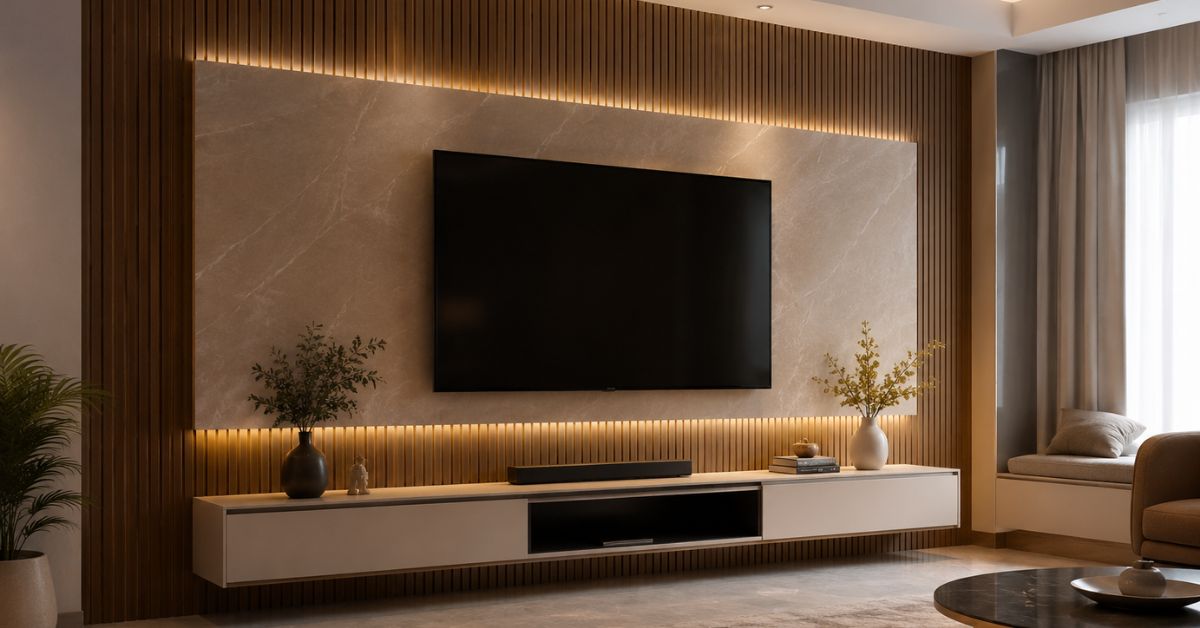
Wall panel design has become one of the most popular interior upgrades in Indian homes. It transforms plain walls into striking design features. Homeowners now prefer wall paneling design over regular paint. It adds texture, depth, and a premium look to any space.
This guide covers every type of wall panel design available today. You will learn about PVC panels, wooden panels, MDF panels, and POP panels. We also cover room-specific ideas for bedrooms, living rooms, and offices. By the end, you will know exactly which wall panel design suits your home.
What Is Wall Panel Design
Wall panel design refers to decorative boards fixed onto walls. These panels replace or cover plain wall surfaces. They come in various materials, textures, and patterns.
Wall paneling design serves two purposes. First, it improves the visual appeal of a room. Second, it protects walls from daily wear and tear.
Modern wall panel design uses materials like PVC, wood, MDF, and WPC. Each material offers different benefits. Your choice depends on budget, room type, and maintenance needs.
Why Choose Wall Panelling Design for Your Home
Wall panelling design offers many advantages over traditional wall finishes. Here are the top reasons homeowners choose this option.
- Wall panels hide uneven surfaces and old cracks effectively.
- They require less maintenance than painted walls.
- Panels resist moisture, especially PVC and WPC options.
- Installation takes less time than plastering and painting.
- Panels offer better sound insulation in bedrooms and offices.
- They come in endless colors, textures, and patterns.
- Wall panel design increases the resale value of a property.
- Panels are easy to clean with a damp cloth.
These benefits make wall panel design a smart long-term investment. Many homeowners now choose panels over wallpaper or paint.
Types of Wall Panel Design Materials
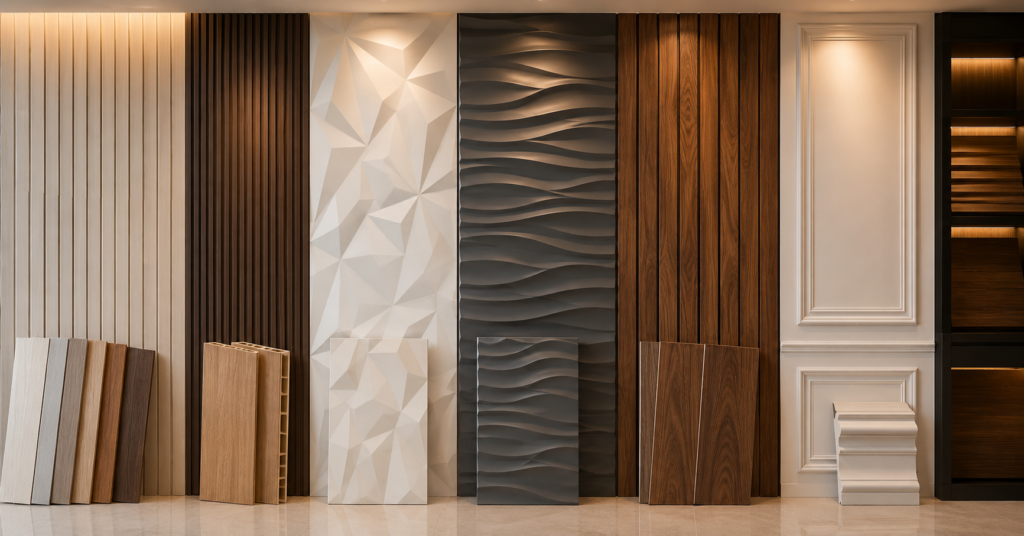
Choosing the right material matters most in wall panel design. Each material has unique strengths. Let us explore the popular options available in the market today.
PVC Wall Panel Design
PVC wall panel design remains the most popular choice in India. PVC stands for polyvinyl chloride, a durable plastic material.
PVC panel design for wall works well in humid areas. It resists water damage completely. This makes pvc wall panel design ideal for bathrooms and kitchens too.
Key features of pvc wall panels designs include:
- Lightweight material that is easy to install.
- Available in wood grain, marble, and 3D textures.
- Affordable pricing compared to wood and stone.
- Zero termite or insect damage risk.
- Simple installation using adhesive or click-lock systems.
Wall pvc panel design comes in sheets or planks. Homeowners can choose glossy, matte, or textured finishes. Many pvc wall panel design images show realistic wood or stone patterns. These designs give a premium look at a fraction of the cost.
WPC Wall Panels Designs
WPC stands for wood plastic composite. WPC wall panels designs combine wood fiber with plastic polymers.
This material offers better strength than pure PVC. WPC panels resist moisture and warping better than natural wood. They also handle temperature changes well.
Benefits of WPC wall panels designs include:
- Higher durability than standard PVC panels.
- Natural wood-like texture and feel.
- Better fire resistance than plastic-only panels.
- Suitable for both interior and semi-outdoor spaces.
- Eco-friendly composition using recycled materials.
WPC panels cost slightly more than PVC. However, they last longer and look more premium.
3D MDF Wall Panel Design
MDF stands for medium density fiberboard. 3D MDF wall panel design creates raised, sculptural patterns on walls.
These panels add depth through geometric or organic shapes. Light and shadow play across the surface. This creates a dramatic visual effect.
3D MDF wall panel design works best in:
- Living room feature walls behind sofas.
- Bedroom headboard walls for a luxury look.
- Hotel lobbies and reception areas.
- Restaurant interiors seeking a bold statement.
MDF panels need protection from excess moisture. They suit dry indoor spaces best. Painting MDF panels in bold or neutral colors enhances the 3D effect further.
3D PVC Wall Panels Designs
3D pvc wall panels designs combine the durability of PVC with textured depth. These panels feature raised patterns molded directly into the plastic.
Unlike MDF, 3D PVC panels resist moisture completely. This makes them suitable for more room types.
Popular 3D pvc wall panels designs include:
- Geometric brick and stone patterns.
- Wave and ripple textures.
- Honeycomb and hexagon designs.
- Abstract leaf and nature-inspired patterns.
These panels work well under LED lighting. Shadows form naturally across the raised surface. This creates a striking focal point in any room.
Wooden Wall Paneling Design
Wooden wall paneling design offers a classic, warm aesthetic. Natural wood grain adds richness that synthetic materials cannot fully replicate.
Wood paneling design works well in these settings:
- Study rooms and home offices.
- Formal living rooms and dining areas.
- Main door wall panelling design for entryways.
- Traditional and rustic themed interiors.
Wood requires more maintenance than PVC or WPC. It needs periodic polishing and protection from termites. However, the natural texture and durability justify the extra care for many homeowners.
Teak, walnut, and oak remain popular wood choices. Veneer options offer the wood look at a lower cost.
POP Wall Panel Design
POP stands for plaster of paris. Pop wall panel design creates smooth, sculpted patterns directly on the wall surface.
Unlike PVC or MDF panels, POP is applied and molded on-site. This allows fully customized designs.
Common pop wall panel design styles include:
- Recessed panel frames with molding borders.
- Curved or arched wall sections.
- Ceiling-to-wall continuous design flow.
- Backlit POP panels with hidden LED strips.
POP wall panel design suits homeowners wanting a fully customized, seamless look. It costs more due to the labor-intensive process. However, it offers unmatched design flexibility.
Wall Panel Design for Bedroom
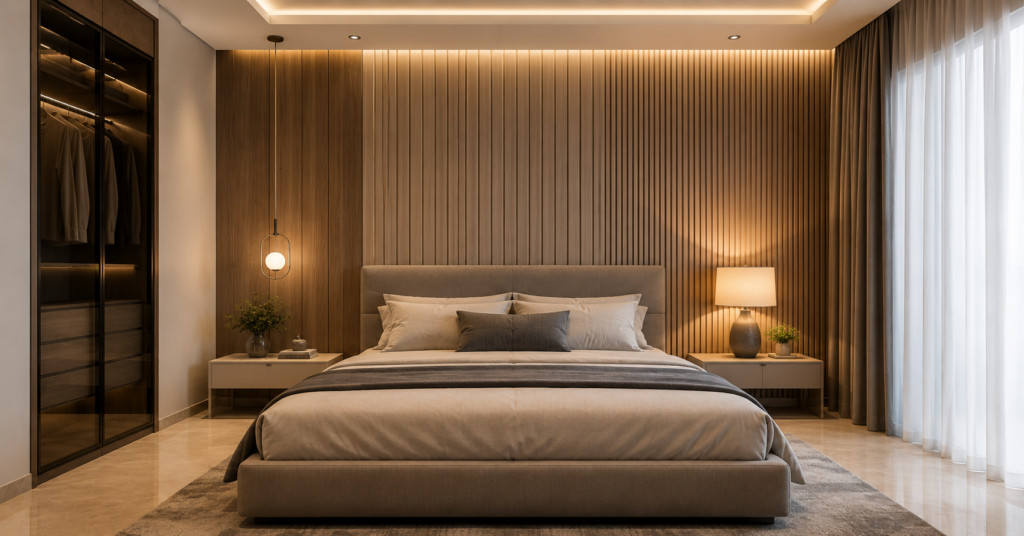
The bedroom deserves special attention in wall panel design. This is a personal space for rest and relaxation. The right panel design creates a calming atmosphere.
Modern PVC Wall Panel Design for Bedroom
Modern pvc wall panel design for bedroom focuses on soft, muted tones. Popular choices include:
- Light wood grain panels behind the headboard.
- Matte grey or beige textured panels.
- Vertical groove panels for a minimalist look.
- Panels with subtle 3D geometric patterns.
PVC wall panel design for bedroom works well because it resists moisture and dust. It also requires minimal cleaning, perfect for a low-maintenance bedroom.
Wall Panel Design for Bedroom: Placement Ideas
Placement matters as much as material choice. Consider these popular options for wall panel design for bedroom:
- Headboard wall panels extending to the ceiling.
- Accent panels on one wall only.
- Full room paneling for a cohesive look.
- Panels combined with ambient LED backlighting.
A single accent wall often works better than paneling the entire room. It keeps costs lower and avoids visual clutter.
Choosing Colors for Bedroom Wall Panels
Color choice affects mood and sleep quality significantly. For pvc wall panel design for bedroom, consider:
- Soft blues and greens for a calming effect.
- Warm beige and cream for coziness.
- Deep charcoal for a modern, bold statement.
- Natural wood tones for warmth and comfort.
Avoid overly bright or glossy finishes in bedrooms. Matte and textured finishes create a more restful environment.
Wall Panelling Designs Living Room
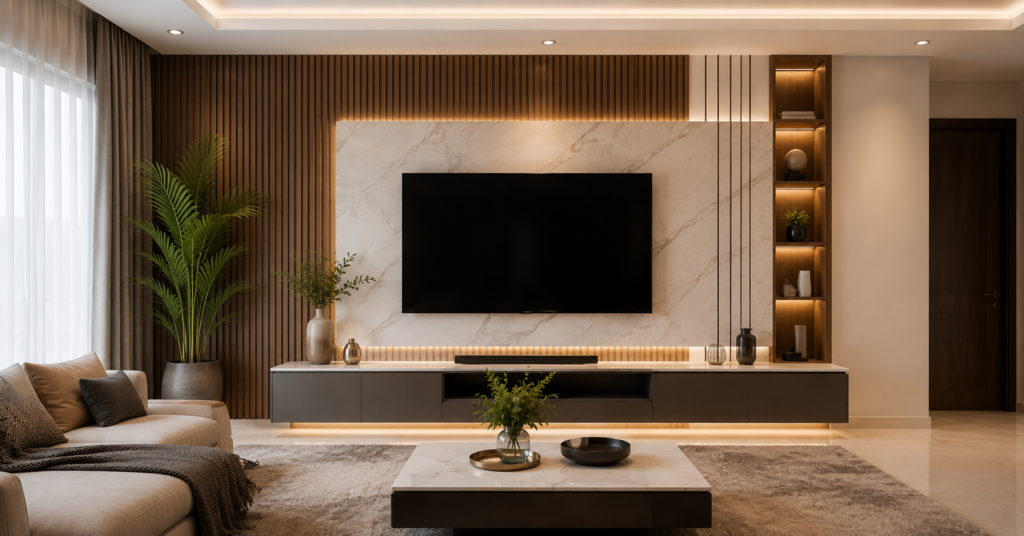
The living room is the most visible space in any home. Wall panelling designs living room ideas focus on making a strong first impression.
PVC Wall Panels Designs for Living Room
Pvc wall panels designs for living room often feature bold textures. Popular choices include:
- Marble-effect panels for a luxury finish.
- Wood grain panels for warmth and depth.
- Geometric 3D panels for a modern statement.
- Two-tone panel combinations for visual interest.
These panels work particularly well on feature walls. A single statement wall draws attention without overwhelming the space.
TV Wall Panel Design
TV wall panel design has become essential in modern living rooms. This wall serves as the focal point of the entire room.
Popular tv wall panel design ideas include:
- Wood panels with hidden cable management.
- 3D textured panels surrounding a wall-mounted television.
- Panels with built-in shelving for decor items.
- Backlit panels creating an ambient glow behind the screen.
When planning tv wall panel design, consider these practical tips:
- Choose panels that allow cable routing behind the wall.
- Keep the panel width proportional to the television size.
- Use darker tones to reduce screen glare.
- Add floating shelves for speakers and decorative pieces.
TV wall panel design should balance function with aesthetics. The panel must support the television bracket securely.
Living Room Panel Layout Ideas
Wall panelling designs living room spaces work best with careful planning. Consider these layout approaches:
- Full-height panels from floor to ceiling.
- Half-wall panels with paint above.
- Panels framing a fireplace or television unit.
- Symmetrical panel patterns for a formal look.
Lighter panel tones make small living rooms feel more spacious. Darker tones add drama to larger rooms with good natural light.
Interior Design Wall Panels: General Principles
Interior design wall panels should complement the overall home theme. Random panel choices can clash with existing decor.
Follow these principles when selecting interior design wall panels:
- Match panel tone to existing flooring color.
- Keep panel texture consistent with furniture style.
- Avoid mixing too many panel patterns in one space.
- Use lighting to highlight panel texture and depth.
- Balance panel walls with plain walls for visual rest.
Interior design wall panels work best as a design feature, not the entire theme. One or two accent walls create more impact than paneling every surface.
Combining Panel Types
Some homes combine multiple panel materials for variety. For example, wooden panels in the study pair well with PVC panels in the living room. This creates zone-specific design without visual conflict.
Consider these combination ideas:
- PVC panels in high-moisture areas like kitchens.
- Wooden panels in low-moisture areas like studies.
- 3D MDF panels for single feature walls.
- POP panels for ceiling-to-wall transitions.
Wall Panel Design for Office
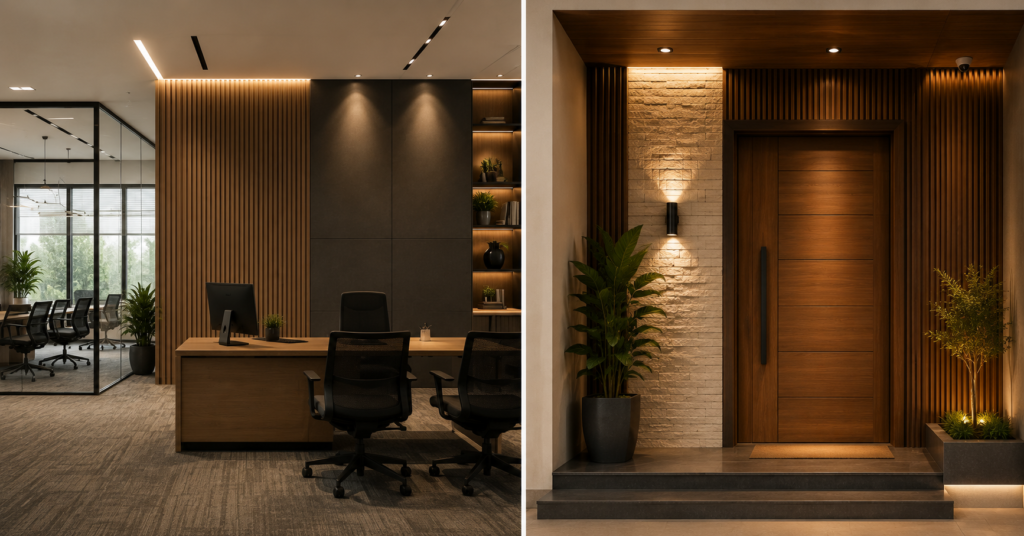
Office spaces benefit greatly from wall panel design. Panels improve acoustics and create a professional appearance.
Why Offices Need Wall Panel Design
Wall panel design for office spaces solves multiple problems:
- Panels reduce noise echo in open-plan offices.
- They hide cables and wiring behind walls.
- Panels create branded, professional reception areas.
- They add warmth to otherwise cold, corporate interiors.
Best Materials for Office Wall Panels
For wall panel design for office use, consider these materials:
- Acoustic PVC panels for noise reduction.
- Wooden panels for executive cabins and meeting rooms.
- Fabric-wrapped panels for sound absorption.
- WPC panels for durability in high-traffic corridors.
Reception areas benefit from bold, branded panel designs. Meeting rooms work better with neutral, calming tones. Open workstations need acoustic panels to manage noise levels.
Office Panel Design Tips
Keep these tips in mind for wall panel design for office spaces:
- Choose neutral colors that match company branding.
- Prioritize acoustic panels in high-noise zones.
- Use durable materials in high-traffic corridors.
- Add subtle texture rather than bold patterns.
Professional environments benefit from understated elegance. Overly decorative panels can distract from work.
Main Door Wall Panelling Design
The main door area creates the first impression of any home. Main door wall panelling design deserves special design attention.
Popular Main Door Panel Styles
Main door wall panelling design often includes these elements:
- Vertical groove panels flanking the entrance.
- Wooden panels matching the door material.
- Backlit panels highlighting the entryway.
- Stone-textured PVC panels for a grand look.
Design Tips for Entryway Panels
Consider these tips for main door wall panelling design:
- Match panel color to the door frame.
- Use durable materials that withstand daily contact.
- Add ambient lighting to highlight panel texture.
- Keep the design simple to avoid clutter.
The entryway sets the tone for the entire home. A well-designed main door wall panelling design creates a lasting first impression for guests.
How to Choose the Right Wall Panel Design
Selecting the perfect wall panel design depends on several factors. Consider these points before making a final decision.
Budget Considerations
Different materials come at different price points:
- PVC panels offer the most budget-friendly option.
- WPC panels cost slightly more than PVC.
- Wooden panels sit at the premium end.
- POP panel design costs vary based on customization level.
Set a clear budget before exploring options. This narrows down material choices quickly.
Room Function
Match the panel material to room function:
- Choose moisture-resistant PVC or WPC for bathrooms and kitchens.
- Select wooden panels for dry spaces like studies.
- Use acoustic panels for noise-sensitive areas like offices.
- Pick 3D panels for feature walls in living rooms.
Maintenance Requirements
Consider how much upkeep each material needs:
- PVC panels need only occasional wiping.
- WPC panels require minimal maintenance too.
- Wooden panels need periodic polishing and termite protection.
- POP panels need repainting every few years.
Room Size and Lighting
Panel choice should also consider room dimensions:
- Light-colored panels work best in small rooms.
- Dark panels add drama to spacious rooms.
- 3D textured panels need good lighting to show depth.
- Glossy panels reflect more light in dim spaces.
Installation Process for Wall Panels
Understanding installation helps set realistic expectations. Most wall panel design projects follow a similar process.
Steps Involved in Panel Installation
The typical installation process includes:
- Measuring the wall area accurately.
- Preparing the wall surface by cleaning and leveling.
- Installing a wooden or metal frame if needed.
- Fixing panels using adhesive or mechanical fasteners.
- Sealing joints and edges for a finished look.
- Adding trim or molding around panel borders.
PVC and WPC panels often use a click-lock system. This makes installation faster than traditional wood paneling.
Time Required for Installation
Installation time varies by material and room size:
- PVC panels typically install within one to two days.
- WPC panels take a similar timeframe.
- Wooden panels may take three to five days.
- POP wall panel design takes the longest due to on-site molding and drying time.
Plan installation timelines accordingly, especially for renovation projects with deadlines.
Maintenance Tips for Wall Panels
Proper maintenance extends the life of any wall panel design. Follow these simple tips for long-lasting results.
Cleaning PVC and WPC Panels
- Wipe panels with a soft, damp cloth weekly.
- Avoid harsh chemical cleaners on the surface.
- Dry panels immediately after cleaning to prevent water spots.
- Check edges periodically for any lifting or gaps.
Maintaining Wooden Panels
- Polish wooden panels every six months.
- Apply termite treatment annually in humid regions.
- Avoid direct water contact on wood surfaces.
- Keep wooden panels away from direct sunlight exposure.
Caring for POP and MDF Panels
- Dust panels regularly with a soft brush.
- Repaint POP panels every two to three years.
- Avoid moisture exposure for MDF panels.
- Fix small cracks immediately to prevent spreading.
Common Mistakes to Avoid in Wall Panel Design
Many homeowners make avoidable mistakes during panel selection and installation. Watch out for these common errors.
- Choosing panels without considering room humidity levels.
- Overusing bold patterns across multiple walls.
- Ignoring proper wall surface preparation before installation.
- Selecting panel colors that clash with existing furniture.
- Skipping professional installation for complex 3D designs.
- Choosing the cheapest material without checking durability.
Avoiding these mistakes ensures a smoother project and better long-term results.
Latest Trends in Wall Panel Design
Wall panel design trends evolve constantly. Staying updated helps homeowners make modern choices.
Current trends include:
- Backlit 3D panels for dramatic evening ambiance.
- Two-tone panel combinations mixing wood and stone textures.
- Minimalist vertical groove panels for understated elegance.
- Sustainable WPC panels made from recycled materials.
- Bold geometric 3D MDF panels for statement walls.
- Nature-inspired textures like leaf and wave patterns.
These trends reflect a shift toward both sustainability and visual drama. Homeowners increasingly want panels that photograph well while remaining eco-conscious.
Cost Comparison of Wall Panel Materials
Understanding relative costs helps with budget planning. Here is a general comparison of common materials.
- PVC panels remain the most affordable option available.
- WPC panels cost moderately more than standard PVC.
- MDF 3D panels sit in the mid-range price bracket.
- Wooden panels command the highest price point.
- POP wall panel design costs depend heavily on customization.
Exact pricing varies by region, brand, and panel thickness. Always request multiple quotes before finalizing a vendor.
Conclusion
Wall panel design offers a practical way to upgrade any home or office. From pvc wall panel design to wooden wall paneling design, options exist for every budget and style preference.
Bedrooms benefit from soft, calming panel tones. Living rooms shine with bold tv wall panel design and 3D textures. Offices need acoustic and durable panel solutions. Main door wall panelling design creates a strong first impression.
Choosing the right material depends on budget, room function, and maintenance capacity. PVC and WPC suit moisture-prone areas. Wood and POP suit dry, formal spaces. 3D panels add drama to feature walls anywhere in the home.
Take time to explore samples before committing to a design. A well-planned wall panel design lasts for years and elevates the entire look of a home.
If you want more information related to wall panel designs, connect with Zen Nest Living, we will guide you and help you to get a complete makeover for your home.
Frequently Asked Questions
1. Which wall panel design lasts the longest?
WPC and PVC panels last the longest among common materials. Both resist moisture, termites, and daily wear effectively. With proper care, these panels can last over fifteen years without significant damage.
2. Is PVC wall panel design suitable for bedrooms?
Yes, pvc wall panel design works well in bedrooms. It resists dust, moisture, and stains effectively. The material also comes in soft tones suited for restful spaces.
3. How much does wall panel design cost per square foot?
Costs vary based on material choice and design complexity. PVC panels start at lower price points, while wooden and POP options cost more. Request quotes from local vendors for accurate regional pricing.
4. Can wall panels be installed over existing paint?
Yes, most wall panels install directly over existing painted walls. The surface needs proper cleaning and leveling first. Uneven walls may require a wooden frame before panel installation.