
Choosing the right flooring can transform how a home looks and feels, and Vitrified Tiles have become the preferred choice for millions of Indian homeowners. If you are planning a renovation or building a new property, understanding this flooring material properly will help you make a confident, informed decision.
This flooring material is manufactured by fusing clay with silica, quartz, and feldspar at extremely high temperatures, typically above 1200 degrees Celsius. This firing process creates a glass-like structure inside the tile, making it dense, hard, and remarkably resistant to water absorption. Unlike ordinary ceramic tiles, which soak up moisture and stain easily, Vitrified Tiles absorb less than 0.5 percent water. This single property explains why they perform so well in kitchens, bathrooms, balconies, and busy living spaces.
What Makes Vitrified Tiles Different from Ceramic Tiles
Homeowners often confuse vitrified and ceramic tiles, but the two differ significantly in composition and performance. Ceramic tiles are typically made from red or white clay and coated with a glaze that carries the colour and pattern. They absorb between 3 and 6 percent water, which makes them prone to cracking and staining over time.
Vitrified Tiles, by contrast, undergo a vitrification process that fuses the raw materials into a non-porous body. This means the colour and pattern run deeper, scratches show less, and the surface resists moisture far better. For high-footfall areas such as hallways, staircases, and commercial spaces, this durability makes a genuine difference to long-term maintenance costs.
Types of Vitrified Tiles Explained
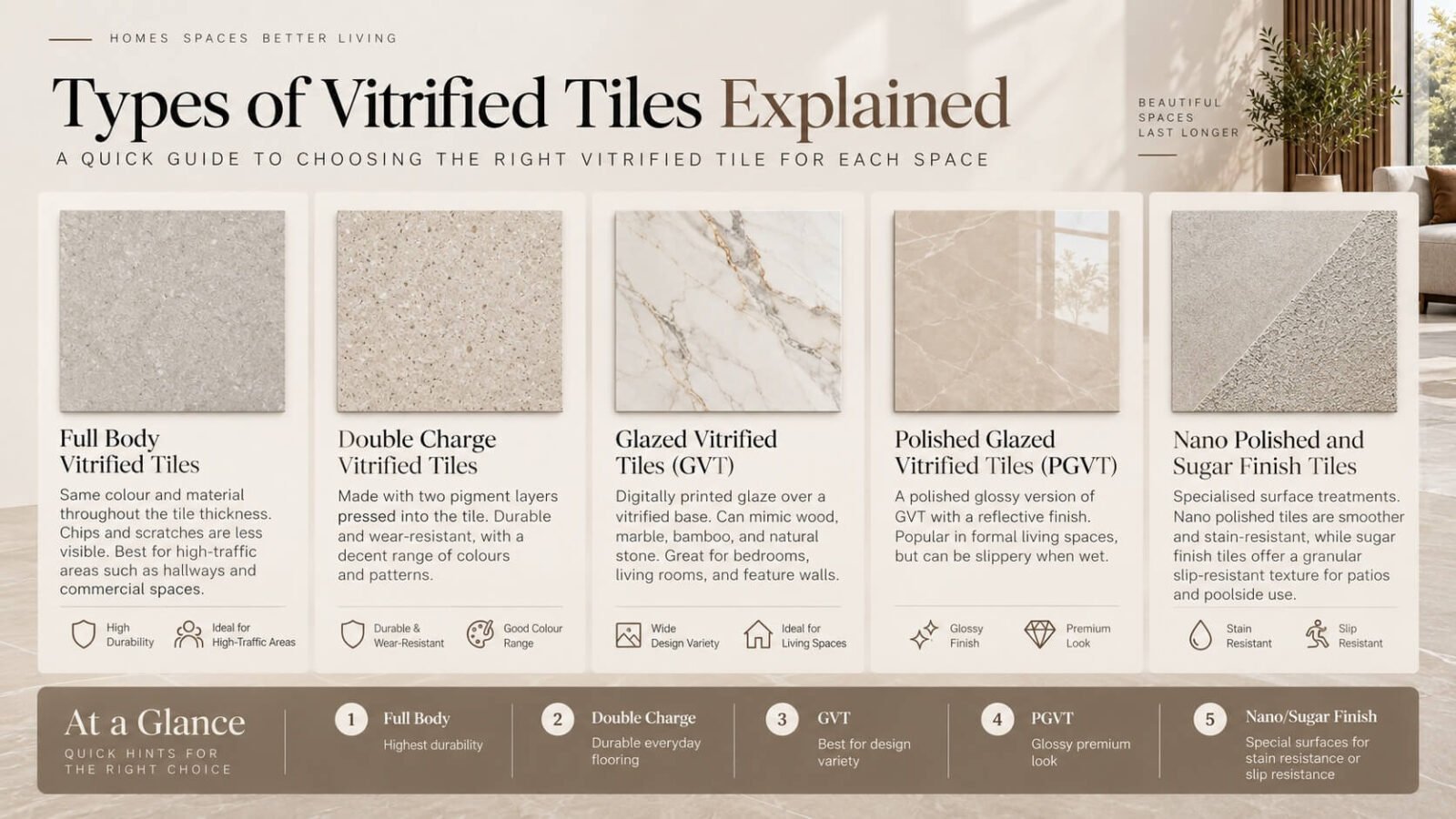
Not all vitrified flooring is the same, and knowing the different categories helps you pick the right one for each room.
Full Body Vitrified Tiles
These tiles carry the same colour and material right through the thickness of the tile. Because there is no separate surface layer, scratches and chips barely show, making this the strongest and most durable option. These tiles suit high-traffic commercial areas, airports, and busy household zones such as hallways.
Double Charge Vitrified Tiles
They are pressed with two layers of pigment fed into the machine, creating a design that penetrates roughly 3 to 4 millimetres into the body. This gives the tile excellent wear resistance while offering a reasonably wide choice of colours and patterns, though intricate designs remain limited compared to glazed options.
Glazed Vitrified Tiles
They are commonly called GVT, feature a digitally printed glaze layer applied over the vitrified base before a final firing seals the surface. This technique allows manufacturers to replicate wood grain, natural stone, marble, and bamboo finishes with striking realism. GVT flooring suits bedrooms, living rooms, and feature walls where design variety matters more than heavy-duty wear resistance.
Polished Glazed Vitrified Tiles
Also known as PGVT, undergo an additional polishing step after glazing, giving them a glossy, reflective finish. This makes them a popular choice for formal living areas, though the polished surface can become slippery when wet, so many homeowners avoid using PGVT in bathrooms.
Nano Polished and Sugar Finish Vitrified Tiles
They offer specialised surface treatments. Nano polishing seals microscopic pores for a smoother, stain-resistant finish, while sugar finish tiles have a granular, slip-resistant texture that suits outdoor patios and pool surrounds.
Read More: Kitchen Wall Tiles Design Ideas
Key Benefits of Choosing Vitrified Tiles
Vitrified Tiles offer several practical advantages that explain their popularity across Indian homes and commercial buildings.
- Low water absorption keeps the tiles resistant to staining, mould, and moisture damage, which matters greatly in India’s humid climate.
- High compressive strength allows them to withstand heavy furniture and constant footfall without cracking.
- Scratch and stain resistance keeps the surface looking newer for longer, reducing the need for frequent replacement.
- Low maintenance requirements mean regular sweeping and occasional mopping are usually sufficient to keep floors looking pristine.
- Wide design range, including wood, marble, and stone finishes, lets homeowners achieve a premium look without the ongoing upkeep that natural stone demands.
- Hygienic, non-porous surfaces resist bacteria and allergens, which makes this flooring a sound choice for kitchens and bathrooms.
Where to Use This Flooring in Your Home
- Living Rooms and Bedrooms suit glazed or polished glazed options where a glossy, elegant finish adds visual appeal to the space.
- Kitchens and Bathrooms benefit from full body or matt-finish tiles, since these areas need strong slip resistance alongside water resistance.
- Balconies and Terraces work best with sugar finish or textured tiles, as the granular surface prevents slipping in wet weather.
- Parking Areas and Driveways call for thicker, full body tiles that can handle vehicle weight and constant exposure to the elements.
How to Choose the Right Vitrified Tiles
Selecting suitable flooring involves balancing several factors rather than picking purely on showroom appearance.
- Consider the room’s function first. A bathroom needs a slip-resistant matt or sugar finish, while a living room can accommodate a glossy PGVT surface.
- Check the Porcelain Enamel Institute rating for high-traffic zones, since a higher rating indicates greater resistance to surface wear.
- Match the tile size to the room dimensions, as larger format tiles create a spacious feel in bigger rooms while smaller formats suit compact spaces without appearing cramped.
- Always verify the water absorption rating, which should ideally stay below 0.5 percent for wet areas.
- Finally, budget realistically, since full body and PGVT options generally cost more than standard glazed varieties, though the durability often justifies the investment over the property’s lifetime.
Installation and Maintenance Tips
Proper installation extends the lifespan of any tiled floor considerably. Ensure the sub-floor is level and completely dry before laying the tiles, since an uneven base can lead to hollow sounds and eventual cracking. Use a suitable tile adhesive rather than traditional cement mortar for large format tiles, as this reduces the risk of lippage and improves bonding strength. Leave adequate expansion joints, particularly in larger rooms, to accommodate natural temperature-related movement.
For maintenance, sweep or vacuum floors regularly to remove grit that can scratch the surface over time. Clean with a pH-neutral cleaner rather than harsh acidic or abrasive products, which can dull the glaze on polished finishes. Wipe up spills promptly, especially oil and coloured liquids, to prevent staining on lighter shades. Avoid dragging heavy furniture across the floor, and use felt pads under furniture legs to prevent scratches.
Current Trends in Vitrified Tile Flooring
Large format tiles continue to gain popularity, as fewer grout lines create a seamless, contemporary appearance that suits modern minimalist interiors. Wood-look and stone-look designs remain firm favourites, allowing homeowners to achieve the warmth of timber or the richness of marble without the associated maintenance concerns. Matt and textured finishes are increasingly preferred over high-gloss surfaces, reflecting a broader shift towards understated, tactile interiors. Sustainable manufacturing practices are also gaining attention, with several Indian manufacturers now focusing on reduced water consumption and recycled raw material content during production.
Vitrified Tiles Versus Other Flooring Options
Homeowners frequently weigh this flooring against marble, natural stone, and engineered wood before making a final call, and each material brings its own trade-offs.
Marble offers undeniable elegance and a cool surface underfoot, but it is porous, prone to staining from acidic spills, and requires periodic polishing to retain its shine. This flooring matches marble’s visual appeal through digital printing while avoiding the ongoing sealing and maintenance that natural stone demands.
Natural stone such as granite or sandstone is extremely durable but tends to be heavier, costlier to install, and limited in colour consistency between batches. This flooring, being factory produced, offers uniform colour and thickness across an entire batch, which makes large-area installations look far more consistent.
Engineered wood flooring brings warmth and texture but struggles in humid Indian climates, where moisture can cause warping and swelling over time. Wood-look vitrified options replicate the same aesthetic while remaining completely unaffected by moisture, making them a more practical choice for bathrooms, kitchens, and coastal properties.
Cost Considerations for This Flooring
Pricing varies considerably depending on the type, size, and finish selected. Standard glazed options in common sizes tend to sit at the more affordable end of the spectrum, making them accessible for budget-conscious renovations. Full body and PGVT options typically command a premium because of the additional processing involved and the superior durability they offer over the property’s lifetime.
Beyond the tile cost itself, factor in the adhesive, labour charges, and any subfloor preparation required, since these can add meaningfully to the overall project budget. Buying slightly extra stock, typically five to ten percent above the measured area, helps account for cutting wastage and future replacements without needing to source matching tiles from a different production batch later.
Common Mistakes to Avoid
Many homeowners select tiles based solely on showroom lighting and a small sample piece, only to find the effect looks different once an entire floor is laid. Always view a larger sample panel, ideally under both natural and artificial light, before confirming an order.
Skipping proper subfloor levelling is another frequent error that leads to uneven tiles, visible lippage, and premature cracking. Equally, choosing a glossy, polished finish for a bathroom or balcony without considering slip resistance can turn an attractive floor into a genuine safety hazard for the household.
Making the Final Decision
Vitrified Tiles bring together durability, design flexibility, and manageable upkeep in a way that few other flooring materials can match. Whether you are flooring an entire property or refreshing a single room, understanding the different types, from full body and double charge to GVT and PGVT, puts you in a strong position to choose confidently. Visit a showroom, request samples, and check them under your home’s actual lighting before finalising your selection, since tile colours can appear notably different under artificial showroom lighting compared with natural daylight.
Ready to plan your dream flooring? Explore more expert guides on home decor, Vastu Shastra and property trends on Zen Nest Living, and turn your house into a space that feels like home, one smart design decision at a time.
Frequently Asked Questions
1. Which type of vitrified tile is best for bathroom flooring?
Full body or sugar finish tiles work best for bathrooms because they offer strong slip resistance alongside low water absorption. Avoid highly polished PGVT options in wet areas, as their glossy surface becomes slippery when water spills on it.
2. Are vitrified tiles more durable than ceramic tiles?
Yes. The vitrification process fuses the tile’s raw materials into a dense, non-porous body, giving it far lower water absorption, better stain resistance, and greater strength compared with standard ceramic tiles.
3. Can this flooring be used outdoors?
Yes, provided you choose a sugar finish or textured, anti-skid variant. Smooth or highly polished finishes should be avoided in balconies, terraces, and outdoor areas, since they lose grip when wet.
4. How long does vitrified flooring typically last?
With proper installation and routine care, it can comfortably last 15 to 20 years or longer. Its non-porous, scratch-resistant surface holds up well against daily wear, provided harsh abrasive cleaners are avoided.
