
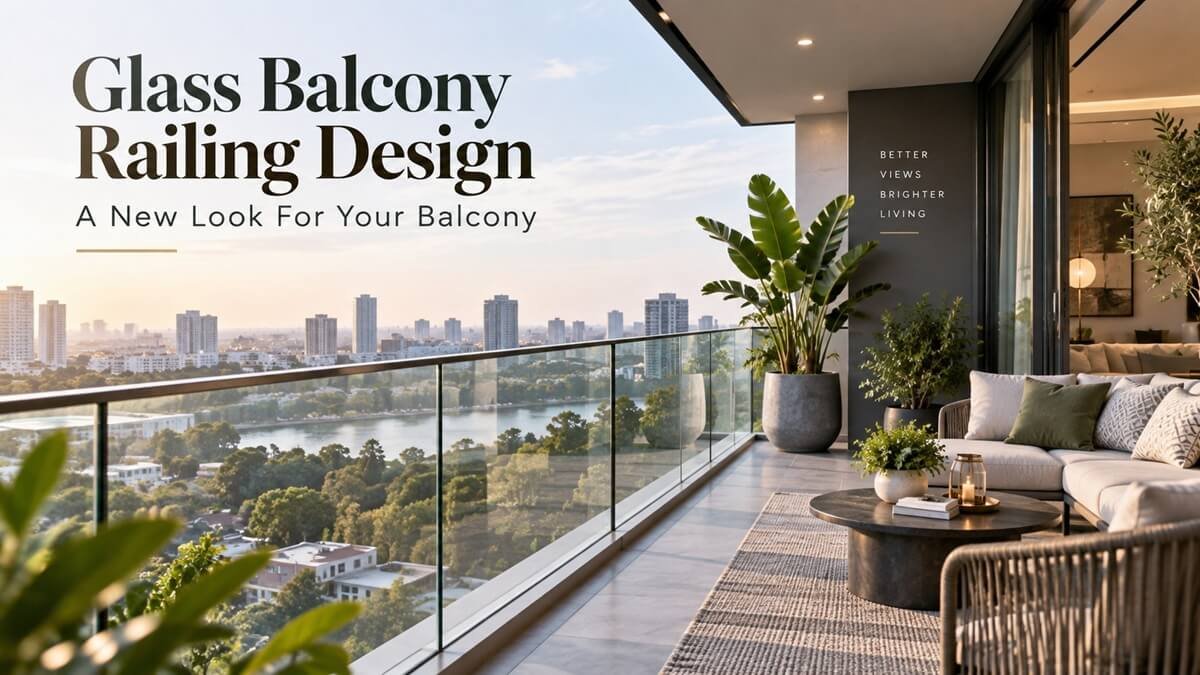
Your balcony deserves more than a plain iron grille. A Glass Balcony Railing turns a forgotten corner into the most photographed spot in the house. It opens up the view, lets in natural light, and gives your home a distinctly contemporary edge. If you are planning a renovation or building afresh, here is everything you need to know about choosing the right Glass Balcony Railing for your space.
Why Homeowners Are Choosing This Balcony Upgrade
Traditional metal grilles served their purpose for decades, but they block light and often feel heavy on smaller balconies. A Glass Balcony Railing solves both problems at once. It creates an uninterrupted view of the skyline, garden, or street below, while still meeting every safety requirement. Builders now install glass railings in regular apartments, not just luxury villas, which has made the look far more accessible.
A well-chosen Glass Balcony Railing also makes a compact balcony feel larger. Because the glass panel is transparent, the eye travels straight through it instead of stopping at a solid barrier. This trick works particularly well in cities where balconies tend to be narrow.
Popular Styles to Consider While Choosing Glass Balcony Railings
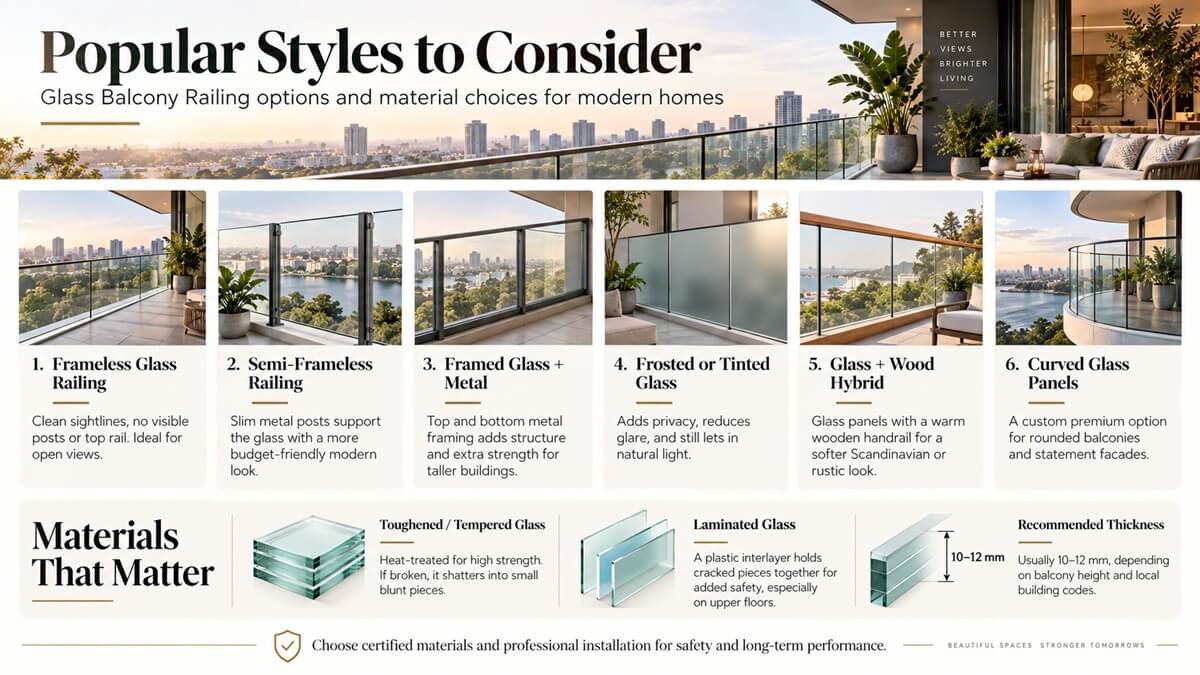
Do not miss the trend, here are some best styles for your glass railings for balcony. Have a look:
Frameless Glass Railing
This is the most sought-after option for modern homes. The glass panels sit directly in a discreet base channel, with no visible posts or top rail breaking the view. A frameless Glass Balcony Railing suits homes that face a garden, a sea view, or an open landscape, since nothing interrupts the sightline.
Semi-Frameless Railing
Here, slim metal posts hold the glass panels in place, but there is no top handrail covering the glass. This style balances the openness of a frameless design with slightly lower installation costs, making it a practical middle-ground choice.
Framed Glass and Metal Combination
A metal frame runs along the top and bottom of the glass, giving the railing extra strength and a more structured look. This version works well for taller buildings and high-rise apartments, where added rigidity is reassuring for residents.
Frosted or Tinted Glass Railing
If your balcony faces a neighbour’s window or a busy street, frosted glass offers privacy without sacrificing light. A tinted Glass Balcony Railing also cuts down glare during peak summer months, keeping the balcony comfortable to sit in.
Glass and Wood Hybrid
Pairing glass panels with a warm wooden handrail softens the industrial feel of pure glass and metal. This combination suits homes with a rustic or Scandinavian-inspired interior, creating visual continuity between the balcony and the living room.
Curved Glass Panels
For homes with a rounded balcony or a statement facade, curved glass panels add a custom, high-end finish. This style costs more but delivers a striking result that flat panels cannot match.
Materials That Matter
Not all glass is suitable for a balcony railing. Reputable installers use either toughened glass or laminated glass, sometimes both together for added strength.
Toughened glass, also called tempered glass, is heat-treated so it is far stronger than ordinary glass. If it does break, it shatters into small, blunt pieces rather than sharp shards, which lowers the risk of injury.
Laminated glass has a thin plastic interlayer sandwiched between two glass sheets. Even if the glass cracks, the interlayer holds the pieces together, so the panel stays intact until it can be replaced. Many homeowners choose laminated glass for upper floors, where safety margins matter most.
A good Glass Balcony Railing typically uses glass that is at least ten to twelve millimetres thick, though the exact specification depends on the height of the balcony and local building codes.
Read More: Teak Wood Main Door Design Ideas
Choosing the Right Frame and Fittings
The frame material affects both the look and the lifespan of a Glass Balcony Railing. Stainless steel resists rust and suits coastal or humid regions. Aluminium is lighter and more budget-friendly, and it takes powder coating well if you want a specific colour. Matte black and bronze finishes are replacing polished chrome as the preferred choice for fittings, standoffs, and handrails, giving the railing a more grounded, sophisticated appearance.
Standoff fittings, which hold the glass slightly away from the wall or floor, are gaining popularity because they create a floating effect and make cleaning easier.
Cost of Glass Balcony Railing in India
Pricing depends on the glass type, thickness, frame material, and design complexity. As a rough guide, a basic framed Glass Balcony Railing can start around fifteen hundred rupees per running foot, while frameless or curved designs with premium fittings can cross three thousand rupees per running foot. Always ask installers for a written quote that separates glass, frame, and labour costs, so you can compare options fairly.
Placement and Practical Tips
Before finalising your railing choice, walk through a few practical points with your architect or fabricator.
Check the local building bylaws for minimum railing height, since most municipal codes require at least ninety centimetres for residential balconies. Confirm whether your building society has any restrictions on glass type or colour, particularly in gated communities with a uniform facade. If your balcony gets strong afternoon sun, consider a light tint to reduce heat buildup indoors. For homes with young children, choose a design without horizontal bars that could be used as a foothold, since a clean glass panel is inherently safer in this regard.
Many homeowners also consult Vastu principles when finalising balcony elements. While glass itself is considered neutral in Vastu, the general guidance is to keep balconies, especially those facing north or east, open and uncluttered, which a transparent Glass Balcony Railing naturally supports.
Common Mistakes to Avoid
Even a well-planned railing project can go wrong if a few basics are overlooked. Skipping a proper structural check before installation is one of the most frequent errors, especially on older buildings where the balcony ledge may not have been designed for the added weight of glass and fittings. Always ask the fabricator to inspect the existing structure first.
Choosing the cheapest quote without checking the glass certification is another common pitfall. Genuine toughened or laminated glass carries a certification mark, and skipping this check to save money can compromise safety later. Similarly, ignoring drainage is a mistake many homeowners make. Water that collects along the base channel can seep into the flooring over time if weep holes or a slight slope are not built into the design, so raise this with your fabricator at the planning stage.
Finally, avoid mismatching the frame finish with the rest of your exterior. A railing that clashes with your window frames or grilles can look out of place, even if the glass panel itself is flawless, so pick a finish that ties in with the building’s overall palette.
Choosing a Reliable Installer
The quality of installation matters as much as the quality of the glass itself. Ask any installer for references from recent projects and, where possible, visit a completed site to see how the panels have held up over time. A reliable fabricator will explain the glass thickness, the type of interlayer used, and the warranty on both material and workmanship in writing.
It also helps to confirm turnaround time before work begins, since custom-cut glass panels can take a few weeks to arrive depending on the supplier. Building this buffer into your renovation schedule avoids last-minute delays, particularly if you are coordinating the railing work alongside flooring or painting.
Maintenance Made Simple
A Glass Balcony Railing needs less upkeep than most people expect. Wipe the panels with a soft cloth and a mild glass cleaner every couple of weeks to prevent water spots and dust buildup. Avoid abrasive scrubbers, which can scratch the surface over time. Check the fittings and base channel every few months for any looseness, and have a professional inspect the seals if you notice water seeping in during heavy rain. With basic care, a well-installed glass railing can last well beyond a decade without losing its shine.
Bringing It All Together
A Glass Balcony Railing is no longer a niche upgrade reserved for high-end villas. It suits apartments, independent houses, and everything in between, offering an open view, better natural light, and a cleaner overall look. Whether you choose a frameless finish for uninterrupted views or a framed design for extra reassurance, the right glass railing can transform how your balcony looks and feels for years to come.
Ready to redesign your balcony with a style that truly lasts? Explore more expert guides on railing ideas, interior trends, Vastu tips, and property insights at Zen Nest Living, and turn your home renovation plans into a beautifully finished reality today.
Frequently Asked Questions
Is a Glass Balcony Railing safe for high-rise apartments?
Yes, provided it uses toughened or laminated glass installed to the manufacturer’s specifications. These glass types are designed to withstand wind load and accidental impact, and they are commonly used on high-rise buildings across the country.
How thick should the glass be for a balcony railing?
Most residential installations use glass between ten and twelve millimetres thick, though taller buildings or wider spans may need thicker panels. A structural engineer or experienced fabricator can confirm the right specification for your balcony.
Does a glass railing need special cleaning products?
No, a standard glass cleaner and a soft, lint-free cloth are usually enough. Avoid harsh chemicals or abrasive pads, since they can dull the surface finish over time.
Can a glass balcony railing be installed on an existing balcony without major construction?
In most cases, yes. Retrofitting is common, and installers can fix the base channel or posts to the existing balcony structure without extensive demolition, though the final method depends on your balcony’s current design and material.
