

Here comes the big news for those who are looking to invest in Greater Noida property, specially in and around Jewar. Land prices near Jewar have changed dramatically in recent years. The trigger is simple, Noida International Airport has finally become a reality.
Prime Minister Narendra Modi inaugurated the airport on March 28, 2026. Commercial flights began on June 15, 2026. International routes followed in September 2026.
This single project has reshaped an entire real estate corridor. Villages once known only for farming now attract serious investor attention.
How Much Have Prices Actually Risen
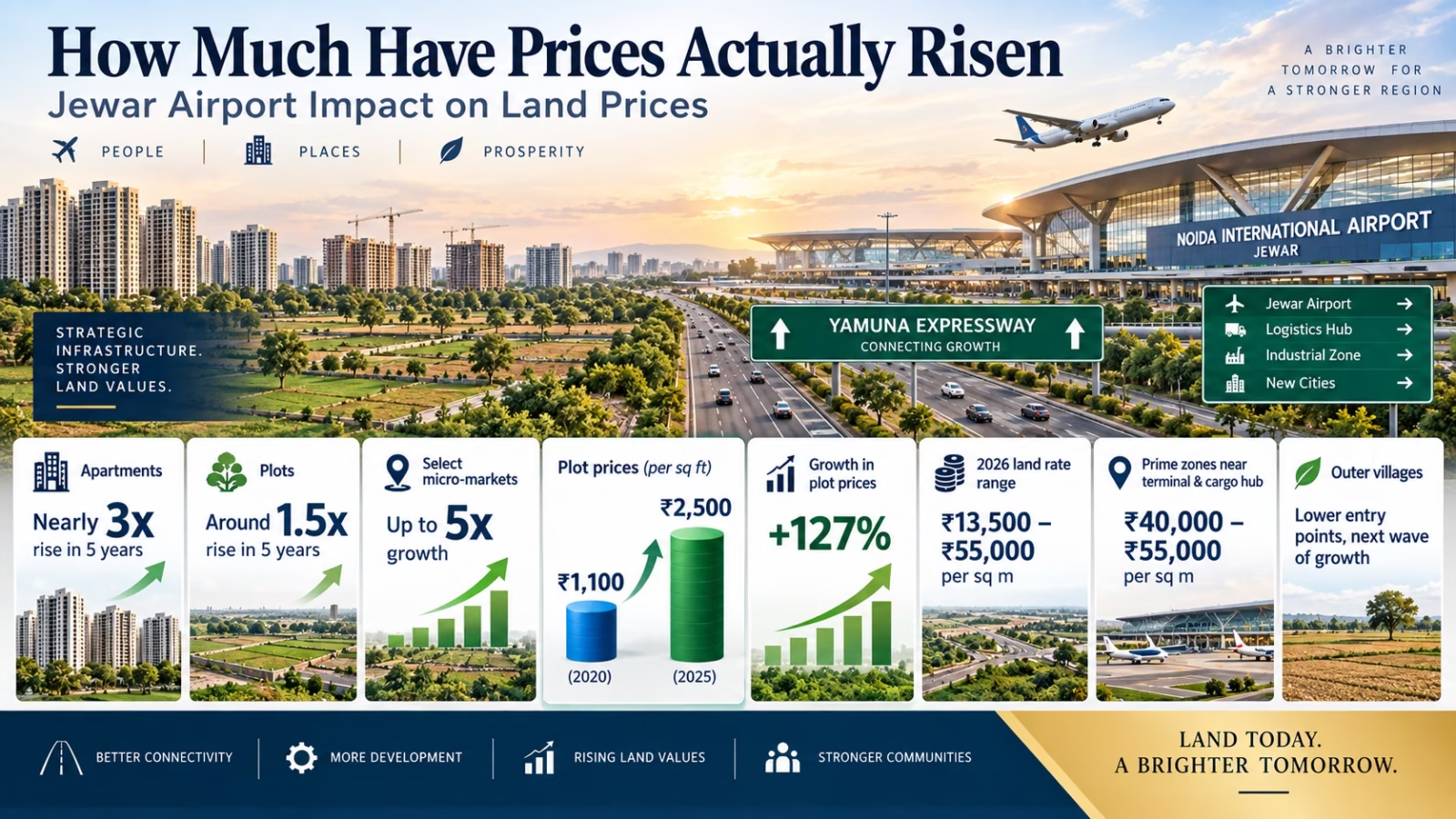
The numbers are striking for anyone tracking this region. Property prices along the Yamuna Expressway corridor have increased nearly 3x for apartments and around 1.5x for plots over the past five years.
Some pockets have performed even better than the average. Select micro-markets near the airport have recorded growth as high as 5x during this same period.
This explains the “3 to 5 times” figure many investors now quote. It reflects real transactions, not just marketing claims.
Plot rates tell a similar story on the ground. Plot prices along the Yamuna Expressway reached around 2,500 rupees per square foot in 2025, up 127 percent from 1,100 rupees in 2020.
Current land rates vary sharply by exact location. Rates in 2026 range from about 13,500 to 55,000 rupees per square meter, depending on the plot.
Prime zones command the steepest premiums right now. Land closest to the terminal and cargo hub trades between 40,000 and 55,000 rupees per square metre.
Villages farther from the airport still offer relatively lower entry points. Investors are watching these outer belts for the next wave of growth.
Why the Airport Has Triggered This Boom
Infrastructure is the biggest reason behind this price jump. An operational international airport instantly changes how a region gets perceived. Connectivity plays a central role in this shift. Better roads and faster access reduce travel time to Delhi and beyond.
Employment generation adds another strong layer of demand. Upcoming technology and film hubs alone are expected to create over 450,000 jobs across this belt. More jobs mean more people need housing nearby. This pushes both rental and ownership demand higher across sectors.
Connectivity projects are reinforcing this cycle further. The Noida Metro expansion and the Ghaziabad-Jewar Regional Rapid Transit System are expected to boost demand even more.
Developers have also shifted their focus dramatically. Builders earlier centered on central Noida are now expanding across the expressway belt, including Greater Noida and Yeida.
Launch numbers confirm this shift is not small. More than 52,000 residential units were launched across Noida, Greater Noida, and Yeida between 2022 and 2025.
This scale of activity rarely happens without strong underlying demand. Investors read this as a signal of long-term confidence.
The Government Push Behind Rising Values
Government-backed development has added real credibility to this corridor. YEIDA has actively shaped supply through structured plot schemes.
One recent launch drew massive attention from buyers. YEIDA offered 973 residential plots across sectors 15C, 18, and 24, close to the airport.
Pricing under this scheme stayed relatively controlled. The land rate was fixed at 36,260 rupees per square metre, with the smallest plots starting near 58 lakh rupees.
Demand for these government plots has been overwhelming. The scheme reportedly received more than 113 applicants for every single plot on offer.
Such demand levels rarely occur without strong market conviction. This also explains why private land nearby has followed the same upward path.
Farmers who gave up land for the project have benefited too. Compensation rates were raised from 3,100 to 4,300 rupees per square metre, with added interest as per norms.
Better connectivity projects are also planned or underway. The Faridabad-Jewar Expressway is expected to open between late 2026 and early 2027.
Each new project adds another layer of confidence to the market. Together, these developments explain why prices have moved so quickly.
What Analysts Expect Going Forward
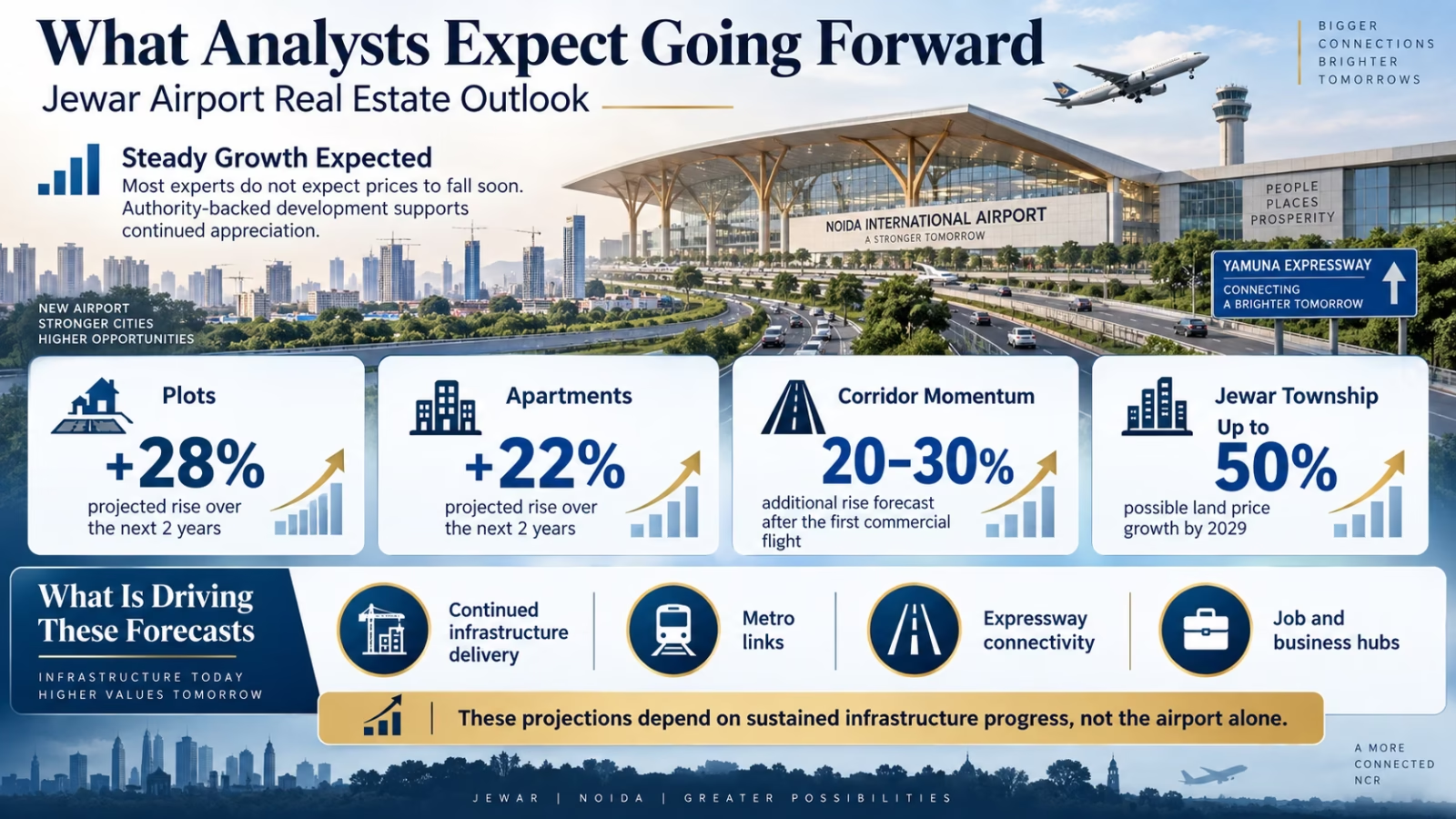
Most experts do not expect prices to fall soon. The structured, authority-backed nature of this development supports steady growth.
Forecasts point to continued appreciation over the next few years. Prices are projected to rise a further 28 percent for plots and 22 percent for apartments over the next two years.
Other analysts see similar momentum building. Market experts now forecast an additional 20 to 30 percent price rise along the corridor following the first commercial flight.
Longer-range estimates go even further. One industry report projects land prices near the Jewar township could grow by nearly 50 percent by 2029.
These forecasts rely on continued infrastructure delivery, not just the airport alone. Metro links, expressways, and job hubs all play a role.
What This Means for Buyers and Investors
Rapid price growth creates opportunity, but it also raises risk. Buyers should approach this market with careful research.
Entry costs still remain comparatively lower than established markets. Jewar plot prices currently sit 30 to 50 percent below equivalent land in Greater Noida.
This gap is why many first-time investors are entering now. They see room for growth before prices match neighbouring markets.
Documentation, however, matters more than ever in this environment. Buyers should confirm a clear land title, verify road access, and check the approved land use before purchasing.
Skipping these checks can create serious legal complications later. A lower price today is not worth a disputed title tomorrow.
Government-backed plots like YEIDA schemes offer added safety. These plots come with transparent allotment, RERA compliance, and clear titles, making them safer for first-time buyers.
Private land deals need extra caution in comparison. Independent verification through official land records remains essential before any payment.
Patience also matters for anyone entering this market. Most analysts suggest a minimum five-year holding period to see meaningful appreciation in this corridor.
This is not a market built for quick flips. It rewards buyers who plan for the medium to long term.
The Bigger Picture for Noida and Greater Noida
This airport effect extends well beyond Jewar’s immediate boundaries. Noida and Greater Noida are also feeling the impact directly.
For years, Noida was seen mainly as Delhi’s affordable alternative. That perception is now changing rapidly across the region.
The scale of investment supports this shift. The airport’s first phase alone represented an investment of around 11,200 crore rupees.
Combined with metro expansion, expressways, and Film City plans, the entire belt is being repositioned. Analysts increasingly describe it as a new urban growth corridor for North India.
Buyers today are not just purchasing land. They are betting on an entire ecosystem still taking shape.
Final Thoughts
The Jewar airport effect on land prices is real and well documented. Numbers from multiple reports confirm gains between 3 and 5 times.
Government schemes, private developers, and infrastructure projects are all moving together. This alignment rarely happens without lasting impact on regional prices.
Still, rising prices demand more caution, not less. Verified titles, clear land use, and patient timelines remain essential for every buyer.
Jewar’s transformation is still unfolding. Those who research carefully today are better positioned for what comes next.
Frequently Asked Questions
1. How much have land prices increased near Jewar Airport?
Land prices along the Yamuna Expressway corridor have risen between 3 and 5 times over the past five years, depending on the exact location and plot type.
2. What is the current land price range near Jewar Airport?
As of 2026, prices range from around 13,500 to 55,000 rupees per square metre. Prime zones near the terminal command the highest rates.
3. Is it still a good time to invest near Jewar Airport?
Prices remain lower than in established markets like Greater Noida, but experts recommend a minimum five-year holding period and careful title verification before buying.
4. What is driving the price rise around Jewar Airport?
Airport operations, government plot schemes, metro expansion, expressway connectivity, and upcoming job hubs are together driving strong and sustained demand.
