
Nine days of fasting can leave you tired by day three. The usual culprit is not the fast itself. It is the plate. Sabudana, potatoes and fried snacks fill you up, but they carry very little protein.
The good news is that you can fix this without breaking any vrat rules. This guide shares High Protein Navratri Recipes that use paneer, makhana, curd, peanuts, kuttu and rajgira. Every recipe is simple, quick and vrat-friendly.
What Are the Best High Protein Navratri Recipes?
Quick answer: The best High Protein Navratri Recipes use fasting-approved foods that are naturally rich in protein. These include paneer, curd, milk, makhana (fox nuts), peanuts, almonds, kuttu (buckwheat) flour and rajgira (amaranth) flour. Paneer tikka, kuttu paneer chilla, makhana peanut chaat and samak rice pulao with paneer are four easy options. Each gives 12 to 20 grams of protein per serving.
Why Protein Matters During Navratri
Most Navratri plates are heavy on carbohydrates. Sabudana khichdi, aloo sabzi, kuttu puri and sweets all digest fast. Your blood sugar rises quickly and then drops. That drop makes you feel weak, dizzy and hungry again within two hours.
Protein slows this cycle. It digests slowly, keeps you full longer and protects your muscles when you eat less overall.
Here are some numbers worth knowing:
- The ICMR-NIN 2020 guidelines set the daily protein need for Indian adults at about 0.83 grams per kg of body weight.
- That works out to roughly 46 grams a day for a reference woman and 54 grams for a reference man.
- A widely cited IMRB survey found that about 73 percent of Indians consume too little protein.
- A typical fasting day, built on sabudana and potatoes, often delivers less than 25 grams.
So the gap is real. The recipes below help you close it, one meal at a time.
Protein Content of Common Vrat Foods
Use this table to plan your meals. Values are approximate per 100 grams and can vary by brand and preparation.
| Vrat Food | Protein (per 100 g) | Best Way to Eat It |
|---|---|---|
| Peanuts (roasted) | 25 to 26 g | Chaat, chutney, khichdi |
| Almonds | 21 g | Smoothies, snacks, kheer |
| Paneer | 18 to 20 g | Tikka, bhurji, stuffed chilla |
| Kuttu flour | 13 g | Chilla, roti, pakora |
| Rajgira flour | 13 to 14 g | Paratha, roti, ladoo |
| Makhana | 9 to 10 g | Roasted, kheer, raita |
| Samak rice (barnyard millet) | 6 to 11 g (raw) | Pulao, khichdi |
| Curd | 3 to 4 g | Raita, lassi, kadhi |
| Milk | 3.4 g | Kheer, smoothies |
| Sabudana | Under 0.5 g | Pair with peanuts and paneer |
Notice how low sabudana sits. That does not mean you should skip it. It means you should never eat it alone.
Read more: Common Navratri Recipes
9 Easy High Protein Navratri Recipes
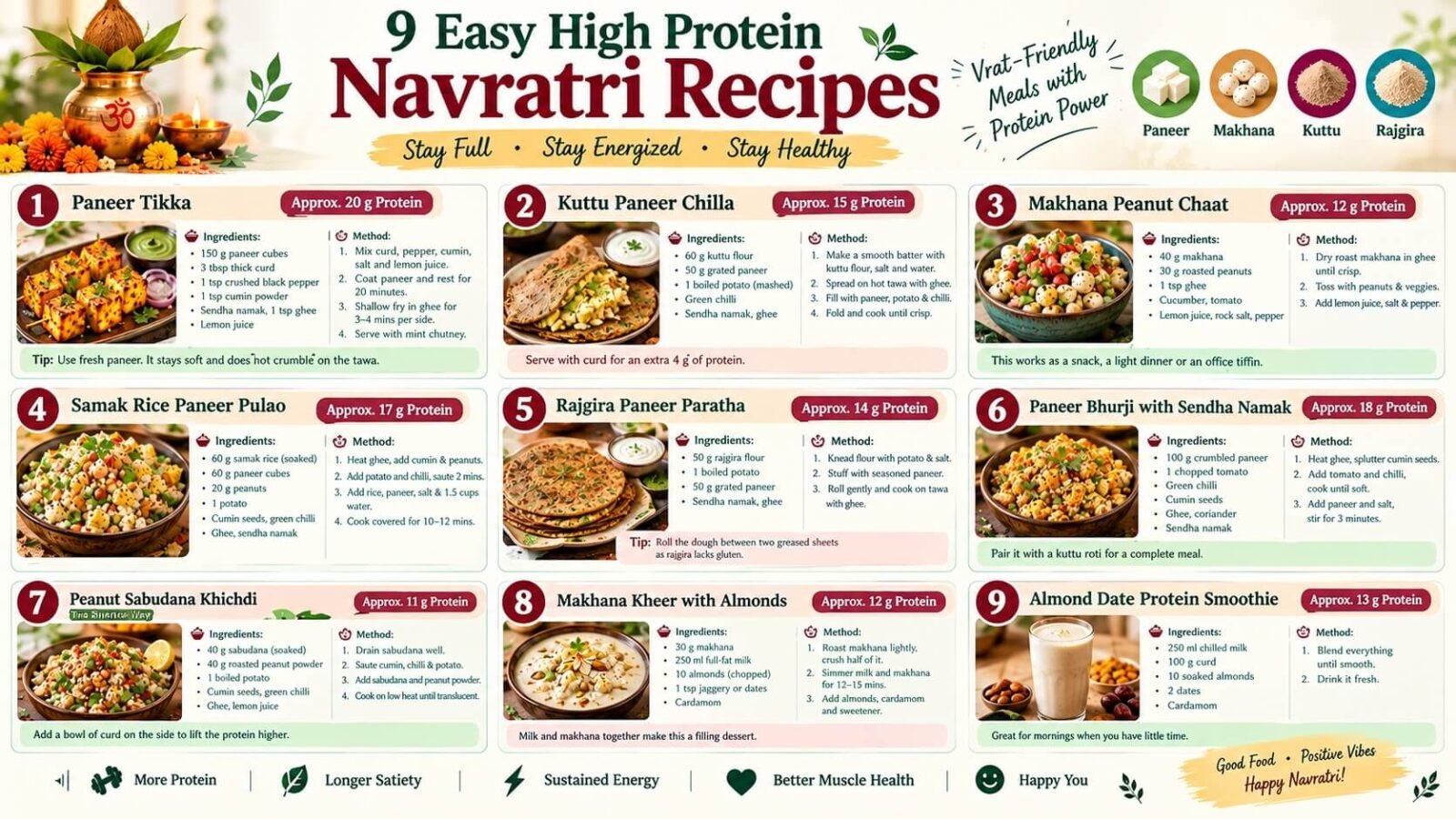
Get your daily protein intake with these 9 healthy and protein rich foods in Navaratri.
1. Paneer Tikka (Approx. 20 g Protein)
This is the easiest way to add protein to your fasting plate.
Ingredients: 150 g paneer cubes, 3 tbsp thick curd, 1 tsp crushed black pepper, 1 tsp cumin powder, sendha namak, 1 tsp ghee, lemon juice.
Method:
- Mix curd, pepper, cumin, salt and lemon juice.
- Coat the paneer and rest it for 20 minutes.
- Shallow fry in ghee for 3 to 4 minutes per side until golden.
- Serve with mint and coriander chutney.
Tip: Use fresh paneer. It stays soft and does not crumble on the tawa.
2. Kuttu Paneer Chilla (Approx. 15 g Protein)
Kuttu is a pseudo-cereal, which is why it is allowed during vrat. It is also richer in protein than most fasting flours.
Ingredients: 60 g kuttu flour, 50 g grated paneer, 1 boiled potato (mashed), green chilli, sendha namak, ghee.
Method:
- Make a smooth batter with kuttu flour, salt and water.
- Spread it thin on a hot tawa with a little ghee.
- Fill with a mix of paneer, potato and chilli.
- Fold and cook until crisp.
Serve it with curd for an extra 4 grams of protein.
3. Makhana Peanut Chaat (Approx. 12 g Protein)
Makhana is light, crunchy and easy on digestion. Peanuts add both protein and healthy fats.
Ingredients: 40 g makhana, 30 g roasted peanuts, 1 tsp ghee, chopped cucumber, tomato, lemon juice, rock salt, pepper.
Method:
- Dry roast makhana in ghee until crisp.
- Toss with peanuts and chopped vegetables.
- Add lemon juice, salt and pepper.
This works as a snack, a light dinner or an office tiffin.
4. Samak Rice Paneer Pulao (Approx. 17 g Protein)
Samak rice cooks fast and feels like regular rice. Adding paneer and peanuts turns it into a full meal.
Ingredients: 60 g samak rice (washed and soaked for 20 minutes), 60 g paneer cubes, 20 g peanuts, 1 potato, cumin seeds, green chilli, ghee, sendha namak.
Method:
- Heat ghee and add cumin seeds and peanuts.
- Add potato and chilli and saute for 2 minutes.
- Add rice, paneer, salt and 1.5 cups of water.
- Cook covered for 10 to 12 minutes.
5. Rajgira Paneer Paratha (Approx. 14 g Protein)
Rajgira (amaranth) is one of the most protein-dense flours allowed during Navratri.
Ingredients: 50 g rajgira flour, 1 boiled potato, 50 g grated paneer, sendha namak, ghee.
Method:
- Knead rajgira flour with mashed potato and salt.
- Stuff with seasoned paneer.
- Roll gently and cook on a tawa with ghee.
Tip: Rajgira dough lacks gluten, so roll it between two greased sheets.
6. Paneer Bhurji with Sendha Namak (Approx. 18 g Protein)
Ingredients: 100 g crumbled paneer, 1 chopped tomato, green chilli, cumin seeds, ghee, coriander, sendha namak.
Method:
- Heat ghee and splutter cumin seeds.
- Add tomato and chilli and cook until soft.
- Add paneer and salt and stir for 3 minutes.
Pair it with a kuttu roti for a complete meal.
7. Peanut Sabudana Khichdi, the Smarter Way (Approx. 11 g Protein)
You do not need to give up this favourite. Just fix the ratio.
Ingredients: 40 g sabudana (soaked 4 to 5 hours), 40 g roasted peanut powder, 1 boiled potato, cumin seeds, green chilli, ghee, lemon juice.
Method:
- Drain the soaked sabudana well so it does not turn sticky.
- Saute cumin, chilli and potato in ghee.
- Add sabudana and a generous amount of peanut powder.
- Cook on low heat until the pearls turn translucent.
Add a bowl of curd on the side to lift the protein higher.
8. Makhana Kheer with Almonds (Approx. 12 g Protein)
Ingredients: 30 g makhana, 250 ml full-fat milk, 10 almonds (chopped), 1 tsp jaggery or dates, cardamom.
Method:
- Roast makhana lightly and crush half of it.
- Simmer milk and makhana for 12 to 15 minutes.
- Add almonds, cardamom and sweetener.
Milk and makhana together also make this a filling dessert.
9. Almond Date Protein Smoothie (Approx. 13 g Protein)
Ingredients: 250 ml chilled milk, 100 g curd, 10 soaked almonds, 2 dates, a pinch of cardamom.
Method: Blend everything until smooth. Drink it fresh.
This is a great choice for mornings when you have little time.
Sample 9-Day High Protein Navratri Plan
You can repeat or swap these meals. Protein values are approximate.
| Day | Breakfast | Lunch | Dinner | Total Protein |
|---|---|---|---|---|
| 1 | Almond date smoothie | Samak rice paneer pulao | Makhana peanut chaat | 40 to 45 g |
| 2 | Curd with fruits and nuts | Kuttu paneer chilla | Paneer bhurji with kuttu roti | 50 g |
| 3 | Makhana kheer | Rajgira paneer paratha with curd | Paneer tikka | 50 g |
| 4 | Milk with soaked almonds | Peanut sabudana khichdi with curd | Samak rice with vegetables | 35 to 40 g |
| 5 | Almond date smoothie | Paneer bhurji with rajgira roti | Makhana peanut chaat | 45 g |
| 6 | Curd with peanuts | Kuttu paneer chilla | Samak rice paneer pulao | 45 to 50 g |
| 7 | Makhana kheer | Rajgira paratha with raita | Paneer tikka with salad | 50 g |
| 8 | Almond date smoothie | Peanut sabudana khichdi | Kuttu roti with paneer bhurji | 45 g |
| 9 | Milk with dry fruits | Samak rice paneer pulao | Makhana peanut chaat | 40 to 45 g |
Most days land near the daily requirement for an average adult, which is a big step up from a typical vrat day.
Smart Tips to Boost Protein While Fasting
- Eat protein first. Start each meal with paneer, curd or nuts. This keeps your appetite steady.
- Pair every carb with a protein. Sabudana with peanuts, potato with paneer and kuttu with curd all work well.
- Do not fry everything. Shallow frying, roasting and air frying cut excess oil. Heavy oil slows digestion and makes you feel bloated.
- Snack on nuts and seeds. A small handful of almonds, roasted peanuts or makhana between meals keeps energy stable.
- Drink enough water. Fasting often leads to mild dehydration. Coconut water, buttermilk and plain water all help.
- Watch your portions. Paneer is dense in calories as well as protein. A 100 to 150 g serving per meal is plenty.
Common Mistakes to Avoid
- Eating sabudana alone. It gives quick energy but almost no protein.
- Skipping meals. Long gaps cause energy crashes and overeating later.
- Relying on fried snacks. Pakoras and puris add calories without adding much nutrition.
- Too much sugar. Sweets and packaged fasting snacks spike blood sugar.
- Ignoring your body. Weakness, dizziness or a racing heart mean you should eat and rest.
If you have diabetes, kidney disease, high blood pressure or a heart condition, speak to your doctor before fasting. Pregnant and breastfeeding women should also seek medical advice first.
Final Thoughts
A Navratri fast should leave you feeling calm and energised, not drained. With the right High Protein Navratri Recipes, you can stay strong through all nine days. Start small. Add one protein-rich dish to your daily plate and build from there.
Plan your meals a day ahead, keep nuts and makhana handy, and listen to your body. Small changes make a big difference.
Making your home ready for the festive season? Zen Nest Living shares practical ideas on interior design, Vastu and modern living. Explore our latest guides at zennestliving.com and turn your house into a warm, welcoming space this Navratri.
Frequently Asked Questions
1. What are the best High Protein Navratri Recipes for weight loss?
Paneer tikka, makhana peanut chaat and kuttu paneer chilla work well. They are filling and moderate in calories. Bake or shallow fry instead of deep frying.
2. Which vrat foods have the most protein?
Roasted peanuts, almonds and paneer lead the list. Kuttu flour, rajgira flour and makhana follow closely. Curd and milk add smaller but steady amounts.
3. How much protein should I eat during Navratri?
Aim for about 0.8 to 1 gram per kg of body weight. That means roughly 45 to 60 grams for most adults. Choose the higher end if you are active.
4. Can I eat paneer during Navratri fasting?
Yes. Most families allow paneer, milk, curd and ghee during vrat. Practices differ across regions and households, so follow your own tradition.
5. Is makhana good for protein?
Makhana has around 9 to 10 grams of protein per 100 grams. It is low in fat and easy to digest. Pair it with peanuts or milk to raise the protein level further.
6. How can vegetarians get more protein without dal or grains?
Use paneer, curd, milk, nuts, kuttu and rajgira. These are allowed during most fasts and are protein-rich.
