

The Delhi Bullet Train Corridor is moving from paper to ground reality. NHSRCL has started land surveys along the route. The Union Budget 2026-27 gave the project fresh financial backing. Homebuyers and investors across Noida and Greater Noida are tracking every update closely.
In this blog, we have covered latest information related to Delhi Bullet to Siliguri Bullet Train Corridor, every route, station list will be mentioned in this. Along with that we have also explained the fact how this infrastructure growth impact the real estate nearby.
What Is This High-Speed Rail Project
The Delhi Bullet Train Corridor refers to the proposed Delhi-Varanasi High Speed Rail line. NHSRCL is developing this line using Japanese Shinkansen technology. The corridor will run for nearly 865 kilometres. It links the national capital with major cities in Uttar Pradesh. The project falls under India’s wider high-speed rail expansion plan.
The Mumbai-Ahmedabad line remains India’s first bullet train project. Its Surat-Bilimora stretch will open on August 15, 2027. The Delhi Bullet Train Corridor is expected to follow as the next major priority route. Officials describe it as a natural extension of India’s high-speed rail vision.
The estimated project cost stands near Rs 2.30 lakh crore. This figure covers land, civil works, and rolling stock. Costs may shift slightly as detailed planning continues.
NHSRCL first submitted a detailed project report back in 2020. The overall route alignment was finalised two years later. Planning work has continued steadily since that milestone. This history shows the project builds on years of groundwork.
The route mostly runs on elevated viaducts, similar to other lines. Elevated construction reduces the need for large land parcels. It also lowers disruption to existing roads and settlements nearby.
Delhi to Siliguri Bullet Train Project (Latest Updates As Of September 2026)
The project has entered a new and active phase. District administrations are preparing land acquisition proposals now. Officials in Prayagraj and other districts are identifying affected land parcels. NHSRCL conducted LiDAR surveys to map the terrain earlier this year.
Land acquisition for the Delhi Bullet Train Corridor may formally begin by late 2026 or early 2027. The feasibility study and alignment work stand largely complete. The Railway Board has formed dedicated core teams for execution. Project-specific headquarters are also being set up along the route.
Knight Frank is advising authorities on route alignment near key hubs. Officials recently met YEIDA representatives to discuss station planning. Two stations near Mathura and Agra may become integrated township hubs. These hubs will combine transport, housing, and commercial development.
The government has also proposed a further eastward extension. This extension would connect Varanasi with Patna via the Varanasi-Siliguri line. Together, these routes could eventually link Delhi with Bihar and West Bengal. Such scale reflects India’s growing appetite for high-speed rail.
Delhi Bullet Train Project Route And Stations Along The Way
The Delhi Bullet Train Corridor begins at Sarai Kale Khan in Delhi. It passes through Noida, Greater Noida, and Jewar Airport. From there, the route continues toward Mathura and Agra. It then moves through New Etawah, South Kannauj, and Lucknow. The line further connects Ayodhya, Raebareli, and Prayagraj. It finally terminates at Varanasi, covering thirteen stations in total.
Two stations fall within the Delhi-NCR region itself. One station is planned near Noida Sector 144. The other will serve the upcoming Noida International Airport at Jewar. This placement directly benefits residents and investors across western Uttar Pradesh.
The alignment mostly follows existing expressways and greenfield stretches. This design choice helps reduce land acquisition challenges. It also keeps construction timelines more predictable for planners.
How It Compares With Other Bullet Train Plans
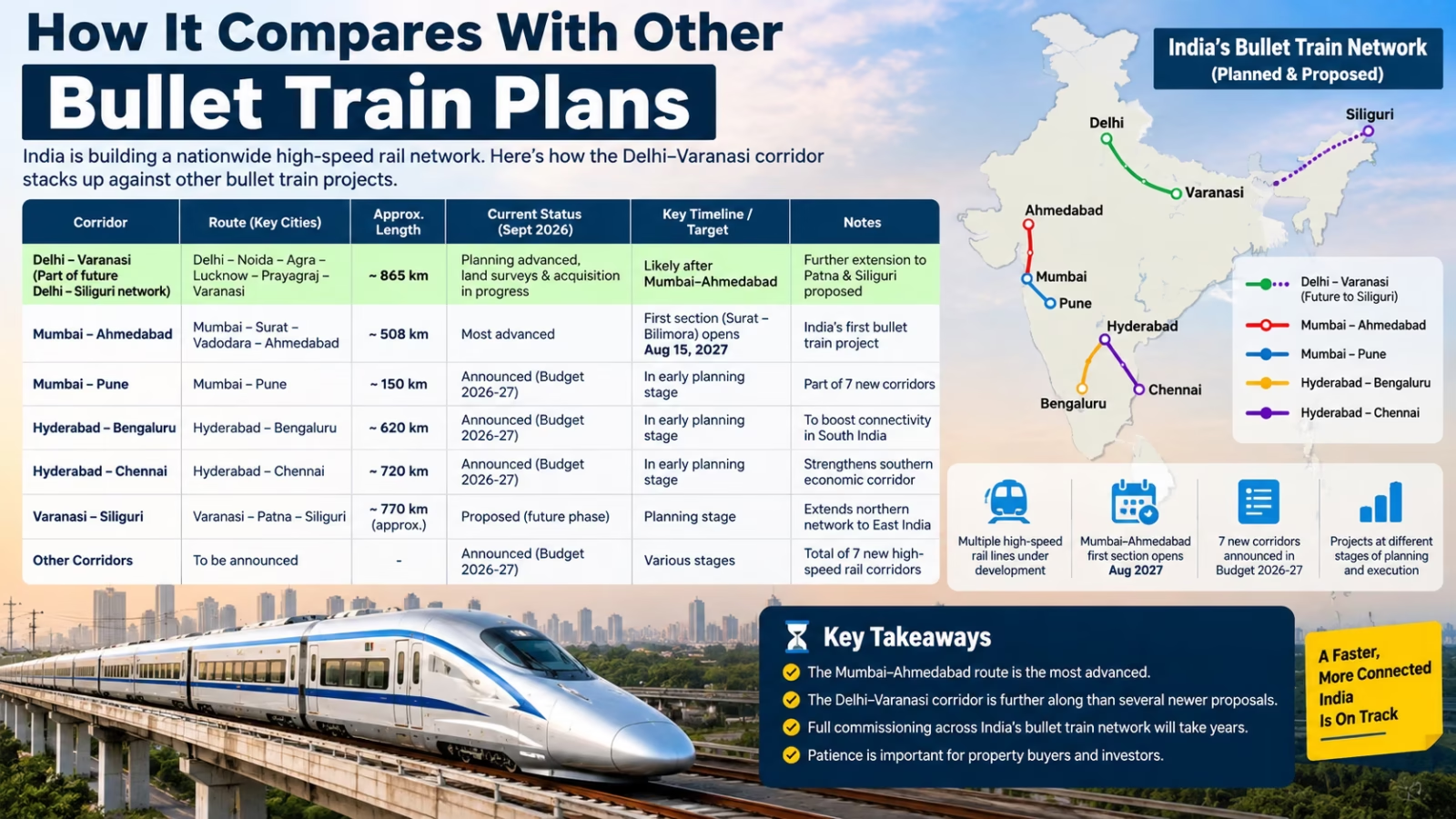
India is developing several high-speed rail lines at once. The Mumbai-Ahmedabad route remains the most advanced of these projects. Its first section opens in August 2027 between Surat and Bilimora. Seven new corridors were announced in the Union Budget 2026-27.
These include Mumbai-Pune, Hyderabad-Bengaluru, and Hyderabad-Chennai routes. The northern network also includes Varanasi-Siliguri as a future extension. Each project sits at a different planning stage right now. This route is further along than several newer proposals.
Comparing timelines helps set realistic expectations for buyers. Full commissioning across India’s bullet train network will likely take years. Patience remains important when planning property purchases around such projects.
Travel Time And Rail Technology

The Delhi Bullet Train Corridor promises major time savings for travellers. Delhi to Lucknow may take just around two hours. Delhi to Varanasi could reduce to under four hours. Current train journeys on this route often take twelve hours.
Trains will use Japanese Shinkansen technology for safety and speed. Operational speeds are expected to reach around 320 kilometres per hour. Design speeds may touch 350 kilometres per hour on select stretches. This technology transfer also supports India’s indigenous rail manufacturing push.
BEML is separately developing India’s first fully domestic bullet train. This train, called B28, targets a top speed of 280 kilometres per hour. It represents a parallel effort to build local manufacturing capacity.
Real Estate Impact Near The Route
The Delhi Bullet Train Corridor is already shaping real estate sentiment. Sectors near the proposed Noida stations show renewed investor interest. Property near the Noida-Greater Noida Expressway remains especially popular today. Developers expect demand to rise further once construction visibly begins.
Industry experts note that large transport projects often lift nearby property values. A confirmed station typically boosts residential and commercial demand nearby. This corridor could repeat that familiar pattern across its full route.
Mathura and Agra may see similar effects over time. Planned township hubs near these stations aim to attract long-term investment. These zones could offer mixed residential and commercial opportunities. Buyers seeking future growth corridors are watching these locations closely.
Noida Extension, Central Noida, and the Noida Expressway belt already see strong housing demand. The Delhi Bullet Train Corridor adds another growth driver to this region. Analysts expect this trend to strengthen as land acquisition progresses further.
Homebuyers should also watch Agra and Mathura for early-mover advantages. Prices near confirmed station sites often rise before construction starts. Waiting for full clarity can sometimes mean paying a premium later.
Timeline And What Comes Next
The Delhi Bullet Train Corridor still awaits several approval stages. Land acquisition must be completed before construction can start. Environmental and technical clearances will also follow standard processes. No official commissioning date has been announced yet.
The Railway Ministry has set broader targets for related corridors. Detailed project reports for some lines are due between September 2026 and March 2027. This suggests steady, phased progress across India’s high-speed rail network.
Homebuyers should track official NHSRCL announcements for confirmed timelines. Speculative buying based on rumours can carry higher risk. Verified updates remain the safest guide for investment decisions.
Why This Project Matters For Homebuyers
This high-speed rail project is more than a transport upgrade. It represents long-term regional development potential for many cities. Areas connected by high-speed rail often attract fresh business activity. This can create jobs and improve local infrastructure over time.
Buyers considering property near proposed stations should assess several factors. Location within the broader city masterplan matters greatly here. Existing road and metro connectivity also add practical value. The Delhi Bullet Train Corridor should remain one factor among several.
Government schemes and expressway projects often move together in NCR. Buyers should study these combined effects before finalising any decision. A well-connected location tends to hold value better long term.
Renters may also benefit from improved connectivity near stations. Better transport links often draw professionals seeking shorter commute times. This can support rental demand even before the line becomes operational.
First-time buyers should compare multiple projects before committing funds. Checking builder track record matters as much as location advantage. RERA registration status offers useful protection for every buyer.
Final Thoughts
The Delhi Bullet Train Corridor marks a major step for Indian rail. Land surveys, budget backing, and core teams show real momentum. Full construction and a launch date remain some distance away. Homebuyers and investors should still track this project closely.
Zen Nest Living will continue covering this story as it develops. Readers can expect timely updates whenever new details emerge. Also, we are here to help people who are ready to invest in real estate, if you want any information related to flats, plots or want to own a home, feel free to contact us.
Frequently Asked Questions
What is the Delhi Bullet Train Corridor?
The Delhi Bullet Train Corridor is the proposed Delhi-Varanasi High Speed Rail line. It will connect Delhi with major cities across Uttar Pradesh. The route spans nearly 865 kilometres and includes thirteen stations.
When will the Delhi Bullet Train Corridor become operational?
No official commissioning date exists yet. Land acquisition may begin by late 2026 or early 2027. Construction timelines will depend on approvals and land handover.
Which stations fall under this corridor?
Key stations include Sarai Kale Khan, Noida, Jewar Airport, Mathura, and Agra. The route also covers Lucknow, Ayodhya, Raebareli, Prayagraj, and Varanasi. Thirteen stations are planned across the full route.
How will this project affect Noida real estate?
Sectors near proposed stations may see rising investor interest. Areas along the Noida-Greater Noida Expressway already show strong demand. Confirmed timelines typically strengthen this effect further.
