
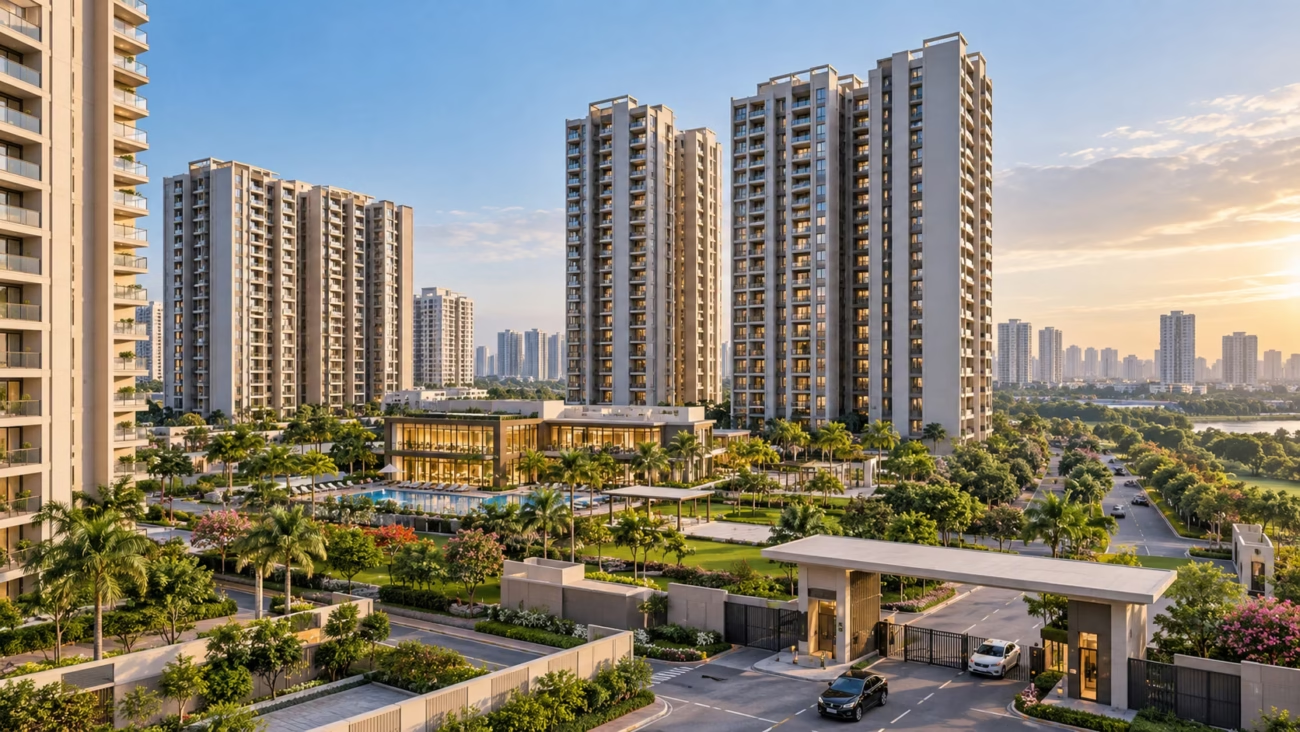
Indian cities are no longer able to expand horizontally. A house close to metros, offices and good schools is now an expensive proposition. Hence, developers prefer to go up rather than out and the skylines of Mumbai, Gurugram, Noida, Bengaluru and Pune reflect that.
The change has been embraced by buyers. It’s been well received by investors. High Rise Apartments are the predominant type of fresh supply in nearly all major metros and are the most attractive to tenants and resale buyers.
This is reflected in the market. Overall, housing sales in the top cities increased by around 8 per cent year on year in early 2026, with premium homes accounting for almost all of the increase. Today’s buyer seeks security, amenities, views and a respected address and towers provide all of these.
This guide outlines 6 reasons why you should invest in High Rise Apartments this year. It also provides you with a checklist to check before you sign anything – a strong market will never save a weak purchase.
6 Valid Reasons To Choose High Rise Apartments To Live A Relaxed Life
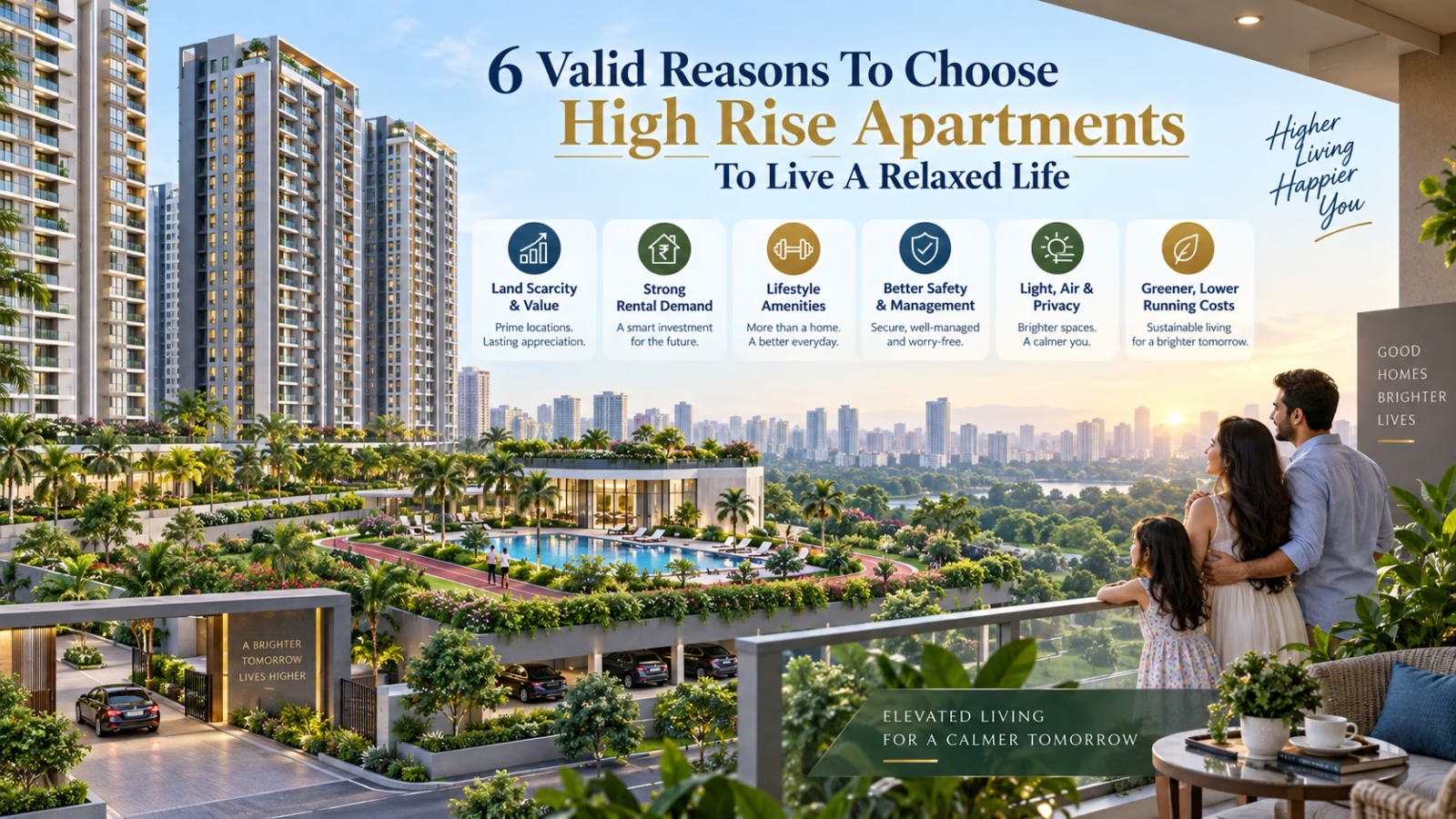
These reasons are the major one that compel any new homebuyer to invest in high rise apartments rather than choosing a low rise.
1. Land scarcity keeps values firm
Cities cannot manufacture new land. They can only use the land they already have more efficiently. A single tower houses hundreds of families on a plot that would otherwise hold a handful of bungalows. Municipal bodies encourage this density because roads, water lines and sewerage then cost far less per household.
This simple arithmetic protects your money. Once a micro market exhausts its developable plots, existing towers gain value because nothing new can come up beside them. High Rise Apartments in mature corridors such as Lower Parel, Golf Course Road or Noida Expressway have proved this pattern repeatedly over the past decade.
Scarcity also shortens your resale timeline. Buyers who want that specific location have very few alternatives, so they negotiate less and decide faster.
2. Rental demand stays reliable near job hubs
Tenants rank commute time above almost every other factor. Property experts polled during 2026 expect average urban rents in India to climb by roughly 6 to 8 per cent over the year, comfortably ahead of consumer inflation. Towers sitting close to IT parks, metro stations and business districts absorb that demand first.
Corporate tenants also prefer professionally run buildings. They want working lifts, power backup, covered parking and a manned security desk. Gated towers supply all four as standard, so well located High Rise Apartments rarely stay vacant for long.
Rental yields on High Rise Apartments in these corridors typically range between 2.5 and 4 per cent, and the better managed societies sit at the top of that band. A short vacancy cycle matters more than a high headline rent. Two empty months can wipe out an entire year of premium rental income, and dense residential towers protect you from exactly that risk.
3. Amenities that tenants now treat as essentials
Ten years ago, a clubhouse felt like a luxury. Today buyers treat it as a baseline. Modern towers offer swimming pools, gymnasiums, jogging tracks, co-working lounges, children’s play zones and landscaped podiums within the compound itself.
Hybrid work sharpened this expectation, and High Rise Apartments answered it fastest. Buyers now want larger homes, better air quality, dedicated workspaces and complete lifestyle amenities inside their own residential community. Residents spend far more hours inside their society, so they value a quiet workspace and open green space within walking distance of the lift lobby.
Independent floors and small builder blocks simply cannot match that package. This gap explains why High Rise Apartments command a clear rental and resale premium over comparable homes in the same postcode.
4. Better safety, security and professional management
Tall buildings follow stricter rules than low-rise structures. The National Building Code and state fire regulations demand sprinklers, wet risers, fire refuge floors, pressurised staircases and firefighter lifts once a building crosses specified heights. Local fire departments inspect these systems before they issue a no objection certificate.
Day-to-day management improves too. A registered residents’ welfare association or a professional facility management firm handles lift maintenance, water testing, waste segregation, diesel generator servicing and CCTV monitoring. Boom barriers, visitor apps and biometric access control the entry points.
For an investor who lives in another city, this structure matters enormously. Somebody competent looks after the asset even when you cannot visit it yourself, which is why non-resident buyers overwhelmingly choose High Rise Apartments.
5. Light, air and privacy on the upper floors
Height buys comfort. Upper storeys escape street noise, dust and the glare of traffic headlights at night. Natural light reaches deeper into the rooms because no neighbouring wall blocks the windows, and cross ventilation works far better than it does in a congested lane.
Open views add a real premium. A flat facing a golf course, a lake, a park or an unobstructed city skyline routinely fetches more than an identical unit on a lower floor of the same tower. Buyers pay for that outlook without much argument.
Privacy improves as well. You do not overlook anybody, and nobody overlooks you. Families with young children and senior parents value that calm, which keeps demand for upper floor High Rise Apartments consistently firm.
6. Greener buildings cut long term running costs
Sustainability has moved from marketing brochure to buyer checklist. Developers now install solar panels on terraces, rainwater harvesting pits, sewage treatment plants, LED common area lighting and electric vehicle charging points in basements. Many projects chase IGBC or GRIHA green ratings.
These features trim your monthly outgo. Recycled water irrigates the landscaping, solar power runs the common lighting, and efficient pumps reduce the electricity load shared across residents. Lower maintenance bills make the flat easier to rent and easier to sell.
Regulators are pushing the same direction. State bodies keep tightening energy and water norms for new construction, so green certified High Rise Apartments should age better than older, energy hungry stock. Resale buyers increasingly ask for these certifications by name.
A checklist before you invest
Run these checks before you pay any booking amount.
Verify the RERA registration number on your state authority website and match the promised completion date. Study the approved layout plan and confirm the floor area ratio the builder has used. Ask for the fire no objection certificate and the occupancy certificate for completed towers.
Compare the price per square foot against three recent resale deals in the same sector. Portals list this data freely, and it quickly exposes an overpriced launch. Check the lift ratio next. One lift for every 40 to 50 flats keeps waiting times sensible during morning peaks. Ask about the sinking fund, the monthly maintenance rate per square foot and any pending arrears in the society.
Study the builder’s delivery record honestly. Visit two of their completed projects and speak to residents about water supply, lift breakdowns and structural repairs. Finally, compare the carpet area, not the super built up area, across every option on your shortlist. That single habit reveals which High Rise Apartments genuinely offer value.
The bottom line
Vertical housing suits the way Indian cities are growing. Land keeps shrinking, incomes keep rising and buyers keep demanding amenities that only large projects can fund. High Rise Apartments answer all three pressures at once.
Treat the purchase as a business decision rather than an emotional one. Compare at least four projects, visit each site on a working day and read every clause of the builder buyer agreement before you pay. Choose an established corridor, verify every approval, back a developer with a clean delivery record and hold the asset for at least five to seven years. Investors who follow that discipline usually collect steady rent along the way and a healthy gain at the end.
Planning your next property move with confidence? Zen Nest Living brings you honest real estate guides, Vastu insights, home decor ideas and weekly market updates. Explore our latest articles and take the next step towards a home you love.
Frequently asked questions
Are High Rise Apartments a good investment in India in 2026?
They remain a strong option in land scarce metros with active job markets. Premium homes drove most of the 8 per cent sales growth recorded in early 2026, and rents in established corridors continue to rise faster than inflation. Location and builder quality still decide your final return.
Which floor should an investor choose?
Middle and upper middle floors of High Rise Apartments usually strike the best balance. They escape street noise and dust, yet they avoid the heat gain and lift dependence of the topmost storeys. Floors with an open view towards a park, water body or skyline resell fastest.
Do tall towers cost more to maintain?
Yes, maintenance charges run higher because lifts, fire systems, pumps, generators and shared amenities all need regular servicing. Budget roughly 3 to 5 rupees per square foot each month in most metros. Solar power, rainwater harvesting and efficient pumps reduce that burden meaningfully.
How safe are tall residential towers during an earthquake or fire?
Approved towers follow seismic design codes and the National Building Code. Engineers design the structure for the local seismic zone, and fire regulations mandate refuge floors, sprinklers, wet risers and firefighter lifts. Always inspect the fire no objection certificate and the structural stability certificate before buying.
