
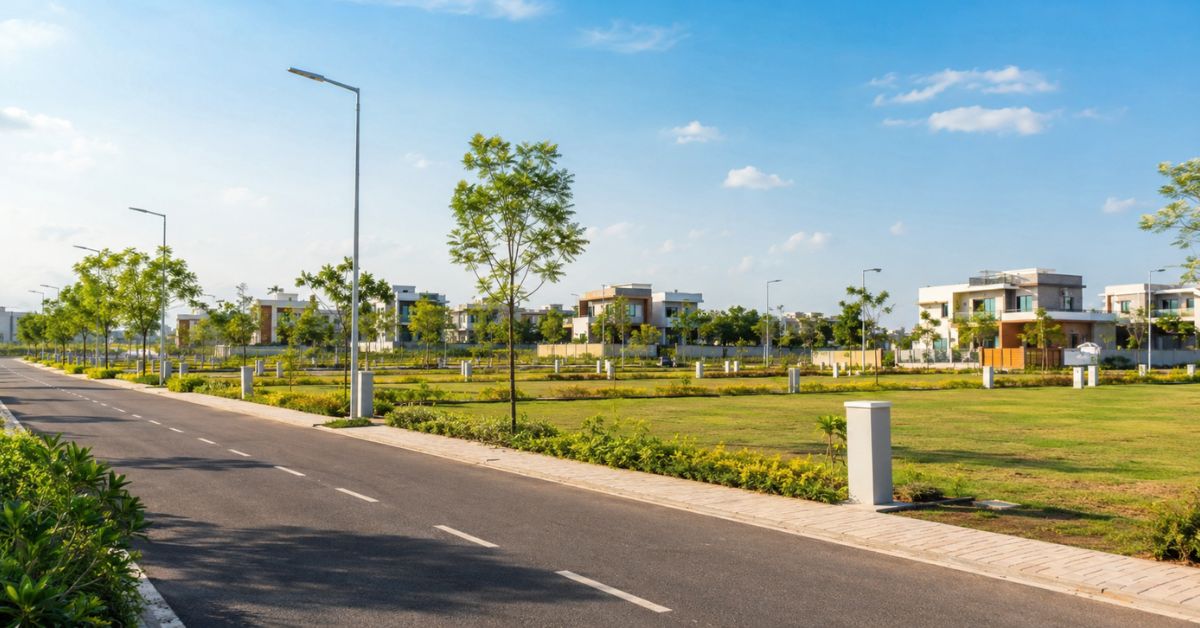
Owning a plot near Delhi NCR feels harder every year. Property prices keep rising fast. The Haryana Government created a solution for this problem. It is called the Deen Dayal Jan Awas Yojana. Most people know it by its short form, DDJAY. This scheme offers planned plots at fair rates. It targets middle income and low income families. This guide covers everything about DDJAY in 2026. You will learn about eligibility, plot sizes, and locations. You will also learn the complete online application process.
What Is Deen Dayal Jan Awas Yojana
Deen Dayal Jan Awas Yojana is Haryana’s flagship plotted housing policy. The state government launched it under the Affordable Plotted Housing Policy 2016. Prime Minister Narendra Modi introduced this scheme on 1st November. The launch happened on Haryana’s Golden Jubilee Day. The scheme allows private developers to build plotted colonies. Developers need land parcels above five acres for this. The government offers major incentives to these builders. These incentives include waived or reduced conversion charges. Infrastructure development charges also get reduced under this policy. License fees drop too, which lowers the final plot price. This is why DDJAY plots cost less than open market plots.
The scheme falls under Section 9A of a Haryana law. This law is the Development and Regulation of Urban Areas Act, 1975. DDJAY focuses on Low and Medium Potential towns of Haryana. These towns include Sonipat, Bahadurgarh, Jhajjar, and Karnal. Rohtak, Panipat, Farukhnagar, and Sohna also fall in this list. The policy encourages high density plotted colonies in these towns. Small plots become available through this liberal policy framework.
Why DDJAY Matters in 2026
Delhi NCR property prices have risen at a steady pace over recent years. Many families cannot afford apartments in Gurgaon or Delhi. DDJAY solves this problem through planned, affordable plotted development. Buyers get freehold plots instead of builder floors or flats. This ownership model appeals to long term investors. It also suits families wanting to build a custom home. As of early 2026, the government has refined this policy further. The goal was to speed up project delivery and increase density. This move benefits both developers and end buyers directly.
One important update affects buyers in core Gurugram areas. The government has discontinued new DDJAY licenses in high-potential zones. This includes the Gurugram Manesar Urban Complex and Faridabad. Only projects licensed before this cutoff continue moving forward. Buyers should now focus on low and medium potential zones instead. These zones include Sohna, Farukhnagar, Kharkhoda, and Bahadurgarh. Dharuhera and Jhajjar also remain active and promising options.
Key Features of Deen Dayal Jan Awas Yojna
DDJAY offers several structural benefits that make it attractive. Understanding these features helps buyers make informed decisions.
- Stilt plus four floors construction: Buyers can construct a stilt parking level. Up to four floors can rise above this stilt level. Each floor allows separate ownership and separate registration. This means one plot can house four different families. It also allows owners to rent or sell individual floors.
- Floor Area Ratio benefits: The standard Floor Area Ratio under DDJAY stands at 2.0. Buyers can purchase additional Purchasable FAR if needed. This purchase can raise the ratio up to 2.68. Higher FAR means more constructed area on the same plot.
- Planned infrastructure standards: Developers must provide nine-metre-wide internal roads. They must also allocate green and open space properly. This green space must cover at least 7.5 percent of the project. This ensures colonies do not feel congested or poorly planned.
- Limited commercial development: Up to four percent of the licensed area allows commercial use. This includes small shops and convenience stores within the colony. Residents get daily essentials without travelling far from home.
- No GST on plots. Deen Dayal Jan Awas Yojna plots do not attract GST charges. This keeps the overall cost lower than many private developments.
- Bank financing support. Several banks offer plot loans for Deen Dayal Jan Awas Yojna properties. Buyers can typically secure loans covering up to seventy percent. State Bank of India and HDFC run specialised DDJAY loan desks. This financing option makes the scheme accessible to salaried buyers.
- Government-backed security. Deen Dayal Jan Awas Yojna projects require valid HRERA registration. The Town and Country Planning Department also issues formal licenses. Buyers can verify these details before making any payment.
DDJAY Eligibility Criteria
DDJAY keeps its eligibility criteria simple and inclusive. Understanding these rules helps buyers apply with confidence.
Any Indian citizen above 18 years can apply for DDJAY plots. There is no strict income criteria for most private Deen Dayal Jan Awas Yojna projects. This differs from government subsidy schemes like PMAY. Applicants must have standard identity documents and address proof documents. A valid PAN card and Aadhaar card are essential. Address proof can be an Aadhaar, passport, or utility bill. Corporate buyers and NRI applicants may need extra documentation. This depends on the specific project and its verification rules.
Some projects offer special quota benefits to certain applicant groups. Women applicants often receive a price discount per square yard. Government employees may also qualify for similar discounted rates. Buyers should check the specific project brochure for quota details.
Deen Dayal Jan Awas Yojana Gurgaon
Deen Dayal Jan Awas Yojana Gurgaon covers the wider Gurugram district. This includes belt areas rather than the core city zones. Farukhnagar and Sohna remain the primary active locations here. The Gurugram Manesar Urban Complex itself has stopped new licenses. Buyers interested in Gurgaon should target these outer belt projects instead.
Sohna offers strong connectivity through the Sohna Elevated Corridor. It also connects well to the Dwarka Expressway network. Farukhnagar benefits from proximity to NH-48 and Manesar industrial zones. Projects like Lykehomes Avenue operate in the Farukhnagar sector. These projects offer plots ranging between 90 and 180 square yards. Buyers get gated community security along with basic amenities. Schools, parks, and commercial spaces sit within walking distance.
Pataudi has also emerged within the Gurgaon Deen Dayal Jan Awas Yojna belt recently. It connects well to New Gurgaon and Manesar industrial hubs. The Dwarka Expressway further boosts its long term appeal. Buyers here get freehold plots through a transparent lottery draw.
Investors view Deen Dayal Jan Awas Yojana Gurgaon projects favourably. Gurgaon’s growth story continues to push demand in outer belts. Rising commercial activity in Manesar supports steady price appreciation. Families working in Gurgaon also prefer these affordable residential options.
Deen Dayal Jan Awas Yojana Bahadurgarh
Bahadurgarh has become one of the most active Deen Dayal Jan Awas Yojna hubs. Its closeness to Delhi makes it highly attractive to buyers. The Delhi Metro Green Line already connects till Bahadurgarh. This metro link significantly boosts daily commuter convenience.
Sector 36, Sector 41, and Sector 50 host several DDJAY projects. Vasa Avenue operates in Sector 50 of Bahadurgarh. Ruhil Smart City runs its project in Sector 41. Plot sizes here generally range from 100 to 200 square yards. Prices remain considerably lower than similar plots inside Delhi.
Connectivity strengthens the case for Bahadurgarh investment further. The Delhi Rohtak Bypass sits close to most project locations. The KMP Expressway and UER-II also connect nearby. NH-9 links Bahadurgarh directly to Rohtak and Jhajjar. IMT Kharkhoda, a growing industrial hub, sits within short driving distance. This industrial growth supports steady demand for nearby housing.
Deen Dayal Jan Awas Yojana Bahadurgarh projects suit two buyer types. First are end users who commute daily to Delhi. Second are investors seeking rental income from constructed floors. Since the policy allows separate floor registration, rental income becomes simple. An owner can rent out each floor to a different tenant.
Deen Dayal Jan Awas Yojana Dharuhera
Dharuhera sits in the Sohna and Rewari growth corridor. This location has gained attention due to industrial expansion nearby. Several automobile and manufacturing companies operate around this belt. This industrial presence creates strong housing demand from workers and staff.
Projects like Shyam Villas have operated under DDJAY in Dharuhera. These projects offer completed plots ready for possession. Buyers benefit from established infrastructure in such ready projects. Registration amounts for Dharuhera projects typically stay affordable. Most projects require a nominal booking amount around thirty thousand rupees.
Dharuhera connects well to NH-48, linking it to Gurgaon and Jaipur. This highway access makes daily commuting practical for working families. The location also benefits from proximity to Manesar’s industrial zone. Buyers considering Deen Dayal Jan Awas Yojana Dharuhera should verify HRERA numbers first. Always check the project completion status before finalising payment.
Other Active Deen Dayal Jan Awas Yojna Locations in 2026
Beyond Gurgaon, Bahadurgarh, and Dharuhera, several other towns host DDJAY projects.
- Sonipat and Kharkhoda have become strong investment hotspots recently. Their connectivity to Delhi, Kundli, and the KMP Expressway drives demand. Projects like Majestic Greens and Aaranya Greens operate in this belt.
- Rohtak continues attracting buyers through projects like NV City. Its location along NH-9 connects it well to Delhi and Gurgaon. Educational institutions like MDU and NIT also add to its appeal.
- Jhajjar has gained traction due to Reliance MET City nearby. This upcoming industrial township is expected to create major employment. DDJAY plots here start from around sixty two lakh rupees.
- Panipat and Karnal round out the list of active DDJAY zones. These towns benefit from NH-44 connectivity to Delhi and Chandigarh.
Read More: Haryana Land Records
How to Apply for DDJAY Online
The Deen Dayal Jan Awas Yojana online application process stays fully digital. Buyers do not need to visit any government office physically. Follow these steps to complete your application successfully.
- Step 1: Visit the official project website. Each DDJAY project runs its own registration portal. Search for the specific project name you want to book.
- Step 2: Click on the Apply Online option. This button usually appears on the homepage itself.
- Step 3: Enter your basic details. Provide your name, mobile number, and preferred plot size. Click submit once you complete this section.
- Step 4: Verify your mobile number or email. You will get an OTP on your number for verification. Enter this OTP and click continue to proceed further.
- Step 5: Fill the complete application form. This form asks for personal and identification details. Fill every field carefully before submitting the form.
- Step 6: Complete the payment process. You will get redirected to a secure payment page. Select your preferred payment method for the registration amount. Verify the transaction using another OTP sent to you.
- Step 7: Receive your application confirmation. Your application number arrives through email after submission. Keep this number safe for future reference.
- Step 8: Check the lottery draw result. Most DDJAY projects allot plots through a transparent lottery. Your application number will appear in the result list. This happens if you get selected during the draw.
Documents Required for DDJAY Application
Keep these documents ready before starting your application process.
Identity proof requires a copy of your PAN card. Your Aadhaar card also serves as valid identity proof. Address proof can include Aadhaar, passport, or a utility bill. Passport size photographs are needed for most application forms. Bank account details help process refunds for unsuccessful applicants. Income proof may be required for certain quota based applications. Corporate applicants need company registration documents additionally. NRI applicants need passport copies and valid visa details.
Registration Amount and Refund Policy
DDJAY projects charge a nominal registration amount at booking. This amount typically ranges between twenty one thousand rupees. It can go up to forty nine thousand rupees for larger plots. This amount depends on the specific project and plot size chosen.
The refund policy protects unsuccessful applicants fairly. Registration amounts get fully refunded if you do not win the lottery. Most projects process this refund within fourteen to fifteen working days. The refund goes directly to your original payment source. This transparent system builds trust among first time applicants.
Payment Structure After Allotment
Successful applicants follow a phased payment structure after allotment. The initial registration amount counts toward the total plot cost. Buyers then pay instalments based on construction milestones. Developers share a detailed payment schedule in the project brochure. Most projects also support pre-approved home loans through partner banks. Buyers should compare interest rates before choosing a loan provider.
Things to Verify Before Booking a DDJAY Plot
Buyers must verify several details before finalising any Deen Dayal Jan Awas Yojna purchase.
- Check the HRERA registration number for the specific project. This number confirms the project follows real estate regulations properly.
- Cross-verify the license number on the TCP Haryana portal. This step confirms the government has approved the project legally.
- For older projects, check if the completion certificate exists. This certificate confirms that fifty percent of the saleable area has been freed.
- Visit the project site personally if possible before booking. This helps you assess actual construction progress and location quality.
- Read the project brochure carefully for hidden charges. These may include PLC charges, connection charges, and applicable taxes.
- Confirm the exact plot size in both square yards and square metres.
- Understand the total license validity period for the project. Most DDJAY licenses run for seven years from the grant date. This includes five years of initial development period. Two additional years serve as an extension window.
Benefits of Investing in DDJAY Plots
DDJAY plots offer multiple advantages for both end users and investors.
- Government backing reduces investment risk considerably for buyers. Developers receive incentives that help keep final prices affordable.
- Well-planned infrastructure includes roads, parks, and green spaces. Schools, hospitals, and markets typically develop near these colonies over time.
- The floor-wise registration facility allows flexible income generation. Owners can rent out or sell individual floors separately.
- Rising urbanisation across Haryana supports long-term price appreciation. Growing industrial activity in nearby zones increases housing demand steadily.
- Freehold ownership gives buyers complete control over their property. This differs from leasehold arrangements common in some other schemes.
Risks and Precautions for Buyers
Every real estate investment carries certain risks buyers should understand.
- Construction delays remain possible in any large-scale development. Buyers should check the developer’s track record before committing funds. Not every project completes exactly on the promised timeline.
- Location quality varies significantly between different DDJAY projects. Some plots sit closer to established infrastructure than others. Buyers should personally visit sites rather than relying only on brochures.
- Market prices for open plots fluctuate based on demand cycles. Buyers should treat DDJAY plots as medium to long-term investments. Short-term speculation may not always deliver expected returns.
The Road Ahead for DDJAY in 2026
Haryana continues expanding infrastructure across NCR growth corridors. The Gurugram-Pataudi highway upgrade should improve regional connectivity further. Metro extension plans from Gurugram toward Jhajjar remain under discussion. The Dwarka Expressway has already boosted demand in nearby DDJAY zones. Industrial growth around Reliance MET City in Jhajjar continues attracting attention. These developments should support steady appreciation for DDJAY plot owners.
Buyers considering a DDJAY investment should act during active registration windows. Projects announce specific application and allotment dates regularly. Missing a window means waiting for the next available project. Staying updated on official project websites remains the best approach.
The Final Words for Buyers
Deen Dayal Jan Awas Yojana remains one of Haryana’s strongest affordable housing options. It combines government backing with private sector efficiency effectively. Buyers across Gurgaon, Bahadurgarh, Dharuhera, and other belts benefit from this policy. The scheme offers freehold plots, flexible construction, and transparent allotment. Anyone planning to buy a plot near Delhi NCR should consider DDJAY seriously. Verify project documents, compare locations, and apply through official channels only. This approach ensures a safe and rewarding real estate investment.
Ready to explore verified DDJAY plots across Haryana. Contact us now and get an expert who will help you through this.
Frequently Asked Questions
1. What is Deen Dayal Jan Awas Yojana?
Deen Dayal Jan Awas Yojana is Haryana’s affordable plotted housing policy. It allows private developers to build low-rise plotted colonies. Buyers get freehold residential plots at government-regulated prices.
2. Who can apply for a DDJAY plot?
Any Indian citizen above 18 years can apply for DDJAY plots. Most private DDJAY projects do not enforce strict income limits. Buyers need standard identity and address proof documents to apply.
3. How do I complete the Deen Dayal Jan Awas Yojana online application?
Visit the specific project’s official website to begin. Click Apply Online, fill in your details, and verify through OTP. Complete the registration payment and await the lottery draw result.
4. Is the registration amount refundable if I am not selected?
Yes, the registration amount is fully refundable for unsuccessful applicants. Most projects process this refund within fourteen to fifteen working days. The amount returns directly to your original payment source.
