
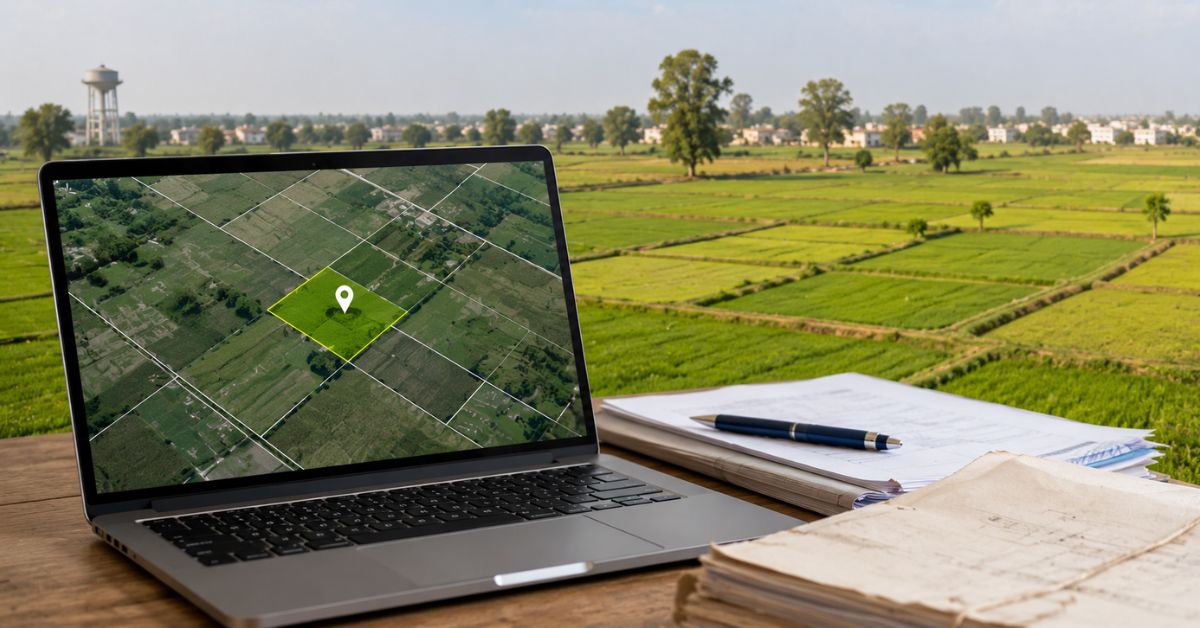
Haryana land records form the backbone of property ownership verification in the state. Every buyer, seller, and lender depends on these records. The state government has digitized this entire system. You can now check haryana land records from your home. This guide explains every part of the process in detail.
What Are Haryana Land Records
Haryana land records track ownership, cultivation, and revenue details of land parcels. The Revenue Department of Haryana maintains these records officially. The official system covers property registration, mutation, and Jamabandi records. These records prove who owns a piece of land legally.
Jamabandi is the most important haryana land record document. It lists the owner name, land area, and cultivation type. The Haryana Jamabandi Nakal works as the official Record of Rights, showing land ownership, usage, and linked rights. Banks, courts, and government offices rely on this document daily.
Why Digital Land Record Haryana Matters
The digital land record haryana system removes old paperwork barriers. You no longer need to stand in long queues at tehsil offices. Citizens can verify land details within minutes now. This saves time and reduces fraud risks significantly.
The digital system managing Haryana land records is called HALRIS, the Haryana Land Record Information System. This platform connects every district and tehsil digitally. HALRIS implementation has resulted in greater transparency and easier service delivery. Revenue collection has also improved through this digital push.
The haryana digital land record system covers both rural and urban areas. It covers rural and urban properties across all districts of the state. Farmers, homeowners, and investors all benefit from this single platform.
The Official Portal for Haryana Land Records Online
The Jamabandi.nic.in website serves as the single-window interface for Haryana land revenue services. This portal handles every land-related query you may have. You can search using owner name, Khewat number, or Khasra number.
Citizens can view sanctioned mutations and Jamabandi details through these three search methods. The portal works smoothly on mobile phones as well. The design remains responsive, allowing checks on the go.
Security remains a priority on this government platform. CAPTCHA verification and secure links help prevent fraud attempts. Most services on the portal stay completely free for users.
Step by Step Process to Check Haryana Land Records Online
Checking haryana land records online follows a simple process. Anyone can complete this task without technical knowledge.
- Visit the official Jamabandi portal through your browser.
- Select your district from the dropdown menu first.
- Choose the relevant tehsil and village next.
- Pick the most recent Jamabandi year available.
- Enter the owner name, Khewat number, or Khasra number.
- Solve the CAPTCHA code shown on screen.
- Click search to view the complete record.
Always select the most recent Jamabandi year during your search. An older year may show outdated ownership data that does not reflect the current legal owner. This step prevents confusion during property transactions.
The result page displays the owner name clearly. It also shows Khewat number, Khasra number, and total land area. Land area typically appears in kanals, the standard unit used in Haryana.
Understanding Khasra, Khewat, and Khatauni Numbers
These three terms appear repeatedly across haryana land records. Understanding them helps you read documents correctly.
- Khasra number identifies a specific plot of land. Every individual field carries its own unique Khasra number. This number helps locate land precisely within a village.
- Khewat number represents ownership records for a group of plots. Multiple owners may share one Khewat number jointly. This number links directly to the revenue records.
- Khatauni number combines cultivation and ownership details together. It shows who cultivates the land and under what arrangement. This document type forms part of the broader Bhulekh record system in Haryana.
Sometimes a Khasra number splits during property transfers. When a Khasra number divides during mutation, it gains new numbers with a denominator. For example, Khasra number 100 may become 100/1 and 100/2 after mutation. This split happens whenever land gets sold or gifted partially.
How to Apply for Mutation Online
Mutation updates ownership records after a sale or inheritance. Mutation applications in Haryana are now accepted fully online through the portal. This process used to require multiple office visits earlier.
Follow these steps to apply for mutation today.
- Log into jamabandi.nic.in using your mobile number and OTP.
- Navigate to the Mutation section on the homepage.
- Select Apply for Mutation from the available options.
- Upload proof of ownership and identity documents.
- Attach your current Jamabandi copy as well.
- Submit the application and save your reference number.
Required documents typically include proof of ownership, identity proof of parties, and the current Jamabandi copy. Keep these documents ready before starting the application. This preparation speeds up the entire submission process.
After submission, you can track your mutation status easily. The Check Mutation Status feature shows results like Pending, Approved, or Rejected. Haryana is also expanding real time Intkal tracking for faster mutation updates.
Recent enhancements allow SMS alerts for status changes by registering your mobile number during filing. This feature keeps applicants informed without repeated portal visits. You receive instant updates on your registered phone directly.
If errors appear in your mutation, you can raise objections. Use the objection form to submit grievances online if incorrect entries occur. The portal now integrates with the Integrated Grievance Redressal System for faster resolution of complaints.
Bhunaksha Maps and Cadastral Details
Bhunaksha Haryana is a digital map portal providing cadastral land maps for every village. This tool links directly with the Jamabandi portal for ownership data. It shows boundaries, dimensions, and the layout of any plot on the map.
Buyers use Bhunaksha maps before finalizing any land purchase. The map confirms physical boundaries match the official records. This step prevents boundary disputes after the transaction completes.
Urban property searches now integrate GIS maps for boundary visualization, rolled out in mid 2026. This upgrade helps urban property buyers verify exact dimensions. You can now compare municipal records against actual ground positions.
Recent Updates to Haryana Land Records Online System in 2026
The haryana land records online system keeps evolving every few months. Several upgrades have rolled out through 2026 already.
The portal integrated with the Integrated Grievance Redressal System as of May 2026. This integration reduces mutation processing time from weeks to just days. Citizens now experience faster resolution of pending land issues.
The state is also rolling out an NRI subscription service for landowners abroad. This service sends alerts whenever records linked to a specific plot get accessed or modified. NRI property owners gain extra protection against fraudulent record changes.
Several future improvements are planned for the coming months. These include Aadhaar based landowner authentication for verified record access. Real time SMS and email alerts for mutation or encumbrance updates are also planned. AI based anomaly detection will flag suspicious mutation patterns automatically.
RERA integration will enable seamless property transaction verification across systems. A dedicated mobile app is also under development. This app will support Jamabandi search, mutation tracking, and revenue payment on mobile devices.
Why You Should Always Check Updated Jamabandi Records
Jamabandi contains the names of current and previous owners, land size, and associated rights. This makes it the most trusted reference for property verification. Skipping this check can lead to costly legal problems.
Many legal disputes arise because buyers rely solely on sale documents without reviewing current revenue records. Always cross check the seller claims against official Jamabandi data. This single step protects you from potential fraud.
Consider checking land classification before any purchase decision. Land may still be classified as agricultural, requiring CLU status verification before construction. This detail matters significantly for residential project buyers in Haryana.
Using Haryana Land Records for Loans and Legal Matters
Banks check land ownership details before approving any loan application. The Jamabandi document works as solid ownership proof during loan processing. Lenders verify the absence of existing mortgages through this record.
Jamabandi Nakal also serves as evidence in property related court cases. Courts treat this government document as primary proof of ownership. This makes accurate record maintenance extremely important for landowners.
A clear land record also makes property transfer or mortgaging much easier. Lenders and buyers both prefer documented and dispute free property history. Keeping your records updated avoids unnecessary transaction delays later.
Getting a Physical Nakal Copy
Sometimes you need a physical copy of your land record. You must submit an application at the HALRIS centre in your Tehsil office. The process involves a few simple steps at the local office.
The computer operator prepares the Record of Rights for your requested Khewat number. The Patwari then checks, signs, and records this Nakal in the official register. A nominal fee of thirty rupees applies, with a receipt provided immediately.
This physical copy holds the same legal value as digital records. Many official processes still require this stamped paper version. Keep this copy safe alongside your other property documents.
Tips for Verifying Land Before Purchase
Property buyers should follow a careful verification routine always. These checks prevent common fraud patterns seen in land deals.
- Check the latest Jamabandi year for accurate ownership data.
- Verify the Khasra number matches the physical plot location.
- Review mutation history for any pending transfer requests.
- Confirm land classification matches your intended use case.
- Cross check the Bhunaksha map against actual boundaries.
- Look for any pending court cases on the property.
Advocates, banks, and property consultants often recommend verifying both Jamabandi records and Bhunaksha maps together. This combined check gives complete confidence before any purchase. Skipping either step increases your transaction risk considerably.
Benefits of Haryana Digital Land Record System
The shift toward digital records has brought multiple advantages. These benefits touch every stakeholder in the property ecosystem.
- Instant access removes dependency on physical document visits.
- Most portal services remain available completely free of charge.
- Mobile friendly design allows checks from anywhere instantly.
- Real time updates reflect changes without delay.
- Transparent records help reduce property related disputes significantly.
- Faster mutation processing saves weeks of waiting time.
Bhulekh Haryana represents a transformative step toward digital governance and citizen empowerment. The system has simplified property management for millions across the state. This transformation continues expanding through new features regularly.
Common Challenges and How to Resolve Them
Despite improvements, some users face occasional difficulties online. Knowing the solutions helps you resolve issues quickly.
Incorrect mutation entries sometimes appear in records. Use the objection form available on the portal to flag such errors. The grievance system now processes these complaints much faster.
Login issues can also occur occasionally. Click Forgot Password and reset it using your registered mobile number or email. Always keep your login credentials secure and private.
Outdated records create confusion during property checks. Always confirm you have selected the latest available year. This single habit prevents most record related misunderstandings.
Conclusion
Haryana land records have transformed property verification across the state. The haryana digital land record system saves time and builds trust. From Jamabandi checks to mutation tracking, everything happens online now.
Buyers, sellers, and lenders all benefit from this transparent system. Regular updates keep adding new features and security layers. Checking haryana land records online has never been this convenient before.
Whether you plan to buy, sell, or verify property, start with the official portal. Accurate records protect your investment and prevent future disputes. Make this verification step a permanent part of your property journey.
Frequently Asked Questions
1. What is Jamabandi in Haryana land records?
Jamabandi is the official Record of Rights document in Haryana. It shows land ownership, cultivation details, and area information. This document gets used for loans, sales, and legal matters.
2. How often does Haryana update Jamabandi records?
Haryana updates Jamabandi records as part of a periodic revenue settlement cycle. Individual mutations get recorded separately between these major updates. Always check the most recent year available online.
3. Is checking Haryana land records online free?
Yes, most search services on the Jamabandi portal remain free. You only pay a small fee for physical Nakal copies. Online searches require no payment for basic record viewing.
4. What documents do I need for mutation in Haryana?
You need proof of ownership and identity documents for parties involved. The current Jamabandi copy must also get uploaded. These documents help verify and process your mutation request smoothly.
