
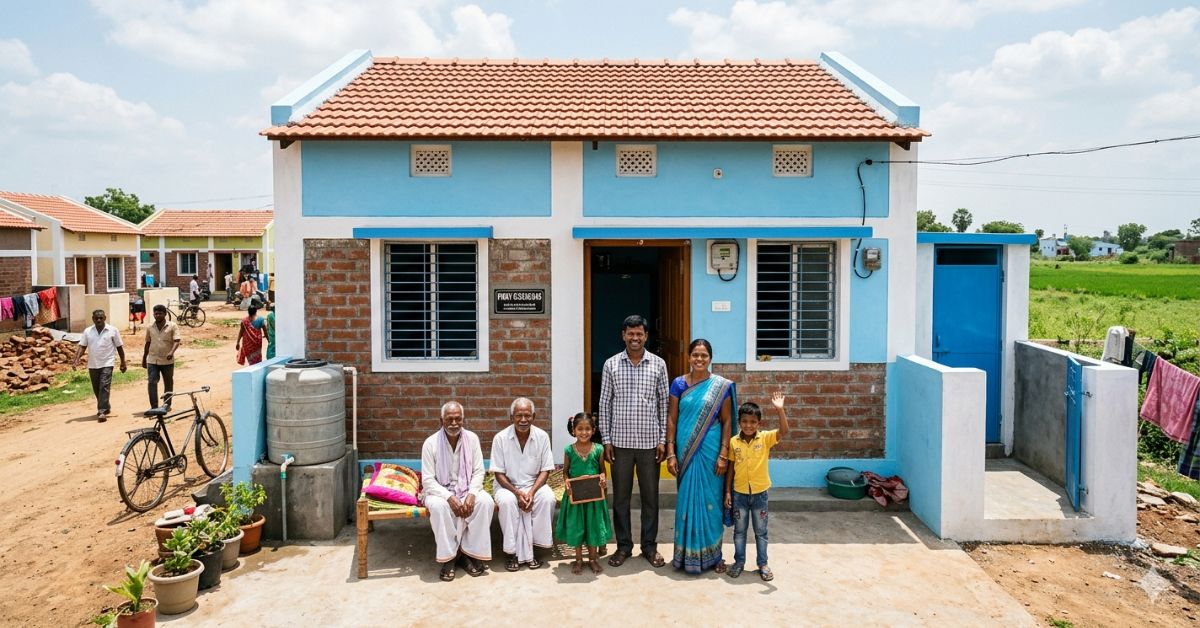
Millions of rural families across India dream of owning a pucca house. The Pradhan Mantri Gramin Awas Yojana 2026 list brings that dream closer. This scheme, commonly known as PMAY Gramin, helps rural households build safe and permanent homes. If you have applied under this scheme, checking your name in the beneficiary list matters a lot. This guide explains everything about the Pradhan Mantri Gramin Awas Yojana 2026 list. It covers eligibility, application status, financial assistance, and step by step verification methods. Read on to understand how PMAY Gramin works in 2026.
What Is Pradhan Mantri Gramin Awas Yojana
Pradhan Mantri Gramin Awas Yojana is the rural housing arm of PMAY. The Government of India launched this scheme in April 2016. The core objective remains simple. Every rural family deserves a pucca house with basic amenities. PMAY-G restructured the former Indira Awaas Yojana to advance the Housing for All objective in rural India. It operates under the Ministry of Rural Development. The scheme targets families living in kutcha or dilapidated homes. It also covers completely homeless rural households.
PMAY Gramin does not work alone. It converges with other welfare schemes. This gives beneficiaries more than just a house. They also get toilets, electricity, and clean water access. It has become one of India’s largest rural welfare initiatives.
PMAY Gramin 2026 Updates You Should Know
The scheme has changed significantly over the past two years. Understanding these updates helps you interpret the current list correctly.
Extension Till 2028-29
The government extended PMAY Gramin beyond its original deadline. The Union Cabinet approved implementation of PMAY-G during FY 2024-25 to 2028-29, providing financial assistance for two crore more houses. This extension addresses housing needs that arose after the initial target. Construction of houses for two crore more households is expected to benefit nearly ten crore individuals.
The original scheme aimed to build 2.95 crore houses by 2024. The government launched PMAY-G in April 2016 with a target of constructing 2.95 crore houses with basic amenities by March 2024. With the extension, the total target rose sharply. The initial target of 2.95 crore houses by 2024 now extends to FY 2028-29 with an increased total target of 4.95 crore.
Current Progress As Of 2026
Progress under this expanded phase has been steady. As of March 2026, cumulative completions stand at 2.99 crore houses against a revised total target of 4.95 crore by 2029. This means the scheme has crossed the earlier target and moved into the new phase. New beneficiaries continue getting added to the list every month.
Awaas Plus 2024 Survey
Many eligible families missed the original survey. The government created a solution for this gap. The Awaas Plus 2024 survey launched on 15 January 2025 to enrol left-out families into PMAY-G 2.0. This survey works alongside the older SECC 2011 data. The Awaas Plus 2024 mobile application allows households missed in original SECC based surveys to register for updated beneficiary lists.
Families who feel they were unfairly excluded can use this route. They register through the Awaas Plus app. Their details then get verified at the Gram Panchayat level. This process directly affects who appears in the Pradhan Mantri Gramin Awas Yojana 2026 list.
Financial Assistance Under PMAY Gramin
Understanding the assistance amount helps beneficiaries plan their construction. The scheme provides different amounts based on geography.
Plain areas receive one amount. Hilly and difficult areas receive a higher amount. The assistance amount is Rs 1,20,000 for plain areas and Rs 1,30,000 for hilly and difficult areas, including IAP districts. These rates have remained unchanged despite the scheme extension. Financial assistance remains at Rs 1.20 lakh per unit in plain areas and Rs 1.30 lakh in North Eastern Region states, hill states, and union territories like Jammu and Kashmir and Ladakh.
Cost Sharing Between Centre And State
The funding does not come entirely from the central government. States also contribute their share. The unit assistance cost is shared between Central and State Governments in the ratio 60:40 in plain areas and 90:10 for North Eastern and hilly states. Union territories without their own legislature receive full central funding.
House Size Requirements
The minimum house size has also increased under the new phase. The housing unit must have a minimum size of 25 square metres, with an associated hygienic cooking area. The minimum house size has expanded from 20 square metres to 25 square metres, including a hygienic cooking space.
Additional Support Beyond The Housing Grant
PMAY Gramin beneficiaries receive more than direct housing money. The scheme links to other welfare programs for extra benefits.
Toilet construction support comes through a separate scheme. Every PMAY-G beneficiary is entitled to Rs 12,000 for toilet construction under the Swachh Bharat Mission Gramin, processed as a separate transfer. This amount does not reduce your main housing grant.
Labour wages form another important benefit. A PMAY-G beneficiary can claim 90 days of unskilled labour wages under MGNREGS for house construction, or 95 days in hilly and IAP areas. However, this benefit does not happen automatically. You need to ask for it directly at the Gram Panchayat.
Who Is Eligible For PMAY Gramin
Eligibility depends on specific deprivation criteria rather than simple income levels. The government moved away from older BPL classification methods.
Primary Eligibility Criteria
Rural households without a pucca house qualify first. Families living in zero, one, or two room kutcha houses also qualify. Beneficiaries are primarily identified through SECC data, with priority given to households living in zero, one, or two room kutcha houses.
Selection does not happen randomly. It follows a structured verification process. Eligible beneficiaries are determined based on both SECC 2011 data and Awaas Plus survey return data, rather than just BPL status.
Priority Groups Within The Scheme
Certain communities receive priority within the overall target. The scheme prioritises landless households, with at least 60 percent of targets allocated to Scheduled Caste or Scheduled Tribe households. This ensures the most vulnerable rural families benefit first.
Community Verification Process
Selection involves local oversight, not just government databases. Final selection gets verified and approved by the Gram Sabha, ensuring community level oversight of the selection process. This step reduces errors and prevents ineligible entries.
Once approved, families move through defined stages. Beneficiaries transition from the Permanent Waiting List to sanctioned status once approvals are issued. This is why some names appear on a waiting list before final sanction.
How To Check The PMAY Gramin 2026 List Online
Checking your name in the list requires a few simple steps. You do not need to visit government offices physically for this.
Method One: Using Registration Number
This method works fastest if you already have your registration details.
Visit the official PMAY-G portal first. Look for the Stakeholders section on the main menu. Visit the official website, go to Stakeholders, then IAY/PMAYG Beneficiary, and search using your registration number or details.
Enter your registration number in the search box. Click submit to view your complete record. Your record shows sanction status, installment details, and construction progress.
Method Two: Advanced Search Without Registration Number
Many applicants do not remember their registration number. A second method exists for this situation.
Open the official PMAY-G Reports section on your browser. Select your State, District, Block, Gram Panchayat, Village, and Financial Year to generate the beneficiary report. Click the generate report button after selecting all filters.
The system then displays your local beneficiary list. The report displays beneficiary names, house sanction status, installment releases, construction progress, and completion details. You can also save this report as a PDF for future reference.
Method Three: Social Audit Reports Section
This alternative route works well for many rural applicants. It uses a different portal pathway.
Click on the AwaasApp tab from the top menu. Select Reports from the dropdown that appears. Under Social Audit Reports, click Beneficiary Details for Verification, then filter by State, District, Block, and Gram Panchayat.
This method suits applicants who prefer browsing by location rather than entering numbers.
Method Four: Using The UMANG App
Mobile users can check their status through a government app as well. Applicants can also check status using their registration number under Stakeholders, IAY/PMAYG Beneficiary, or through the UMANG app. This method suits people who prefer mobile access over desktop browsing.
Understanding Your Beneficiary Record
Once your name appears, the record shows detailed information. Understanding each field helps you track your application properly.
Your record typically includes several key details. The record usually contains the beneficiary name, registration number, sanction status, installment information, and construction stage. Reviewing each field carefully helps you understand where your application stands.
What Sanction Status Means
Sanction confirms your approval under the scheme. It does not mean instant fund transfer. Being included in the list confirms sanction approval, and fund disbursement happens in stages based on construction progress.
This staged release protects the scheme from misuse. Funds flow only when actual construction milestones get completed.
Installment Release Pattern
Money does not arrive all at once. It comes in three structured parts. The first installment releases after foundation work, the second after reaching lintel level, and the third after roof completion and occupation.
Each stage requires field verification before release. Each installment requires field verification and gets credited to the beneficiary’s Aadhaar linked bank account through Direct Benefit Transfer. This ensures transparency throughout the construction process.
Why Your Name Might Be Missing
Sometimes applicants search the list and find their name absent. This situation causes worry, but it often has simple explanations.
Temporary Data Issues
Names sometimes disappear during system updates. This is more common than most people realise. Temporary disappearance during data updates or re-verification phases is common and does not necessarily mean removal from the scheme.
If this happens, do not panic immediately. You may check the portal again after several days. If the problem continues, contact your Gram Panchayat office directly.
Documentation Mismatches
Verification errors also cause missing entries sometimes. Names might not appear despite successful registration due to problems with verification and document matching, among other issues.
Correcting these errors usually requires visiting your local Gram Panchayat. Officials there can identify and fix documentation gaps quickly.
Digital Monitoring And Transparency Measures
PMAY Gramin uses modern technology to reduce corruption and delays. This digital backbone strengthens the entire scheme.
The scheme relies on a dedicated software system for tracking. Each construction stage gets tracked with time-stamped, geo tagged photos on AwaasApp, using AI anomaly detection and Aadhaar face authentication.
This technology prevents fraudulent claims. Along with that, through digital monitoring, beneficiaries receive their rightful assistance without delay.
Parliamentary And Community Oversight
Oversight does not stop at technology alone. Human accountability mechanisms also exist. Implementation is monitored by community participation, including Social Audits, and by Members of Parliament through the DISHA Committee.
This dual layer of oversight, digital and human, keeps the scheme accountable at every level.
Financial Outlay And Government Commitment
The scale of investment shows the government’s commitment to rural housing. Understanding these numbers gives context to the scheme’s importance.
The extended phase carries a massive budget allocation. The total outlay for FY 2024-25 to 2028-29 stands at Rs 3,06,137 crore, including a Central Share of Rs 2,05,856 crore. States contribute the remaining amount as a matching share.
This funding directly supports the expanded target. It ensures the additional two crore houses get completed on schedule despite economic pressures.
PMAY Gramin Versus PMAY Urban
Many applicants confuse the rural and urban components of this scheme. Understanding the difference prevents application errors.
These two schemes operate completely separately. PMAY-G is for rural households and provides direct construction assistance, while PMAY-Urban is for city residents and works through an interest subsidy on home loans.
The portals, application processes, and implementing agencies differ entirely between both schemes. Rural applicants should always use the PMAY-G portal, not the urban one.
Documents Required For PMAY Gramin
Applicants should keep certain documents ready before checking status or applying. These documents speed up verification at every stage.
- Your Aadhaar card remains the most essential document.
- Bank account details linked to Aadhaar matter equally.
- Your Job Card number under MGNREGA also helps during verification.
- Keep your Swachh Bharat Mission registration number handy as well.
Having these documents ready prevents delays during installment processing. Local officials often request these details during field verification visits.
Common Challenges Faced By Beneficiaries
Despite digital improvements, some challenges persist across states. Understanding these helps applicants prepare better.
- Fund release delays sometimes happen at the state level. Main challenges include delays in releasing Central and State share from the State Treasury to the State Nodal Account.
- Other issues also affect timely completion. Challenges include unwillingness of some beneficiaries, permanent migration, disputed succession of deceased beneficiaries, and delays in land allotment to landless families.
- Elections and material shortages can also slow construction temporarily. Being aware of these factors helps beneficiaries stay patient during delays.
Tips For Faster Verification And Fund Release
Following certain practices speeds up your experience with the scheme considerably.
Check your beneficiary status regularly rather than waiting for updates. Keep your Aadhaar linked bank account active and error free. Complete construction milestones properly before requesting the next installment. Report any land allotment delays to your Block Development Office quickly. Stay in contact with your Gram Panchayat throughout the construction period.
These simple habits reduce friction and help you receive assistance without unnecessary delays.
The Road Ahead For PMAY Gramin
The scheme continues expanding its reach every year. With the target now set at 4.95 crore houses, millions more families will benefit before 2029. The Awaas Plus 2024 survey continues identifying genuinely eligible families. This correction process makes the Pradhan Mantri Gramin Awas Yojana 2026 list more inclusive than before.
Rural India has seen real transformation through this scheme. Kutcha houses continue getting replaced with safe pucca homes. Basic amenities like toilets, electricity, and clean water now reach more villages. This scheme remains central to India’s rural development story.
Conclusion
The Pradhan Mantri Gramin Awas Yojana 2026 list represents hope for countless rural families. Checking your status regularly ensures you never miss important updates. Understanding eligibility, assistance amounts, and verification methods empowers you as an applicant. PMAY Gramin continues evolving to reach every deserving household. Stay updated through official portals and your local Gram Panchayat for the latest information.
If you are looking for more information related to PMAY G, or want to connect with an expert, we are here to help you. You can contact us and get the best help with this.
Frequently Asked Questions Related to Pradhan Mantri Gramin Awas Yojana 2026 list
1. How can I check my name in the Pradhan Mantri Gramin Awas Yojana 2026 list?
Visit official website: https://pmayg.dord.gov.in/ and use the Stakeholders section. Search using your registration number under IAY/PMAYG Beneficiary. Alternatively, use the Reports section to search by State, District, and village.
2. What is the financial assistance amount under PMAY Gramin?
Beneficiaries in plain areas receive Rs 1.20 lakh. Those in hilly and North Eastern areas receive Rs 1.30 lakh. This amount transfers directly through Aadhaar linked bank accounts.
3. What is the current target under PMAY Gramin?
The scheme now targets 4.95 crore houses by 2029. This includes the original 2.95 crore target plus two crore additional houses approved in 2024.
4. Why is my name missing from the beneficiary list despite applying?
Names sometimes disappear temporarily during data updates or verification. Document mismatches can also cause this issue. Contact your Gram Panchayat office to resolve such discrepancies quickly.
