
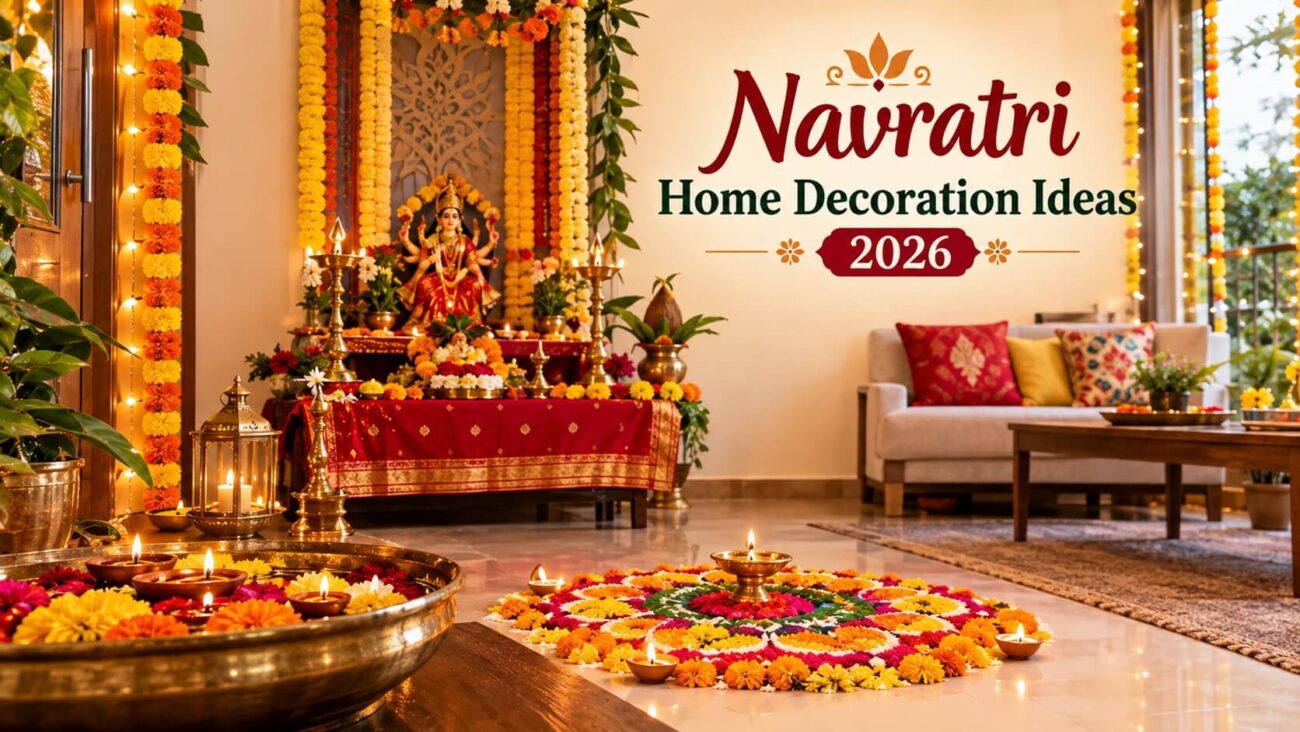
Sharad Navratri 2026 begins on 11 October, according to most panchang calendars. That leaves you about six days. Confirm the exact tithi with your local priest, because timings shift slightly by region.
Many of us remember the week before Navratri at a grandmother’s house. Brass vessels shone on the floor. Marigolds arrived in big baskets. Nobody rushed, yet everything felt ready by sunrise on day one.
You can bring that same calm to your home this week. This guide shares simple Navratri Home Decoration ideas rooted in tradition. Each idea works in a compact flat and in a large house.
You will also find three tables, a countdown plan, and a few tips that most decor articles skip.
What Festive Decor Really Means
Navratri Home Decoration is not about glitter or heavy tinsel. It invites Goddess Durga into a clean, bright and orderly space. Every ritual, from the kalash to the rangoli, serves that single idea.
That belief makes your job easier. You do not need fifty decor items. You need a few meaningful pieces, placed with care.
Think of your home in four zones: the entrance, the puja corner, the living room, and the kitchen. Decorate each zone in layers. Clean first, add structure next, and finish with light and flowers.
Clean First, Decorate Later
Tradition says the Goddess enters a clean home. So start with the broom and the mop, not the shopping bag.
Wash the main door and wipe the threshold. Dust the idols and photo frames. Remove broken items, old newspapers, and anything you no longer use.
Many families sprinkle Gangajal across the rooms after cleaning. It turns a chore into a small ritual. Invite your children to help, because they remember such moments for years.
Try one simple declutter rule in the living room. Remove every object you have not touched in a year. Fewer objects make your festive pieces stand out.
Polish your brass items now. Rub them with a paste of tamarind and salt, then rinse well. They will glow under the diya light later.
Create the Puja Corner With Care
The puja corner is the heart of Navratri Home Decoration. Spend most of your time and budget here.
Vastu experts suggest the north east corner for the altar and kalash. Face east or north while praying. If your home lacks that corner, pick the closest clean and quiet space.
Place a low wooden chowki and cover it with a red or yellow cloth. Raise the idol slightly above the floor. Never place it against a bathroom wall or under a staircase.
Add a brass lamp, a small bell, and a plate for flowers. Leave open space around the idol. Calm spaces feel more devotional than crowded ones.
Read More: North East Facing House Vastu
Backdrop Ideas That Frame the Altar
A good backdrop gives the idol a clear frame. It also hides messy wall corners.
- Use a red or yellow dupatta as a simple drape. Pin it neatly at the back. Add a fresh garland across the top.
- For a traditional look, hang a Madhubani or Pichwai painting behind the altar. Choose a design with lotus or peacock motifs.
- Prefer a modern look? Use a wooden panel with small brass bells. Keep the colours soft and minimal.
- Avoid shiny tinsel behind the idol. It reflects too much light and pulls the eye away from the altar.
Toran and Doorway Decor That Welcomes the Goddess
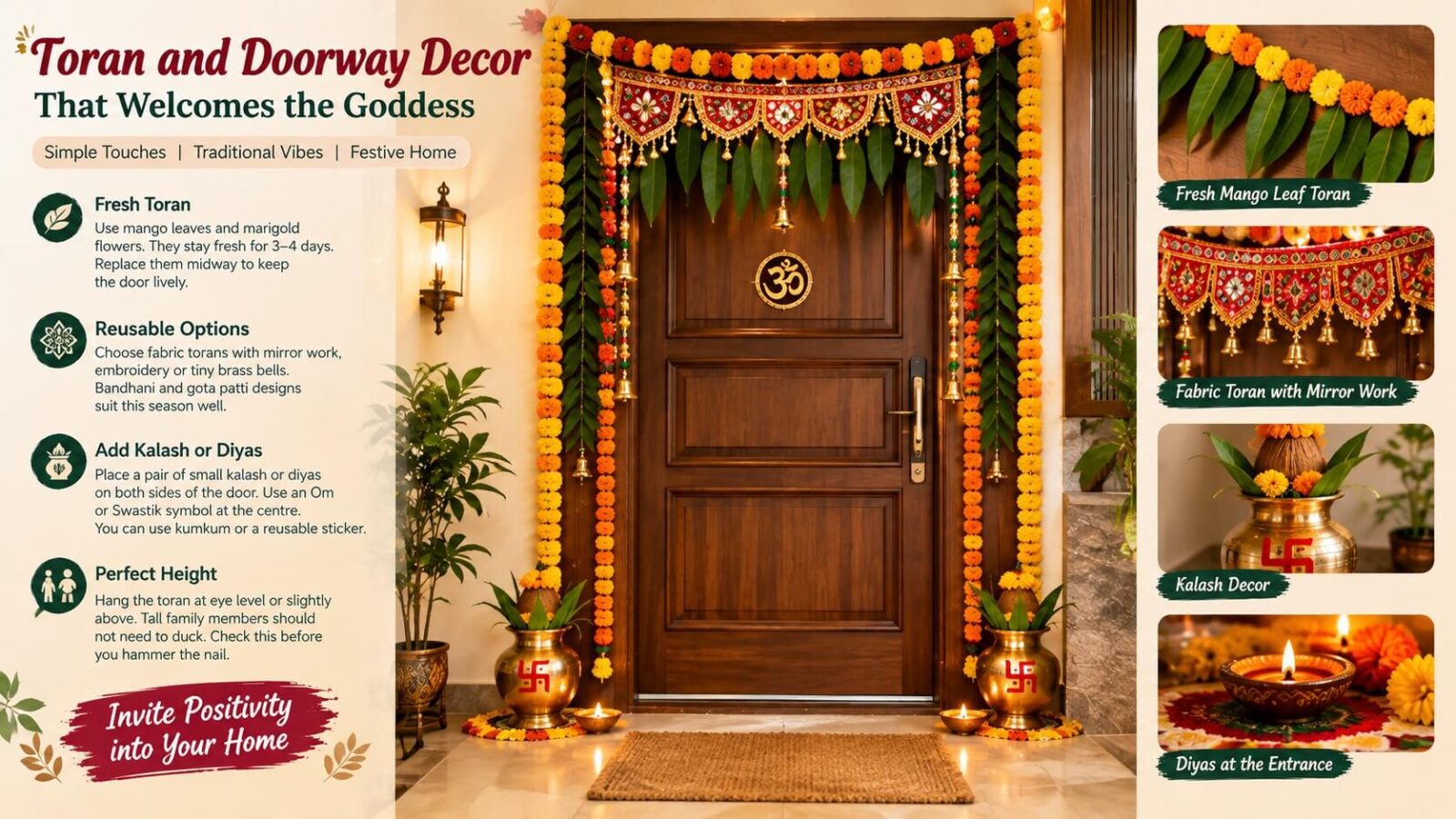
Your main door sets the tone for Navratri Home Decoration. A toran is the quickest upgrade you can make.
Traditional torans use fresh mango leaves and marigold flowers. They stay fresh for three to four days. Replace them midway to keep the door lively.
Want something reusable? Choose a fabric toran with mirror work, embroidery, or tiny brass bells. Bandhani and gota patti designs suit this season well.
Place a pair of small kalash or diyas on both sides of the door. Add an Om or Swastik symbol at the centre. Use kumkum or a reusable sticker.
Hang the toran at eye level or slightly above. Tall family members should not need to duck. Check this before you hammer the nail.
Rangoli Ideas for Nine Days
Rangoli is the signature of Navratri Home Decoration. It also marks a clear and welcoming boundary at your entrance.
Start with a simple design on day one. Use rice flour, flower petals, or coloured sand. Add one new element each day, so the pattern grows with the festival.
Try these easy patterns:
- Lotus petals, the seat of Goddess Lakshmi and Goddess Durga
- Trishul and Om motifs for a strong spiritual look
- Dot and line kolam for flats with limited floor space
- Garba dancer silhouettes for a playful touch
Live in a flat with a shared corridor? Use a stencil on a plywood board or a ready rangoli mat. You can lift it daily and reuse it.
Here is a tip most people miss. Place the rangoli slightly off the main walking path. Family members will not step on it, and the pattern stays intact all day.
Kalash Sthapana and Ghatasthapana Setup
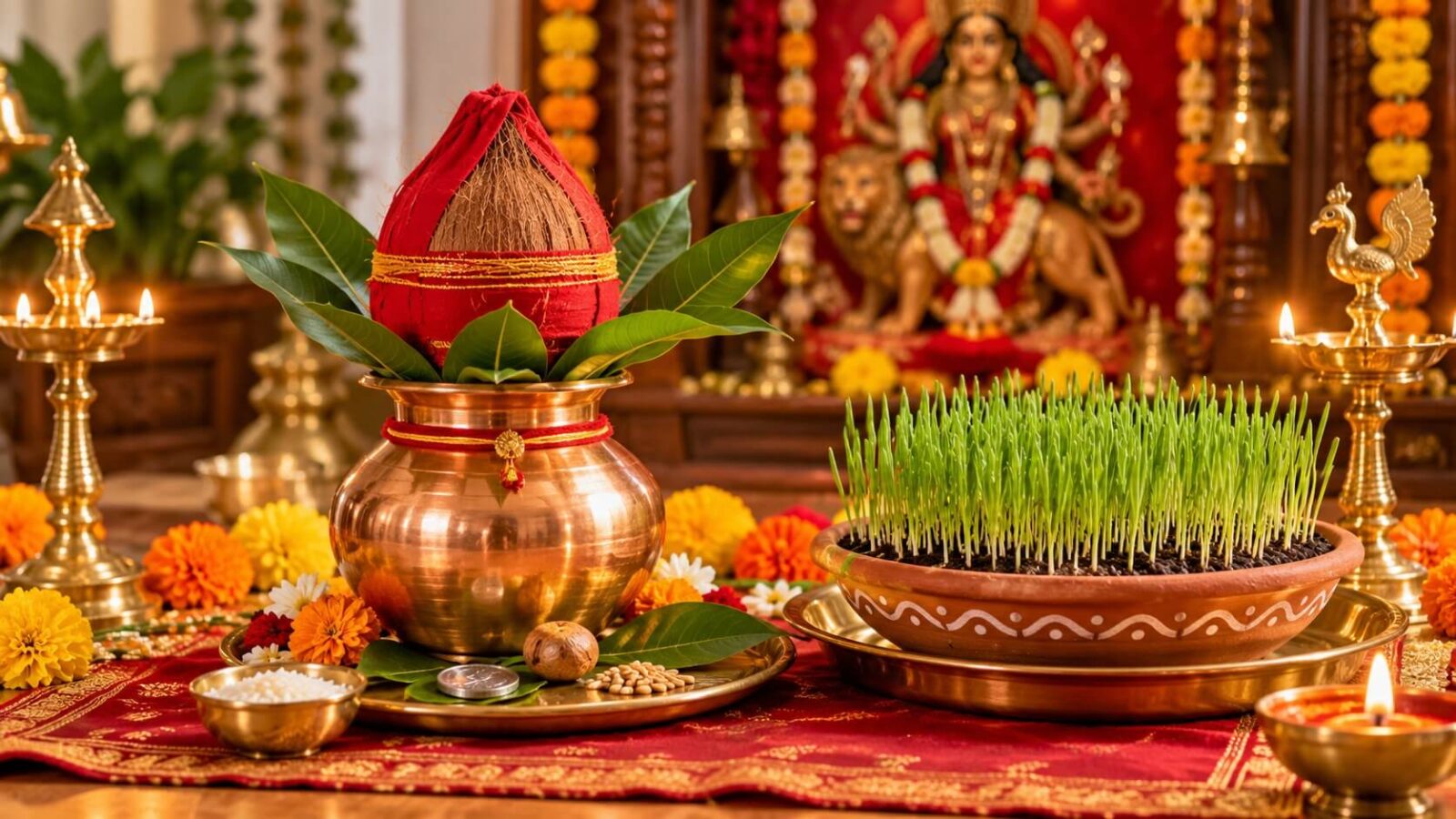
Ghatasthapana opens the festival. Good Navratri Home Decoration keeps the kalash at its centre.
Fill a clean copper or brass pot with water. Add a coin, a betel nut, and a few grains. Place mango leaves on the rim. Cover the pot with a coconut wrapped in red cloth.
Beside it, prepare a clay tray of soil and barley seeds. Water it lightly each day. By day nine, the green shoots signal prosperity.
Choose a tray at least three inches deep. Shallow trays dry out fast, and the barley often fails to sprout.
Set the tray on a plate to protect your floor. Keep it in a bright but shaded spot. Harsh afternoon sun can scorch the young shoots.
Lighting That Feels Warm and Sacred
Light does the heavy lifting in Navratri Home Decoration. It turns a clean room into a festive one.
Swap harsh white bulbs for warm yellow ones in the evening. Warm light flatters brass, flowers, and fabric.
Place clay diyas near the altar and on the balcony ledge. Use LED tea lights in other areas. They give a similar glow without the fire risk.
String fairy lights along the windows or the toran. Pick warm white over multicolour strings. They look more traditional and less cluttered.
A brass diya stand in the corner adds height to the room. Keep it where children cannot knock it over.
Flowers and Fragrance
Flowers bring life to every Navratri Home Decoration plan. They also cost less than most decor items.
Marigold, hibiscus, and jasmine are the traditional favourites. Hibiscus has a special link with Goddess Durga. Use fresh flowers on the altar and garlands on the door.
Floating flower bowls work well in small homes. Fill a wide brass urli with water. Add marigold heads and a few floating diyas.
Fragrance matters too. Burn sandalwood incense or camphor in the morning and evening. Skip heavy room sprays. Natural scents keep the mood devotional.
Buy flowers early in the morning from your local market. They stay fresh longer and often cost less.
Colour Themes for the Nine Days
Many families follow a daily colour during Navratri. These colours follow the weekday, so they shift every year. Check your festival calendar for the exact order.
Use each colour in small ways. A cushion cover, a table runner, or a garland is enough. Navratri Home Decoration does not need a full repaint or new furniture.
| Weekday | Colour | Easy Decor Idea |
|---|---|---|
| Monday | White | Jasmine garland and a white table runner |
| Tuesday | Red | Red cloth on the chowki and red cushion covers |
| Wednesday | Royal Blue | Blue vase and peacock motif cushions |
| Thursday | Yellow | Marigold garlands and a yellow altar cloth |
| Friday | Green | Potted plants and green leaves near the altar |
| Saturday | Grey | Silver diyas and a grey table runner |
| Sunday | Orange | Orange marigolds and a saffron toran |
Nine Goddess Forms and Decor Ideas
Here is a unique way to plan your days. Link each day to the goddess you worship. Add one small change daily. Navratri Home Decoration then feels meaningful instead of repetitive.
| Day | Goddess | Small Decor Addition |
|---|---|---|
| 1 | Shailputri | White flowers and a ghee diya |
| 2 | Brahmacharini | Jasmine garland and a bowl of sugar offering |
| 3 | Chandraghanta | A small brass bell and a crescent motif |
| 4 | Kushmanda | An orange flower arrangement and extra diyas |
| 5 | Skandamata | Lotus motif and a banana offering |
| 6 | Katyayani | Red hibiscus garland and a honey offering |
| 7 | Kalaratri | A bright diya on dark cloth and a jaggery offering |
| 8 | Mahagauri | White flowers and a coconut offering |
| 9 | Siddhidatri | A fruit platter, lotus flowers, and a final colourful rangoli |
Offerings and customs vary by region and family. Follow your own tradition where it differs.
Handmade Decor to Try With Kids
Handmade items add warmth. They also involve the whole family.
- Paint plain clay diyas with acrylic colours. Let them dry for a full day. Add tiny mirrors or beads for sparkle.
- Make paper marigold garlands from orange and yellow crepe paper. Children enjoy this task, and it costs very little.
- Turn old glass jars into tea light holders. Wrap them with thread or lace. Add a few sequins.
- Cut paper into dandiya shaped bunting. Hang it across the dining area.
- Try one family tradition. Let each member decorate one corner of the home. It builds pride and brings variety.
Living Room Ideas for Garba and Guests
Guests visit during Navratri, so your living room needs a practical look. That keeps Navratri Home Decoration useful and not just pretty.
- Clear the centre of the room if you host Garba or Dandiya. Push the sofas to the edges. Roll up rugs that may slip.
- Swap plain curtains for ethnic fabrics. Dupatta curtains with mirror work or embroidery add instant colour.
- Hang colourful dandiya sticks on the wall as decor. Pair them with a bandhani wall hanging. The sticks stay handy, and the wall looks festive.
- Add a brass urli, a tray of sweets, and fresh flowers on the centre table. Keep the arrangement small and simple.
Dining Table and Kitchen Touches
Navratri brings fasting meals, so the kitchen deserves some care too.
- Dedicate one shelf or tray to fasting essentials. Store sabudana, kuttu atta, and sendha namak in neat jars. Label each jar clearly.
- Many families use separate utensils for satvik cooking. Keep them together so nobody mixes them up.
- Spread a simple runner on the dining table. Add a bowl of flowers. Serve prasad on brass plates or banana leaves.
Budget Planner for Navratri Home Decoration
Decorating does not need a big bill. Here is a sample plan for a mid sized home. These prices are rough estimates and vary by city.
| Item | Budget Option (Rs) | Premium Option (Rs) |
|---|---|---|
| Toran | 100 to 250 | 800 to 2,000 |
| Rangoli supplies | 100 to 300 | 500 to 1,000 |
| Flowers for nine days | 500 to 1,000 | 1,500 to 3,000 |
| Diyas and tea lights | 150 to 300 | 600 to 1,500 |
| Fairy lights | 200 to 400 | 800 to 1,500 |
| Kalash and puja accessories | 300 to 600 | 1,500 to 4,000 |
| Approximate total | 1,350 to 2,850 | 5,700 to 13,000 |
Here is a smart saving tip. Diwali follows within a month of Navratri. Buy neutral items such as brass diyas, runners, and fairy lights. You can reuse them for both festivals.
Eco Friendly Choices
Sustainable choices suit the festive spirit. Navratri Home Decoration can be kind to nature too.
Use natural colours for rangoli, such as turmeric, rice flour, and flower petals. Avoid plastic flowers and thermocol. Choose clay diyas over wax ones.
Compost the flowers after the festival. Do not throw them into rivers or lakes. Many housing societies run flower collection drives. Ask your resident association.
Grow the barley in a reusable tray. After the festival, plant the shoots in a garden pot.
Safety Tips for Diyas and Decor
- Diyas look lovely, but fabric burns fast. Keep lamps away from curtains, torans, and dupattas.
- Place each diya on a steel or stone plate. Never leave a burning lamp alone, especially around children and pets.
- Check fairy lights for damaged wires. Do not overload one socket. Switch the lights off at night.
- Keep a bucket of water nearby. It costs nothing and gives peace of mind.
Simple Ideas for Small Flats and Rented Homes
No puja room? No problem. Navratri Home Decoration needs intention more than space.
- Use a wall shelf or a compact wooden mandir. Place a small kalash on top. Drape a fabric strip as a backdrop.
- Cannot drill holes in a rented home? Use adhesive hooks for lightweight torans. Use removable stickers for Om symbols.
- Make the balcony festive with hanging diyas and a short string of lights. Neighbours will notice and may follow your lead.
- Choose multi purpose items. A brass thali can serve as a rangoli base and a puja plate.
Common Mistakes to Avoid
- Overcrowding the altar with too many idols and props
- Using too many colours at once
- Placing the idol against a bathroom wall
- Keeping wilted flowers for several days
- Leaving diyas unattended
- Buying decor at the last minute
Fix these early, and your home will look calm and elegant.
A Six Day Countdown for Your Navratri Home Decoration
Start today if you want a stress free festival. Follow this simple schedule.
| Timeline | Task |
|---|---|
| Six days before | Clean the home and declutter the living room |
| Five days before | Buy the toran, diyas, and fairy lights |
| Four days before | Wash and polish brass items and puja utensils |
| Three days before | Arrange the altar corner and test all lights |
| Two days before | Buy barley seeds, soil, a deep clay tray, coconut, and mango leaves |
| One day before | Prepare the rangoli stencil and set up the kalash area |
| Day one | Hang the fresh toran, make the rangoli, and buy fresh flowers |
Final Thoughts
Navratri is about devotion, family, and renewal. Good Navratri Home Decoration reflects those values. It does not need to be expensive or perfect.
Start with the puja corner. Then add the toran, rangoli, and lights. Make one small change each day, and your home will feel festive and calm.
Which idea will you try first? Share your Navratri Home Decoration plan with your family. Shubh Navratri to you and your loved ones.
Note: Please verify the 11 October start date and the weekday colour order against your local panchang before publishing. These can vary by region.
FAQs
Q1. When does Navratri 2026 begin?
Sharad Navratri 2026 begins on 11 October, as per most panchang calendars. Dussehra follows on 20 October. Exact timings can vary by region, so check your local panchang.
Q2. Which direction is best for the kalash and puja corner?
The north east corner is considered ideal as per Vastu. Face east or north while praying. If that is not possible, choose a clean, quiet and well lit space.
Q3. Can I decorate for Navratri in a rented flat?
Yes. Use adhesive hooks, removable stickers, ready rangoli mats, and a compact wooden mandir. These options leave no marks and are easy to pack away after the festival.
Q4. Which flowers are best for Navratri decor?
Marigold, hibiscus, and jasmine are the most popular choices. Hibiscus has a special link with Goddess Durga. Buy fresh flowers each morning and remove wilted ones daily.
