

Apple’s newest flagship has landed, and with the top storage variant, taxes, AppleCare, and accessories, many buyers end up paying close to ₹4 lakhs for a single phone. That number stops most people in their tracks. Would that same ₹4 lakhs grow your wealth if you invested it in land instead? This comparison of iPhone 18 Pro Max vs real estate investment looks beyond the marketing and studies where your money actually works harder for you.
Buying a premium smartphone feels good. It arrives in a sleek box, it photographs beautifully, and it makes daily life smoother. Land, on the other hand, feels slow and unglamorous. You cannot unbox a plot of land or show it off on social media. Yet when you strip away the emotion, the financial outcomes of these two choices could not be more different.
What You Actually Get for ₹4 Lakhs on an iPhone
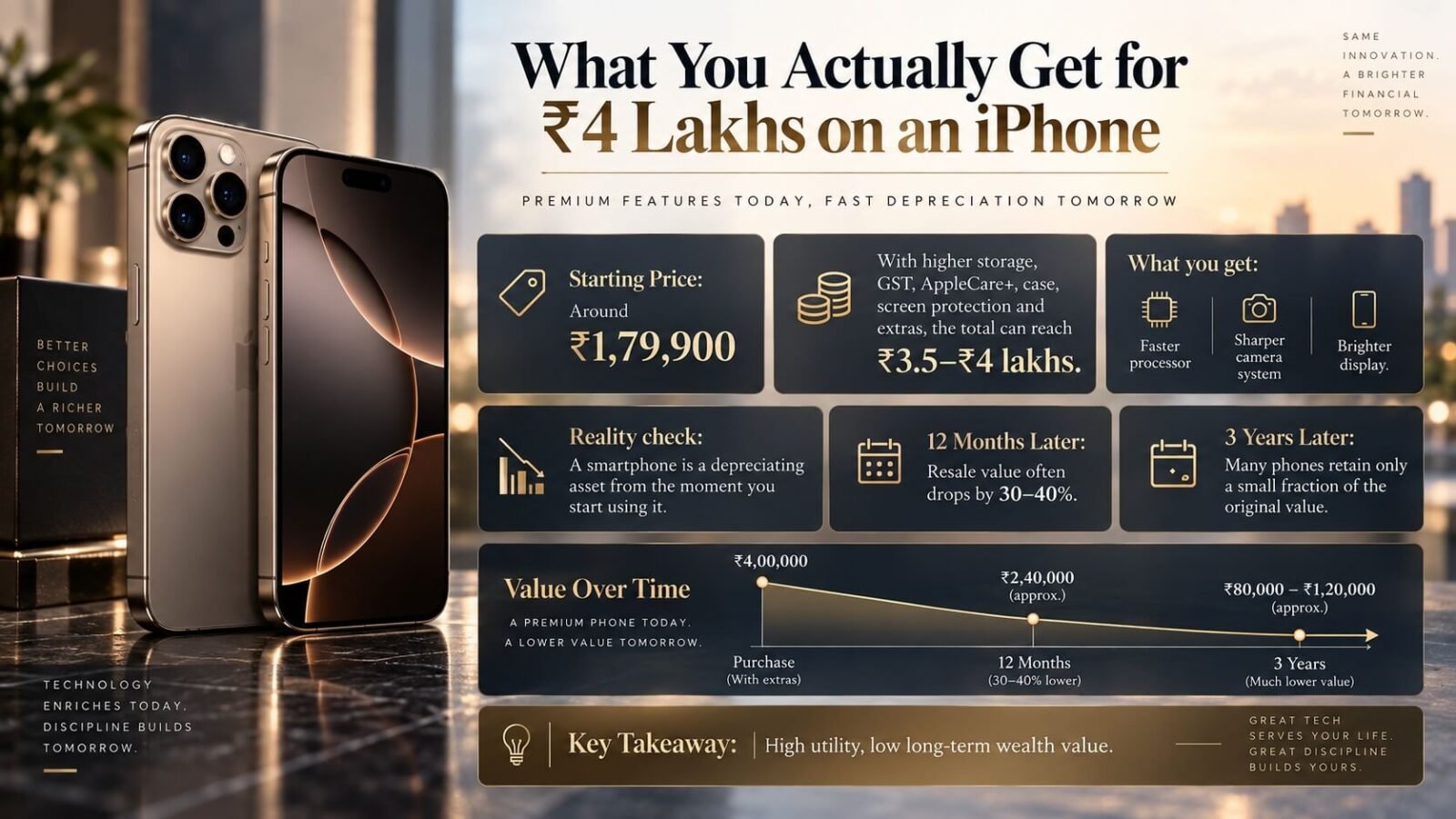
The iPhone 18 Pro Max launched with a starting price of around ₹1,79,900 for the base 256GB model. Once you move up to the 1TB or 2TB storage options, add GST, AppleCare+, a case, screen protection, and perhaps a trade-in top-up, the final bill for many buyers comfortably crosses ₹3.5 to ₹4 lakhs.
For that money, you receive a device with a faster processor, a sharper camera system, and a brighter display. It genuinely performs well. But a smartphone is a depreciating asset from the moment you switch it on. Within twelve months, resale value typically drops by 30 to 40 percent. Within three years, most phones fetch barely a fifth of their original price, assuming the battery and screen remain intact. By the time the next flagship launches, your ₹4 lakh purchase has already lost a substantial chunk of its worth, and you are eyeing the newer model anyway.
What ₹4 Lakhs in Land Could Do Instead
Now flip the scenario. Put that same ₹4 lakhs into a plot of land in a developing corridor, a peripheral township, or an emerging suburb near an upcoming expressway or metro line. Land does not depreciate the way electronics do. It generally appreciates over time, particularly in locations benefiting from planned infrastructure, improved connectivity, or rising residential demand.
Even a modest, well-located plot purchased today can see its value climb steadily over five to ten years as roads, schools, and commercial hubs develop around it. Unlike a phone, land does not need charging, does not crash, and does not become obsolete when a newer version launches. It sits quietly and gains value while you go about your life.
This is the heart of the iPhone 18 Pro Max vs real estate investment debate. One choice depreciates the moment you use it. The other tends to appreciate the longer you hold it.
Comparing Returns Over Time
| Factor | iPhone 18 Pro Max (₹4 Lakhs) | Land Investment (₹4 Lakhs) |
|---|---|---|
| Asset type | Depreciating consumer good | Appreciating tangible asset |
| Value after 5 years | Close to nothing in resale terms | Potential for meaningful growth |
| Key drag on value | Wear, battery degradation, outdated software | None from use; only external market factors matter |
| Growth drivers | None, value only falls | Infrastructure projects, industrial corridors, urban expansion |
| Ongoing costs | Replacement every 2 to 3 years, adding further lakhs | Minimal, mainly maintenance and documentation |
| Certainty of outcome | High, depreciation is near guaranteed | Variable, depends on location, market conditions, due diligence |
| What you gain by year 5 | Convenience and status today | Possibility of long-term financial security |
Consider a simple five-year outlook. A ₹4 lakh smartphone will almost certainly be worth close to nothing in resale terms by year five, especially with wear, battery degradation, and outdated software support. You will likely have replaced it once or twice more by then, spending further lakhs along the way.
A ₹4 lakh land purchase, by contrast, historically has the potential to grow meaningfully over the same period, depending on the location and market conditions. Land near upcoming infrastructure projects, industrial corridors, or expanding cities has shown strong appreciation trends across India in recent years. Naturally, returns are never guaranteed and depend heavily on due diligence, legal clarity, and location, but the underlying principle remains sound: land is a real, tangible asset that can work for you passively.
When you frame the iPhone 18 Pro Max vs real estate investment choice this way, the phone delivers convenience and status today, while land offers the possibility of long-term financial security. Both have value, but only one builds wealth.
Depreciation Versus Appreciation: The Core Difference
Every financial decision eventually comes down to one question. Does this asset gain value or lose it? A smartphone, however premium, is a consumption item. It is built to be used, worn out, and eventually replaced. Even Apple’s own resale programmes acknowledge this by offering trade-in credit that shrinks with each passing year.
Real estate, particularly land, behaves differently. It does not wear out with use because there is no active depreciation from daily operation. Instead, its value is shaped by external growth factors such as urban expansion, government infrastructure spending, and rising demand for housing and commercial space. This fundamental difference explains why financial planners consistently favour tangible assets like land for long-term wealth creation over consumer electronics.
Emotional Value Versus Financial Wealth
It would be unfair to say the iPhone offers no value at all. A great smartphone genuinely improves your day-to-day life. It helps you work efficiently, capture memories, and stay connected. That convenience matters, and nobody should feel guilty about occasionally treating themselves to good technology.
However, when the conversation shifts specifically to wealth creation, emotional satisfaction and financial growth are two separate things. The iPhone 18 Pro Max vs real estate investment comparison is not really about which product is better. It is about understanding the difference between spending money and investing money. Spending buys you comfort today. Investing builds security for tomorrow.
Making a Balanced Decision
Nobody is suggesting you should never buy a good phone. The real lesson here is about proportion and intention. If your monthly income comfortably supports a premium device without straining your savings or investment goals, there is nothing wrong with enjoying the upgrade. Problems arise when a ₹4 lakh gadget purchase crowds out money that could otherwise go towards a genuine appreciating asset.
A smarter approach many financially savvy buyers follow is this: choose a mid-range or slightly older flagship phone that still performs brilliantly, and redirect the savings towards a small land parcel, a recurring investment plan, or a real estate down payment. Over a decade, that single decision can compound into a meaningfully different financial position.
Which One Actually Makes You Richer
When you weigh iPhone 18 Pro Max vs real estate investment purely on financial merit, land wins comfortably. A smartphone gives you short-term utility and a rapidly shrinking resale value. Land gives you a tangible asset with genuine long-term growth potential, provided you choose the location wisely and verify all legal documentation before purchase.
Richness is not just about what you own today. It is about what your money is capable of becoming tomorrow. A ₹4 lakh phone will almost certainly be worth a fraction of that in a few years. A ₹4 lakh plot of land, chosen carefully, has the potential to be worth considerably more.
Ready to explore land and property opportunities that genuinely grow your wealth. Visit Zen Nest Living for expert real estate guides, Vastu insights, and trusted investment tips to help you make smarter property decisions today.
Frequently Asked Questions
1. Is buying the iPhone 18 Pro Max a bad financial decision?
It is not inherently bad if it fits your budget comfortably. The concern arises only when a smartphone purchase competes directly with money that could otherwise go into an appreciating asset like land or property.
2. How much does land typically appreciate compared to gadgets?
Land value depends heavily on location, infrastructure development, and market demand, so returns vary widely. Unlike gadgets, which almost always depreciate, well-located land has historically shown the potential to appreciate steadily over several years.
3. What should I check before investing in land instead of a gadget?
Always verify the title deed, land use classification, encumbrance certificate, and any pending litigation before purchasing. Buying from a reputed developer or through proper legal channels reduces risk significantly.
4. Can I do both, buy a phone and invest in land?
Yes, many buyers choose a balanced approach by opting for a slightly less expensive phone model and directing the remaining amount towards a small land investment or a systematic investment plan, allowing them to enjoy technology without sacrificing long-term wealth building.
