
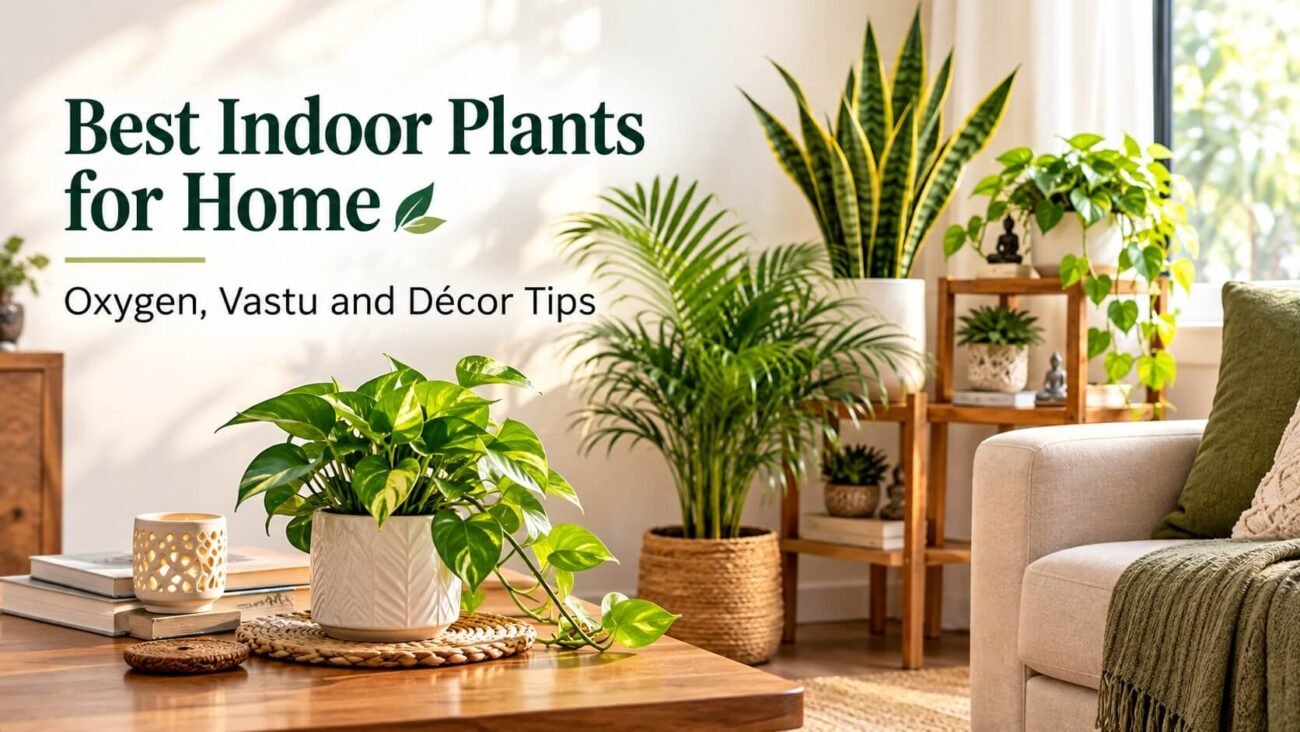
Indoor plants for home have become one of the easiest ways to bring nature indoors. Whether you live in a compact flat or a spacious bungalow, indoor plants for home add colour, improve air quality and lift the overall mood of a space. From small succulents on a windowsill to large statement plants in the corner, the right greenery can transform any interior in a matter of weeks.
This guide covers everything you need to know before you bring greenery home. It explains which varieties suit low light, which follow Vastu principles, which release the most oxygen and which work best as bold, eye-catching pieces. It also covers basic care, so your new greenery stays healthy well beyond the first month. By the end, you will know exactly where to start, how much sunlight each variety needs and how to arrange them so your rooms feel warmer and more welcoming straight away.
Why Add Indoor Plants for Home (Benefits)
Adding indoor plants for home is a simple step towards a healthier and calmer lifestyle. Plants do far more than fill empty corners. They filter dust, soften harsh lines in a room and give a space a lived-in, welcoming feel.
Here are the main benefits homeowners notice within weeks of bringing plants indoors:
- They improve indoor air quality by absorbing carbon dioxide and releasing fresh oxygen during the day.
- They reduce stress and help residents feel calmer, according to several wellness studies.
- They add natural texture and colour without the cost of a full renovation.
- They help regulate indoor humidity, which is useful in air-conditioned homes.
- They require far less maintenance than an outdoor garden, making them ideal for busy households.
Plants also give a room a sense of life that furniture and artwork cannot replicate on their own. A shelf with a trailing vine or a corner with a tall palm instantly looks more finished, even before any other decor goes in. Once you understand the benefits, the next step is choosing plants suited to your specific needs, from air purification to Vastu compliance.
Read More: Rubber Plant Vastu
Indoor Plants for Home for Oxygen
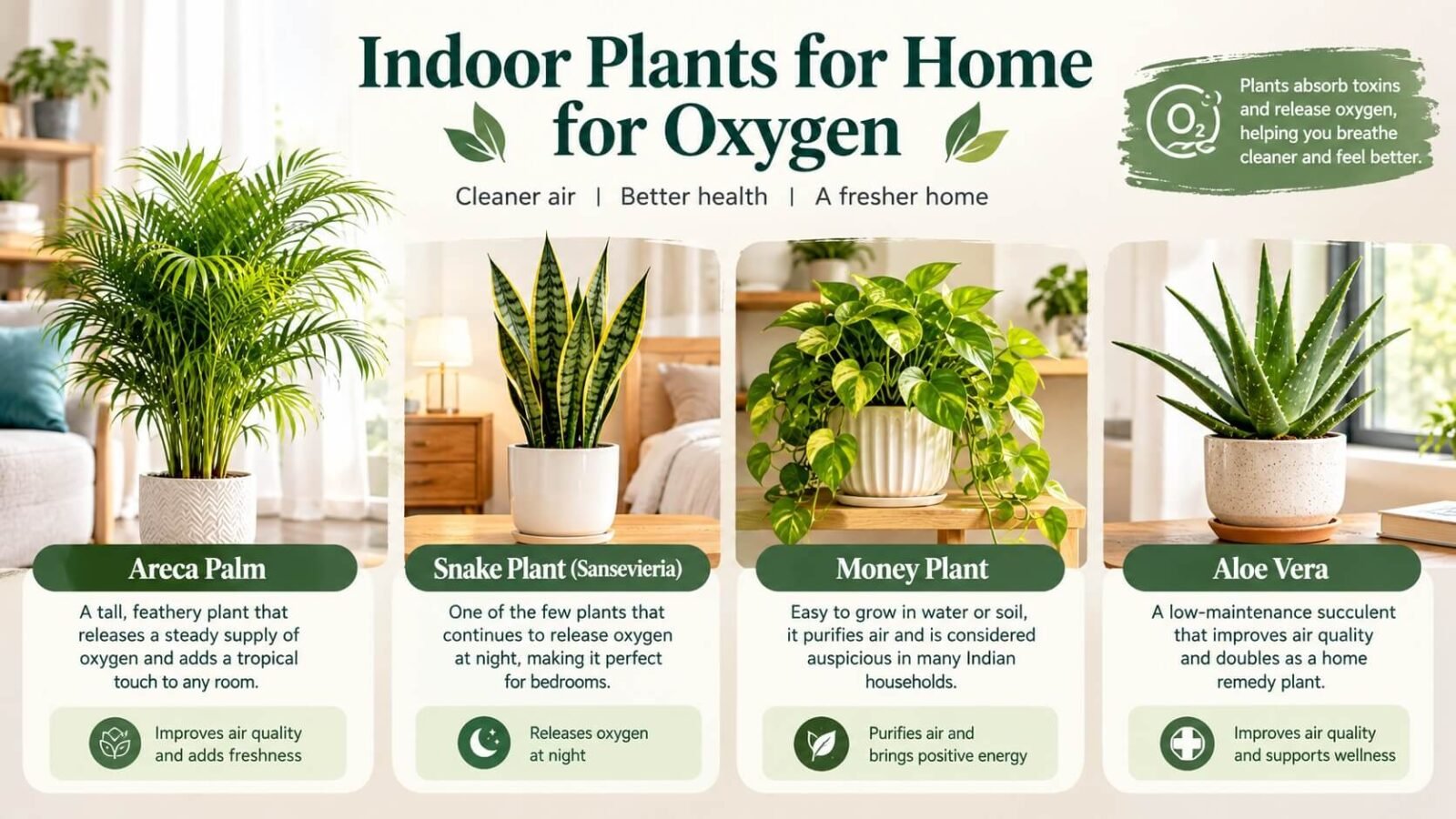
Oxygen-producing indoor plants for home work quietly in the background to freshen the air you breathe every day. Several varieties are known to absorb toxins such as formaldehyde and benzene while releasing oxygen, particularly during the night, which makes them ideal for bedrooms.
- Areca Palm: A tall, feathery plant that releases a steady supply of oxygen and adds a tropical touch to any room.
- Snake Plant (Sansevieria): One of the few plants that continues to release oxygen at night, making it perfect for bedrooms.
- Money Plant: Easy to grow in water or soil, it purifies air and is considered auspicious in many Indian households.
- Aloe Vera: A low-maintenance succulent that improves air quality and doubles as a home remedy plant.
Placing two or three of these plants across your living space can noticeably improve indoor air within a few weeks. Keep leaves free of dust and give each pot enough space to breathe, since crowded plants filter air less effectively than well-spaced ones.
Indoor Plants for Home Vastu Tips
According to Vastu Shastra, the placement of indoor plants for home can influence the flow of positive energy through a house. Certain directions and plant types are considered more favourable than others.
- Keep money plants near the south-east corner of the living room to encourage prosperity.
- Place bamboo plants in the east or south-east direction, ideally in sets of four, six or eight stalks.
- Avoid keeping thorny plants such as cacti inside bedrooms, as Vastu considers them a source of negative energy.
- Position tulsi plants near a window that receives morning sunlight, traditionally in the north or east of the home.
- Remove dry or dead leaves promptly, since Vastu associates decaying foliage with stagnant energy.
Following these simple placement rules allows you to enjoy both the visual and the traditional benefits of greenery at home. Many households combine Vastu-friendly varieties with air-purifying ones, so the same pot works for both wellbeing and tradition without needing separate arrangements.
Indoor Plants for Home Without Sunlight
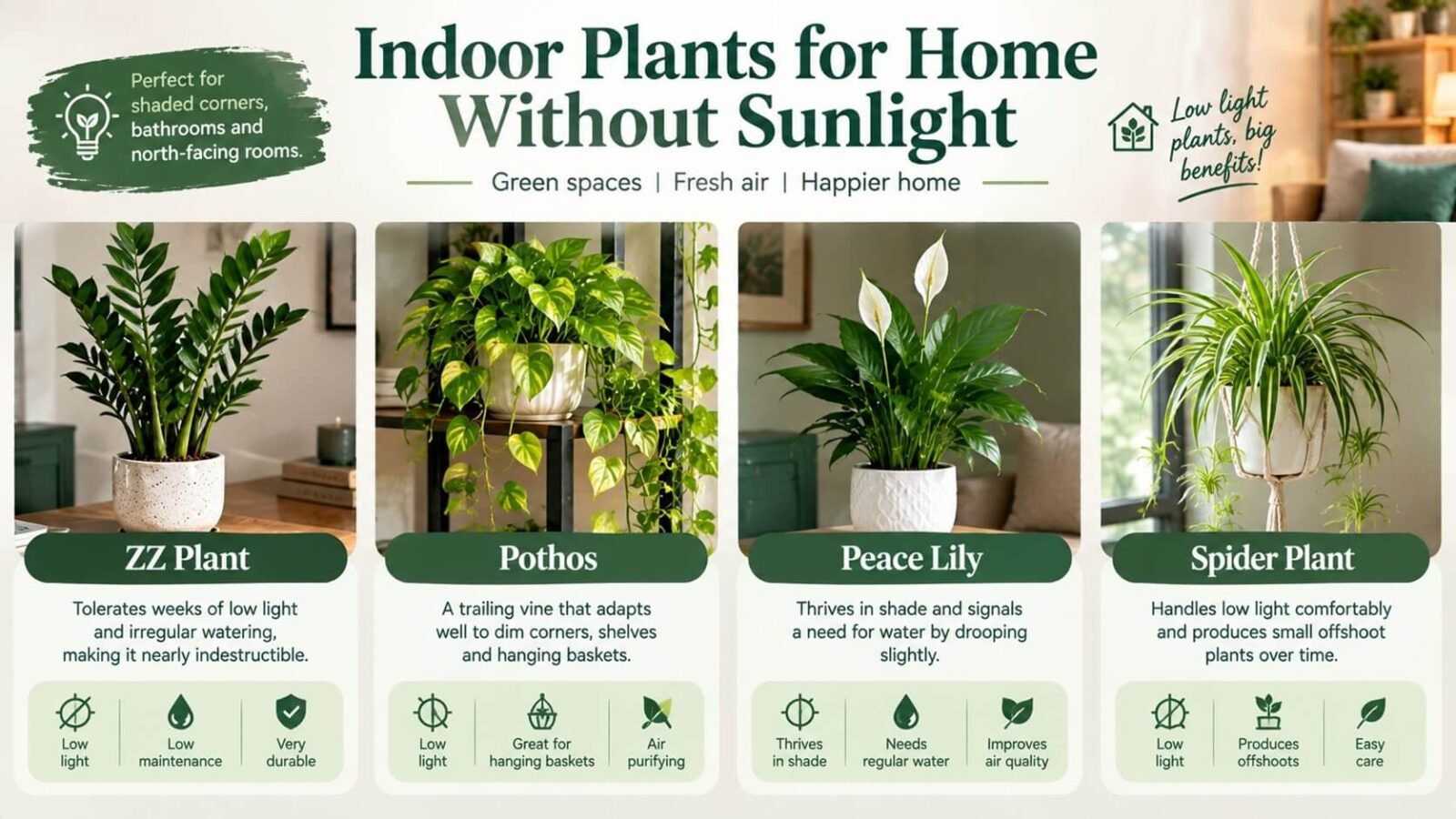
Not every home has a bright, sun-drenched balcony, and that is where low-light varieties come in useful. Several indoor plants for home thrive in shaded corners, bathrooms and north-facing rooms where direct sunlight rarely reaches.
- ZZ Plant: Tolerates weeks of low light and irregular watering, making it nearly indestructible.
- Pothos: A trailing vine that adapts well to dim corners, shelves and hanging baskets.
- Peace Lily: Thrives in shade and signals a need for water by drooping slightly.
- Spider Plant: Handles low light comfortably and produces small offshoot plants over time.
These varieties need only a few hours of indirect light each week, so a corridor or a bathroom windowsill works perfectly well.
Indoor Plants for Living Room
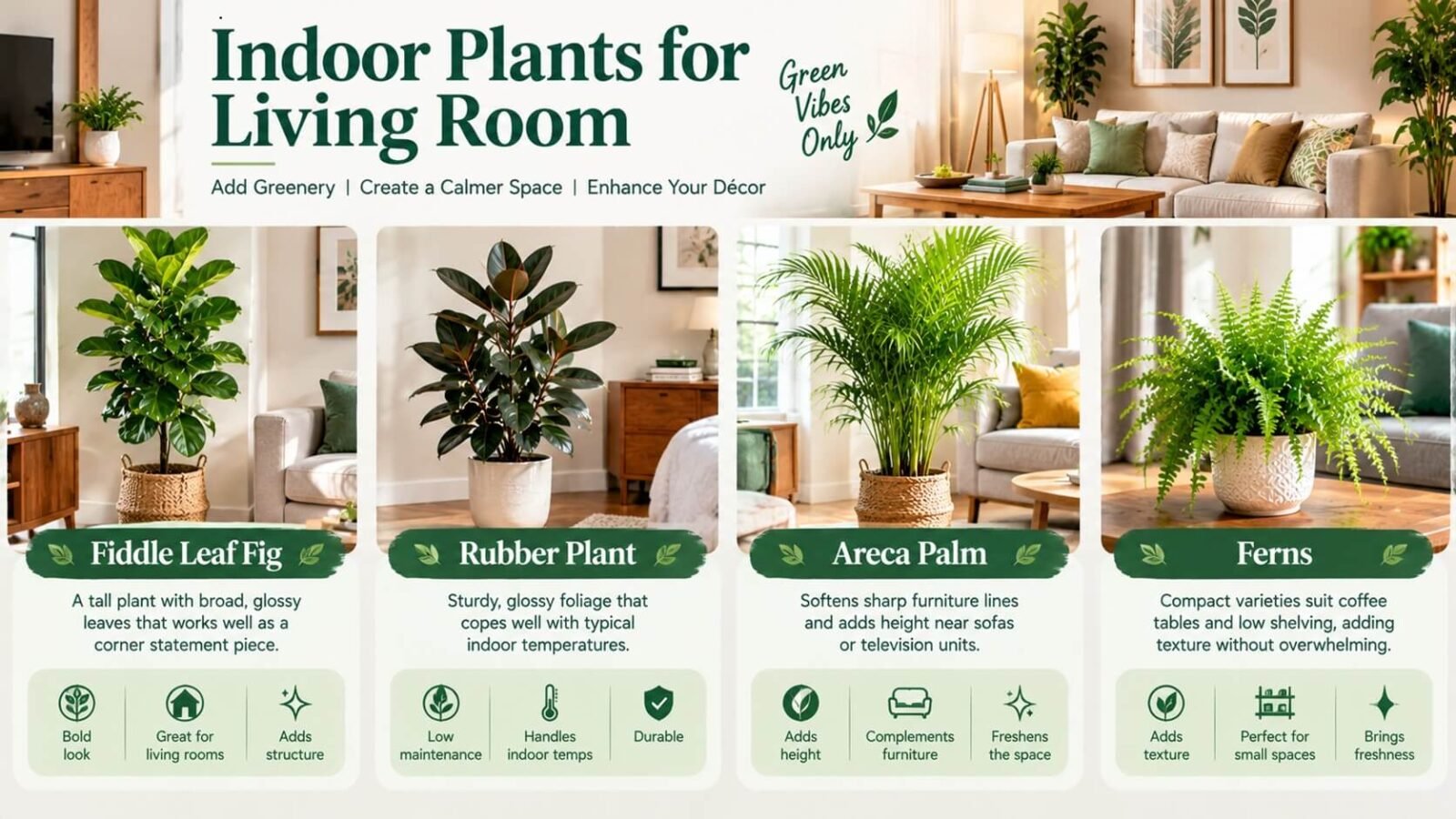
The living room is usually the first space guests notice, which makes it worth choosing greenery carefully. A well-placed indoor plants for home arrangement can anchor the entire seating area and tie the colour scheme together.
- Fiddle Leaf Fig: A tall plant with broad, glossy leaves that works well as a corner statement piece.
- Rubber Plant: Sturdy, glossy foliage that copes well with typical indoor temperatures.
- Areca Palm: Softens sharp furniture lines and adds height near sofas or television units.
- Ferns: Compact varieties suit coffee tables and low shelving, adding texture without overwhelming the space.
Group plants of varying heights together, and use matching planters to keep the overall look cohesive rather than cluttered.
Indoor Plants for Home Big Size
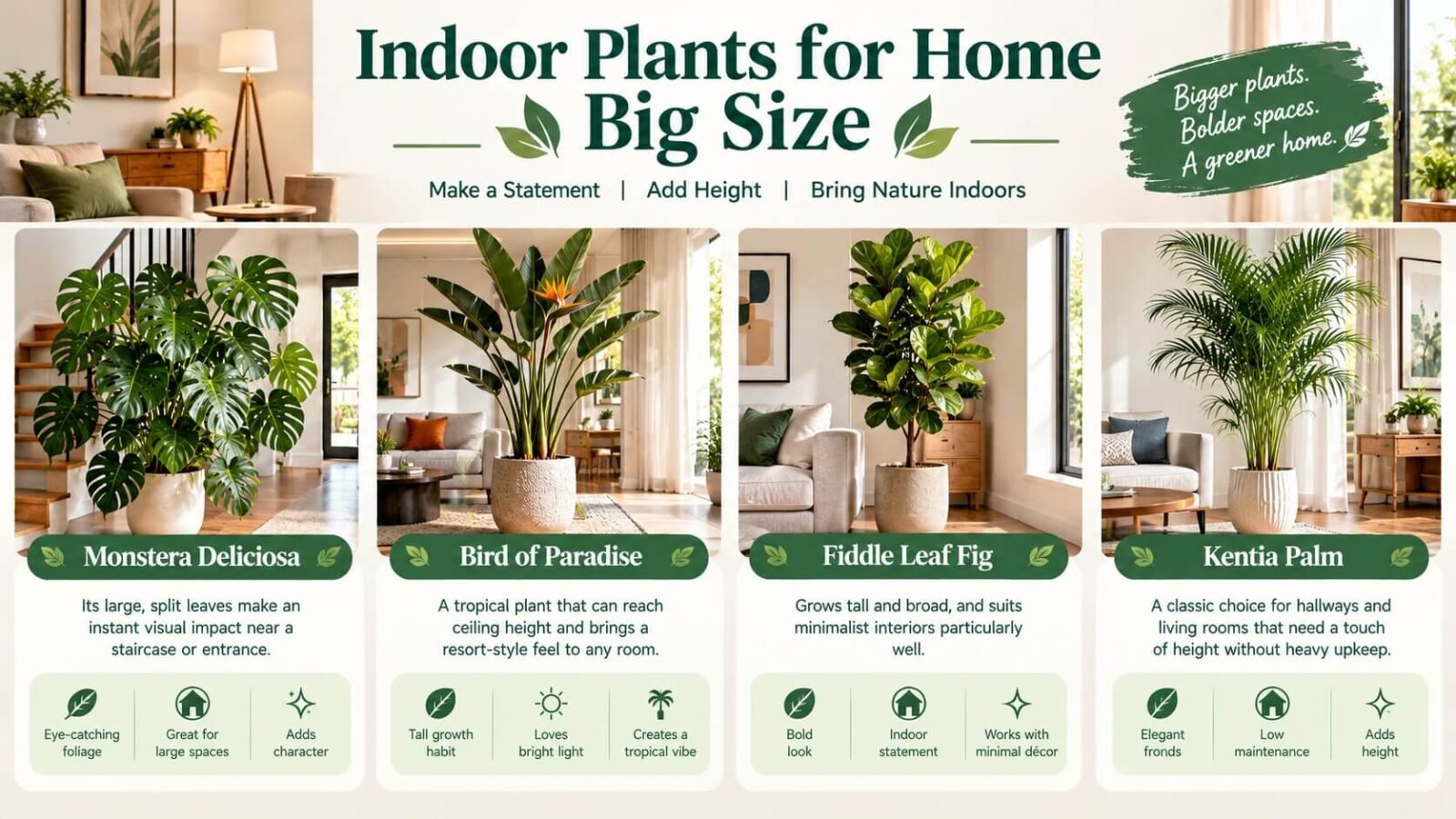
Large, statement-sized plants work well in spacious rooms, open-plan layouts and entryways with high ceilings. A bigger plant draws the eye and can replace the need for extra furniture or artwork altogether.
Consider these options if you have the floor space to spare:
- Monstera Deliciosa: Its large, split leaves make an instant visual impact near a staircase or entrance.
- Bird of Paradise: A tropical plant that can reach ceiling height and brings a resort-style feel to any room.
- Fiddle Leaf Fig: Grows tall and broad, and suits minimalist interiors particularly well.
- Kentia Palm: A classic choice for hallways and living rooms that need a touch of height without heavy upkeep.
Large plants generally need a bright spot, a sturdy pot and repotting every couple of years as the root system expands. Choose a planter with drainage holes and a sturdy base, since top-heavy plants can tip over on smooth flooring.
Indoor Plants for Home Decoration Ideas
Beyond air quality and tradition, plants are one of the simplest decoration tools available. Thoughtful styling turns ordinary greenery into a design feature.
- Use ceramic or woven planters that match your existing colour palette rather than plain plastic pots.
- Group plants of different heights on a plant stand to create a layered, gallery-style display.
- Hang trailing varieties such as pothos or string of pearls near windows to soften bare walls.
- Place a single large plant in an empty corner instead of filling it with extra furniture.
- Rotate a few seasonal flowering plants alongside permanent greenery to keep the space feeling fresh.
Small styling choices like these make a noticeable difference without requiring a full interior overhaul.
Simple Care Tips for Indoor Plants for Home
Most indoor plants for home need only a little consistent attention to thrive. Overwatering is the most common mistake, so check the top inch of soil before watering again. Wipe dust off broad leaves every few weeks so plants can absorb light efficiently. Rotate pots occasionally so growth stays even on all sides, and repot whenever roots begin to crowd the container. Feed with a diluted liquid fertiliser once a month during warmer seasons, and reduce watering during winter when growth naturally slows.
Choosing the right mix of plants for oxygen, Vastu compliance, low-light corners and living room styling gives every home a fresher, calmer feel. Start with two or three easy varieties, observe how they respond to your home’s light and humidity, and expand your collection gradually from there. Keep a simple watering schedule on your phone in the early weeks, so you develop a routine before adding more varieties to different rooms.
Ready to give your home the fresh, green makeover it deserves? Explore more expert home decor, Vastu and property guides on Zen Nest Living, and turn practical tips into a beautifully styled, positive living space today.
Frequently Asked Questions
1. Which indoor plants release the most oxygen at night?
Snake plant and aloe vera continue releasing oxygen after dark, which makes them well suited to bedrooms where fresh air matters most during sleep.
2. Which plants are considered lucky according to Vastu?
Money plant, bamboo and tulsi are commonly regarded as auspicious in Vastu Shastra, provided they are placed in the correct direction and kept free of dead leaves.
3. Can plants survive in rooms with no direct sunlight?
Yes, varieties such as the ZZ plant, pothos, peace lily and spider plant tolerate low light well and only need occasional exposure to indirect daylight.
4. How often should indoor plants be watered?
Most common varieties need watering once the top inch of soil feels dry, which usually works out to once or twice a week depending on the season and pot size.
