
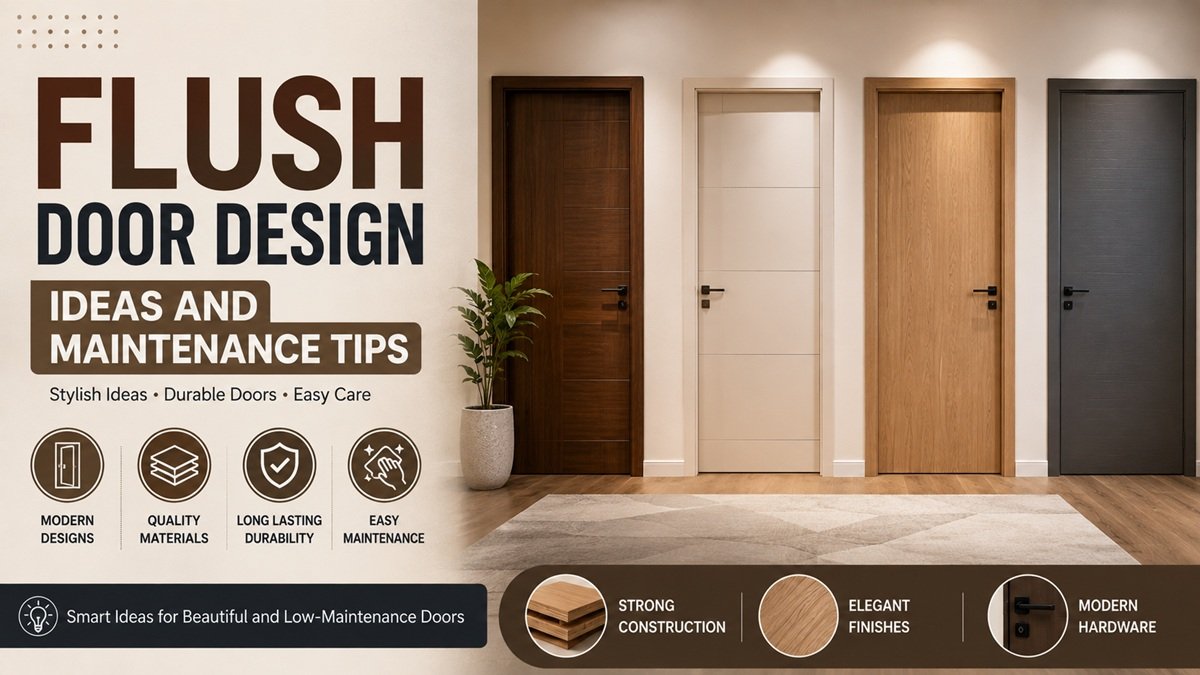
Doors shape the first impression of every room, and homeowners across India increasingly turn to flush door design when planning interiors that feel clean, contemporary, and clutter-free. Unlike panelled or carved doors, a flush door presents a flat, smooth surface on both sides, making it a favourite among architects and interior designers who want simplicity without sacrificing durability. This guide walks through everything worth knowing about flush door design in 2026, from materials and finishes to maintenance and cost.
What Is a Flush Door Design
A flush door consists of a solid or hollow core sandwiched between two flat panels, usually made from plywood, laminate, or veneer. The result is a door with no grooves, mouldings, or raised patterns, giving it a seamless, minimalist appearance. This simplicity is exactly why flush door design has grown popular in apartments, villas, and commercial spaces alike. Builders favour it because it pairs well with almost any interior theme, whether traditional, contemporary, or industrial.
Flush doors typically fall into two categories: solid core and hollow core. Solid core doors use a dense inner filling, such as block board or particle board, which makes them heavier and more soundproof. Hollow core doors contain a honeycomb or cellular structure inside, making them lighter and more budget-friendly. Choosing between the two depends on the room’s purpose, budget, and acoustic requirements.
Why Homeowners Prefer Flush Door Design
Several practical reasons explain why flush door design continues to dominate residential and commercial projects.
- Clean and versatile appearance: A flush door design fits effortlessly into almost any decor style. Its flat surface avoids visual clutter, allowing walls, furniture, and lighting to take centre stage instead of competing with an ornate door.
- Cost efficiency: Compared with panelled or carved wooden doors, flush doors cost considerably less to manufacture and install. Hollow core variants, in particular, suit budget-conscious renovations without compromising on looks.
- Low maintenance: The smooth surface resists dust accumulation and is easy to wipe clean. Unlike carved doors, there are no grooves where grime can collect over time.
- Durability: Solid core flush doors handle daily wear well, making them suitable for main entrances, bedrooms, and high-traffic areas. Their construction resists warping better than many traditional wooden doors, particularly in humid climates.
- Customisation options: Modern flush doors accept a wide range of laminates, veneers, and paint finishes, giving homeowners the freedom to match doors with their overall interior palette.
Materials Used in Flush Door Design
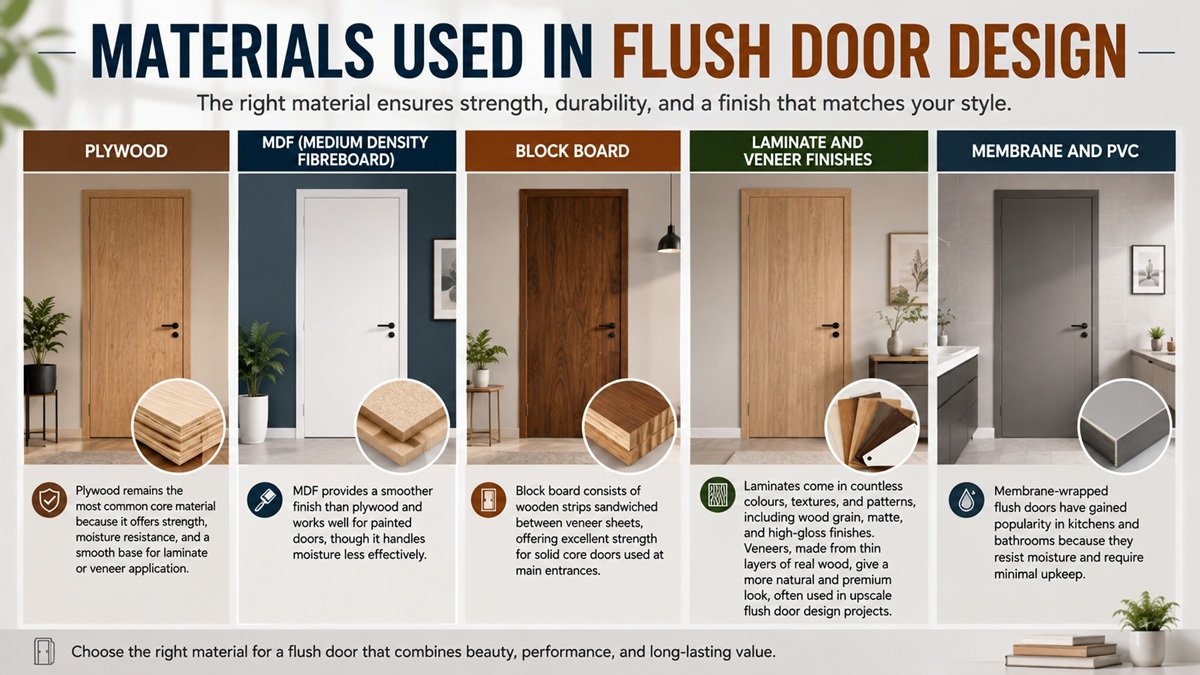
Material choice directly affects the strength, appearance, and lifespan of a flush door.
- Plywood: Plywood remains the most common core material because it offers strength, moisture resistance, and a smooth base for laminate or veneer application.
- MDF (Medium Density Fibreboard): MDF provides a smoother finish than plywood and works well for painted doors, though it handles moisture less effectively.
- Block board: Block board consists of wooden strips sandwiched between veneer sheets, offering excellent strength for solid core doors used at main entrances.
- Laminate and veneer finishes: Laminates come in countless colours, textures, and patterns, including wood grain, matte, and high-gloss finishes. Veneers, made from thin layers of real wood, give a more natural and premium look, often used in upscale flush door design projects.
- Membrane and PVC: Membrane-wrapped flush doors have gained popularity in kitchens and bathrooms because they resist moisture and require minimal upkeep.
Read More: French Door Design Ideas
Popular Flush Door Design Trends in 2026
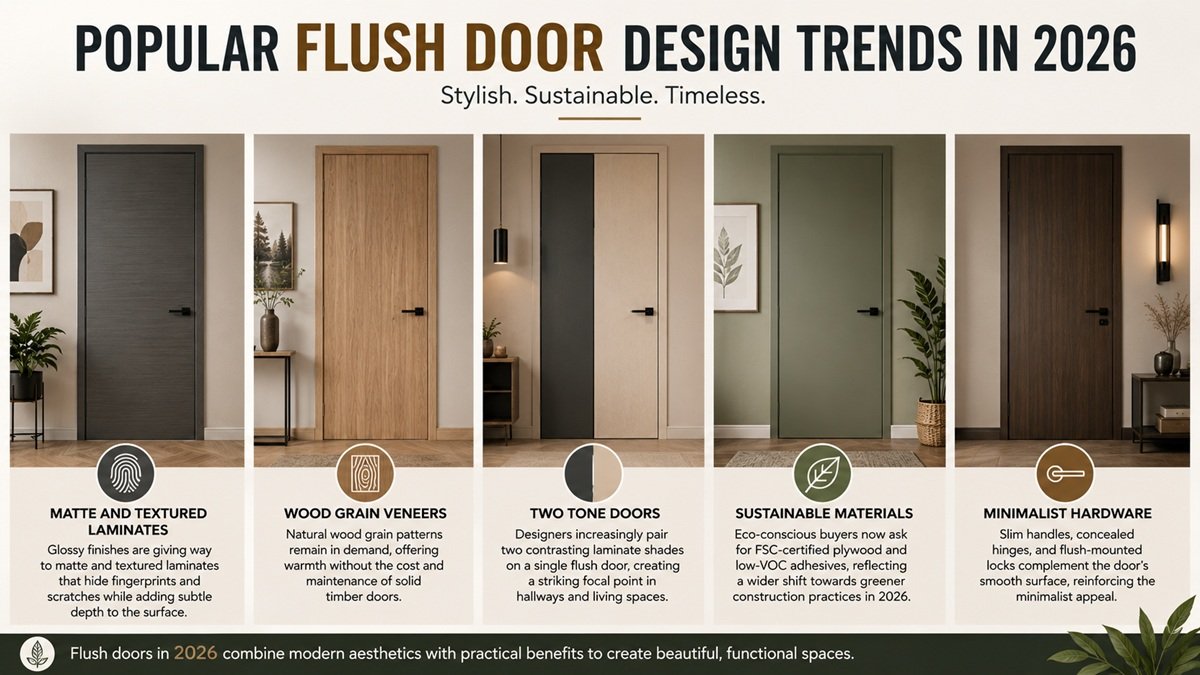
Interior trends this year lean towards warmth, texture, and sustainability, and flush door design has adapted accordingly.
- Matte and textured laminates: Glossy finishes are giving way to matte and textured laminates that hide fingerprints and scratches while adding subtle depth to the surface.
- Wood grain veneers: Natural wood grain patterns remain in demand, offering warmth without the cost and maintenance of solid timber doors.
- Two tone doors: Designers increasingly pair two contrasting laminate shades on a single flush door, creating a striking focal point in hallways and living spaces.
- Sustainable materials: Eco-conscious buyers now ask for FSC-certified plywood and low-VOC adhesives, reflecting a wider shift towards greener construction practices in 2026.
- Minimalist hardware: Slim handles, concealed hinges, and flush-mounted locks complement the door’s smooth surface, reinforcing the minimalist appeal that defines much of today’s flush door design.
How to Choose the Right Flush Door Design
Selecting a suitable flush door depends on several factors beyond appearance.
- Purpose of the room: Main doors need solid core construction for security and durability, while internal doors, such as those for wardrobes or store rooms, can use hollow core variants to save cost.
- Climate and humidity: Homes in coastal or humid regions benefit from moisture-resistant plywood cores and laminate finishes rather than MDF, which swells more easily.
- Budget: Hollow core doors with basic laminate suit tighter budgets, while solid core doors with veneer finishes suit those seeking a premium look with long-term durability.
- Sound insulation needs: Bedrooms and home offices benefit from solid core doors, which reduce noise transfer better than hollow core alternatives.
- Matching interior theme: A well-planned flush door design should complement flooring, wall colours, and furniture rather than clash with them. Sampling laminate swatches against existing decor before finalising a choice helps avoid mismatches later.
Installation and Maintenance Tips
Proper installation extends the life of any flush door.
- Carpenters should ensure the door frame is perfectly level, as an uneven frame causes the door to warp or stick over time.
- Hinges should be rust-resistant, particularly in humid areas, and door edges should be sealed properly to prevent moisture seepage into the core.
- For maintenance, homeowners should wipe flush doors with a soft, slightly damp cloth rather than harsh chemical cleaners, which can dull laminate finishes.
- Avoid excessive water exposure near the bottom edge, as this is where moisture damage typically begins.
- Periodic checks on hinges and locks also help maintain smooth functioning over the years.
Cost of Flush Door Design in 2026
Pricing varies based on core material, finish, and size. As a general guide:
- Hollow core doors with basic laminate typically start at a lower price point, making them suitable for internal doors and rental properties.
- Solid core doors with plywood cores and standard laminate sit in the mid-range, offering a balance between durability and affordability.
- Premium solid core doors with veneer finishes or designer laminates command the highest prices, reflecting their superior look and longevity.
- Labour and installation charges add to the overall cost, so homeowners should request detailed quotations that separate material and labour costs before finalising any purchase.
Flush Door Design Versus Panelled Doors
While panelled doors offer a traditional, ornate look, flush door design suits homes seeking a modern, uncluttered aesthetic. Panelled doors often cost more due to intricate carving and additional material use, whereas flush doors offer better value without compromising structural integrity. Additionally, flush doors are easier to clean and less prone to trapping dust in grooves, which matters for allergy-conscious households.
Conclusion
Flush door design continues to hold its place as a practical, stylish, and cost-effective choice for Indian homes in 2026. Its clean lines suit nearly every interior style, while the range of materials and finishes available allows homeowners to balance budget, durability, and aesthetics with ease. Whether furnishing a new apartment or renovating an existing home, understanding core materials, finishes, and maintenance requirements helps ensure the chosen door performs well for years to come.
Ready to plan your next home renovation with confidence? Visit Zen Nest Living for expert real estate guides, interior design tips, and practical advice to help you create a home that reflects your style and stands the test of time. For expert guidance, contact us now.
Frequently Asked Questions
1. What is the difference between solid core and hollow core flush doors?
Solid core doors have a dense filling inside, making them heavier, more soundproof, and more durable, ideal for main entrances. Hollow core doors have a lightweight honeycomb structure inside, making them cheaper and better suited to internal, low-traffic rooms.
2. How long does a flush door typically last?
With proper installation and care, a good quality flush door can last fifteen to twenty years or more, depending on the core material, climate exposure, and maintenance routine followed.
3. Are flush doors suitable for bathrooms and kitchens?
Yes, provided they use moisture-resistant plywood cores and PVC or membrane finishes designed to withstand humidity. Standard MDF cores should generally be avoided in wet areas.
4. Can flush doors be painted instead of laminated?
Yes, flush doors with MDF or plywood surfaces can be painted for a smooth, custom finish. Painted doors do require more frequent touch-ups compared with laminate or veneer finishes.