
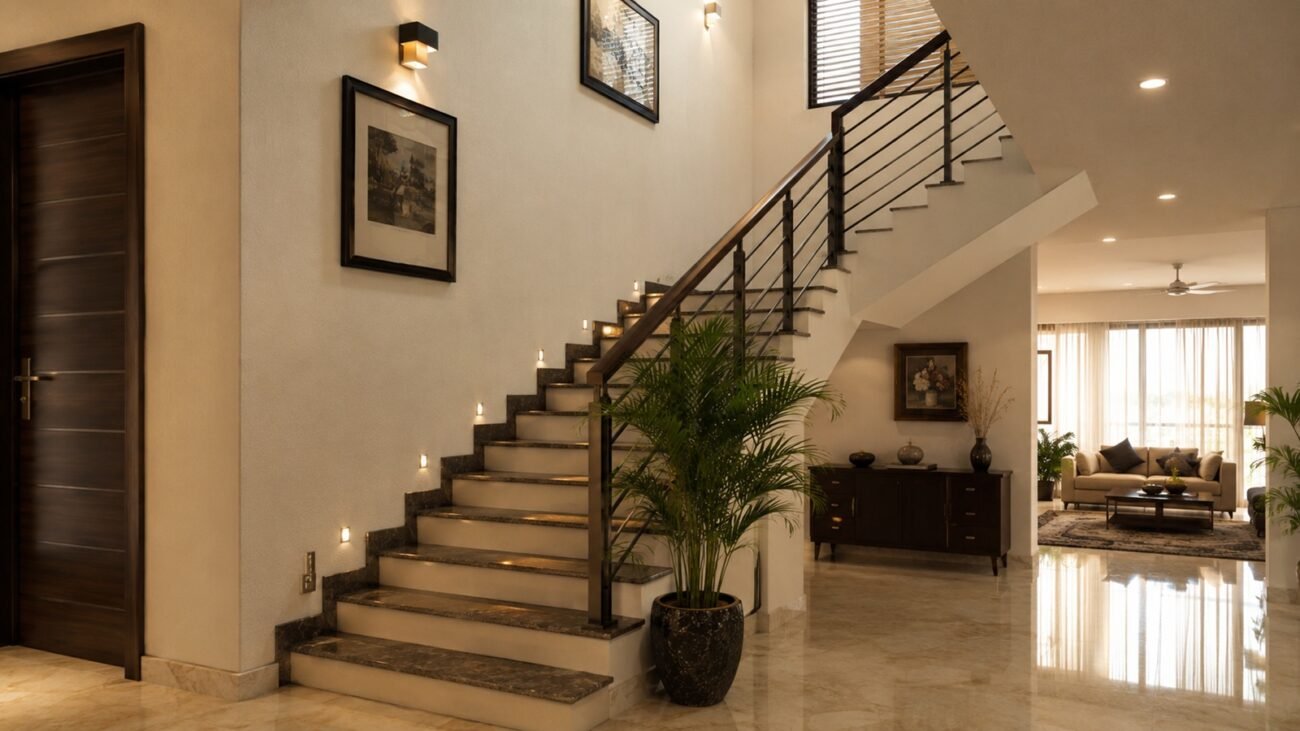
A home functions like a living body, and staircase Vastu shapes its energy flow. The staircase connects different floors and carries movement throughout the house. Correct staircase Vastu brings prosperity, health and stability to residents. Poor staircase placement can disturb peace and invite financial trouble. This guide explains staircase direction as per Vastu in detail.
Why Staircase Vastu Matters
Staircase Vastu affects how positive energy moves through a home. A wrongly placed staircase blocks natural energy flow between floors. This blockage often creates stress, health issues and financial instability for residents. Ancient Vastu texts treat staircases as important as doors and windows. They connect the ground floor to upper levels every single day. Following staircase Vastu principles ensures smooth energy circulation across all floors. Builders and architects now prioritize staircase Vastu during initial planning stages. This proactive approach avoids costly structural changes later.
Ideal Staircase Direction as per Vastu
Staircase direction as per Vastu plays the biggest role in home harmony. The southwest direction remains the most recommended zone for staircases. This direction represents stability and strength according to Vastu principles. A southwest staircase grounds the home and supports steady growth. The south and west directions also work well for staircase placement. These zones align with the natural flow of gravitational energy. Avoid placing staircases in the northeast corner of any home. The northeast represents the zone of Ishaan, linked to spiritual energy. A staircase here disrupts this sacred zone and blocks positive flow. The center of the house, called Brahmasthan, must stay staircase free. This central zone needs open space for energy to circulate freely.
Staircase Vastu for East Facing House
Staircase Vastu for east facing house requires special attention to placement. East facing homes already receive strong morning sunlight and positive energy. The staircase should sit in the south or southwest zone here. This placement maintains the natural energy balance of an east facing home. Avoid building the staircase near the main entrance in east facing houses. This blocks incoming positive energy from spreading through the home. Keep the northeast corner completely clear in east facing house designs. Many homeowners mistakenly place staircases near the front door for convenience. This mistake according to staircase Vastu invites financial and health troubles. Consult a Vastu expert before finalising staircase Vastu for east facing house plans.
Staircase Position as per Vastu
Staircase position as per Vastu depends on the overall layout of the home. The staircase should always begin from the ground floor southwest corner. It should rise steadily toward the north or east as it climbs. This rising pattern follows the natural clockwise flow of positive energy. Never let a staircase directly face the main entrance door. This staircase position as per Vastu creates energy leakage from the home. Energy entering through the door should flow inward, not upward immediately. The staircase should not rise directly above the main entrance either. This placement traps energy and prevents it from spreading indoors properly. Staircase position as per Vastu also depends on the number of steps built.
Number of Steps in Staircase Vastu
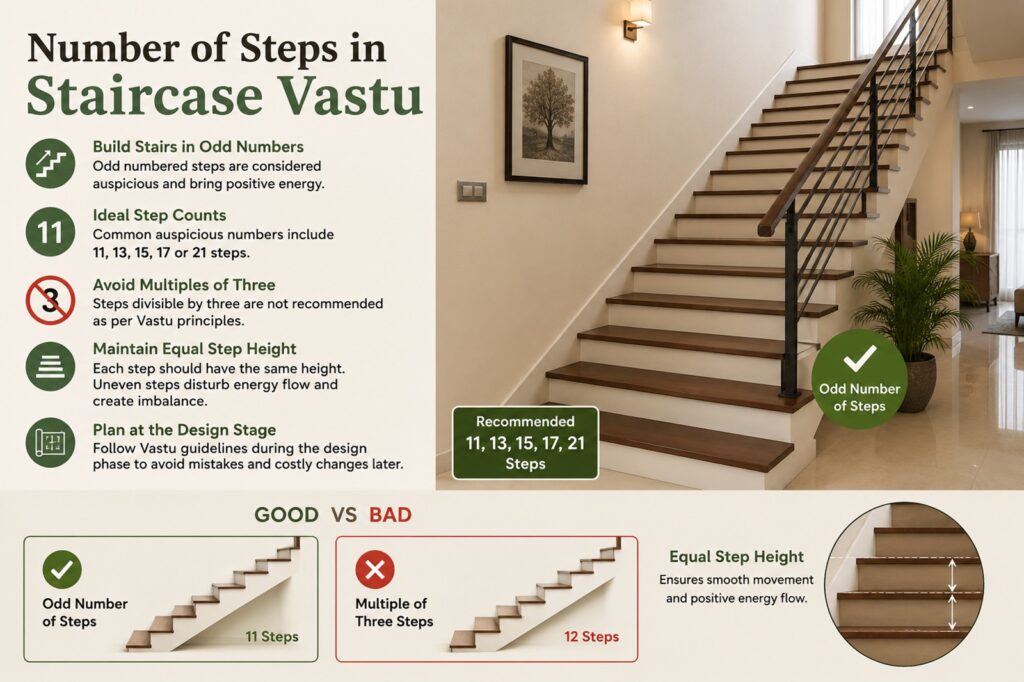
Staircase Vastu recommends building stairs in odd numbers wherever possible. Odd numbered steps are considered auspicious across traditional Vastu practices. Common recommendations include 11, 13, 15, 17 or 21 steps total. Avoid building staircases with steps divisible by three according to Vastu. Each step should also maintain a consistent height throughout the flight. Uneven step heights disturb the rhythm of movement and energy flow. Builders should follow staircase Vastu guidelines during the design phase itself. This prevents costly rework once construction reaches completion.
Staircase as per Vastu: Direction of Ascent
Staircase as per Vastu should ideally rise from south to north. It can also rise from west to east for balanced energy. This ascending pattern supports the natural movement of cosmic energy. A staircase rising from north to south is not recommended. This reverse direction disrupts positive energy movement within the home. Staircase as per Vastu also suggests avoiding a straight line design. A straight staircase allows energy to escape too quickly upward. L-shaped or spiral designs help retain and circulate energy better. These shapes slow down energy flow and distribute it evenly.
Shape and Design Guidelines
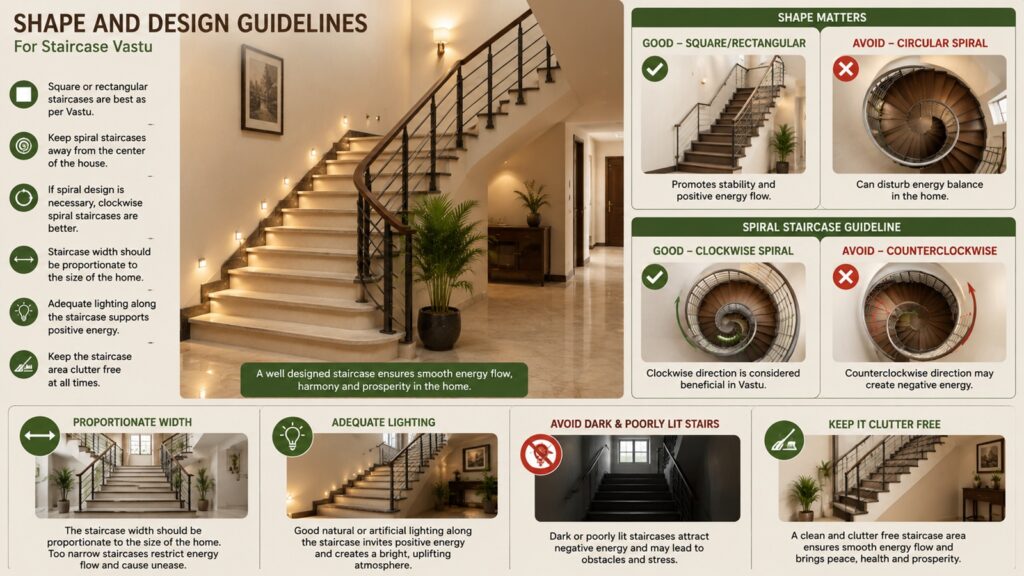
Staircase Vastu favors square or rectangular staircases over circular designs. Circular or spiral staircases can disturb energy balance in some homes. If a spiral design is necessary, keep it away from the center. Clockwise spiral staircases work better than counterclockwise ones in Vastu. The staircase width should remain proportionate to the size of the home. A cramped staircase restricts energy flow and creates a feeling of unease. Adequate lighting along the staircase supports positive staircase Vastu outcomes. Dark or poorly lit staircases attract negative energy over time. Keep the staircase area clutter free at all times for best results.
Materials and Colours for Staircase Vastu
Staircase Vastu suggests using sturdy materials like wood, stone or concrete. These materials provide stability and align with earth element energy. Avoid using glass staircases as they may create an unstable feeling. Metal staircases work well when combined with proper direction and placement. Colour choices also matter significantly in staircase Vastu practices. Earthy tones like brown, beige and cream suit staircases best. Bright red or black staircases are generally discouraged in Vastu. These colours can create aggressive or heavy energy within the home. Light and neutral shades promote calmness and steady energy movement.
Common Staircase Vastu Mistakes to Avoid
Many homeowners overlook staircase Vastu during the construction planning stage.
- Placing a staircase in the northeast zone remains a frequent error.
- Building a staircase directly opposite the main door also causes problems.
- Using broken or cracked steps disturbs the flow of positive energy.
- Storing shoes, junk or unused items under the staircase blocks energy. This common mistake violates basic staircase Vastu recommendations completely. Keeping this space clean and open supports smoother energy circulation.
- Painting the staircase in dark or overly bright colours also proves harmful.
Vastu Remedies for Incorrectly Placed Staircases
Not every home can follow perfect staircase Vastu due to space constraints. Several remedies help balance energy in such situations effectively.
- Placing a small mirror near the staircase can help redirect energy flow.
- Using indoor plants near the staircase base improves air and energy quality.
- Installing bright lighting compensates for staircases in less favourable zones.
- Wind chimes near the staircase also help balance disturbed energy patterns.
A Vastu consultant can suggest customised remedies based on specific home layouts. These small adjustments significantly improve staircase Vastu compliance without demolition. Homeowners facing space limitations should still apply these staircase Vastu remedies.
Staircase Vastu for Different Floor Levels
Multi-story homes require careful staircase Vastu planning for each level. The staircase leading to the first floor should follow southwest placement rules. Staircases connecting upper floors should maintain the same directional consistency. Avoid changing staircase direction abruptly between different floors of a home. This consistency supports uninterrupted energy flow throughout the entire structure. Duplex and villa owners should apply staircase Vastu principles at every level. Builders often consult Vastu experts for multi-story residential projects today.
Conclusion
Staircase Vastu plays a vital role in maintaining balanced home energy. Correct staircase direction as per Vastu supports health, wealth and harmony. Staircase Vastu for east facing house needs particular attention during planning. Staircase position as per Vastu should always avoid the northeast corner. Following staircase as per Vastu guidelines creates a peaceful living environment. Homeowners should consult Vastu experts before finalising staircase designs. Small remedies can also correct existing staircase Vastu imbalances effectively. Thoughtful planning today prevents energy disruptions for years to come.
If you are searching for a home designed with proper staircase Vastu principles in mind, contact us, our experts will guide for the right vastu directions for your staircase to bring harmony.
Frequently Asked Questions
1. What is the best direction for a staircase as per Vastu?
The southwest direction is the best staircase direction as per Vastu. South and west zones also work well for placement.
2. Where should a staircase be placed in an east facing house?
Staircase Vastu for east facing house suggests south or southwest placement. Keep it away from the main entrance and northeast corner.
3. How many steps should a staircase have according to Vastu?
Staircase Vastu recommends odd numbers like 11, 13, 15 or 17 steps. Avoid step counts divisible by three.
4. Can a staircase face the main door according to Vastu?
No, staircase position as per Vastu discourages facing the main entrance directly. This placement causes energy leakage from the home.
