

Tiles change the entire mood of a home. A good room tiles design gives your space a finished, elegant look. It also adds long term value to your property. Whether you build a new house or renovate an old one, tile design decides how welcoming your rooms feel.
This guide covers every important area, from living rooms to pooja rooms. Use it to pick a room tiles design that suits your home and budget.
Why Room Tiles Design Matters for Your Home
Tiles are not just a flooring choice. They set the tone for lighting, furniture placement, and overall interior style. A thoughtful room tiles design improves durability, makes cleaning easier, and adds resale value to your property.
Buyers today notice tile quality during home visits. A well planned tile layout signals that the house has been maintained with care. It also reduces maintenance costs over the years, since good tiles resist stains, scratches, and moisture damage.
Living Room Tiles Design Trends for 2026
This design trend has moved toward minimal patterns and natural finishes. Homeowners now prefer tiles that mimic marble, travertine, and natural stone rather than loud printed designs.
Matte and satin finishes are replacing high gloss tiles because they hide footprints and dust better. Terrazzo style tiles have also made a strong comeback, adding a retro yet modern character to living spaces. Neutral colour palettes with subtle veining remain the safest, most timeless living room tiles design choice for Indian households.
Read More: Terracotta Tiles Design
Different Types of Room Tile Designs for Every Room in Your Home
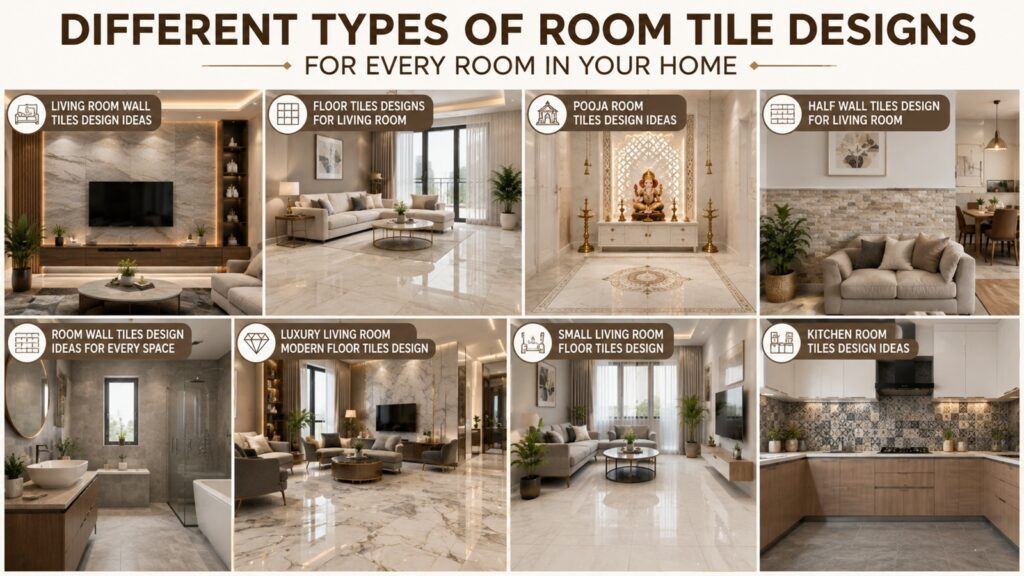
Living Room Wall Tiles Design Ideas
The living room is where guests spend most of their time, so it deserves special attention. A striking living room wall tiles design can turn a plain wall into a focal point. This needs no heavy renovation work.
Large format tiles in marble or stone finish create a luxurious backdrop behind the television unit. Textured tiles with geometric patterns add depth without overwhelming the space. Matte finish tiles in earthy tones like beige, grey, and taupe suit most Indian homes. They pair well with wooden furniture.
For a bolder statement, homeowners can try 3D textured wall tiles near the seating area. These catch light beautifully and create a sense of movement on an otherwise flat wall. Keep the rest of the room simple when you choose a bold wall tile. This keeps the design from feeling cluttered.
Floor Tiles Designs for Living Room
Floor tiles designs for living room spaces need to balance beauty with everyday practicality. Since the living room sees heavy footfall, durability matters as much as looks.
Vitrified tiles are a popular choice because they resist water, stains, and scratches while offering a glossy finish. Wood-look tiles are trending too. They give the warmth of hardwood flooring without the maintenance issues of real wood.
Large tiles, typically 800mm by 800mm or bigger, reduce grout lines. This makes small living rooms look more spacious. Light shades such as ivory, cream, and light grey reflect natural light and keep the room airy.
Pooja Room Tiles Design Ideas
The pooja room holds spiritual significance, so its tiles should feel calm and sacred. A traditional pooja room tiles design often uses marble or marble-look tiles in white or ivory shades. These colours represent purity.
Some homeowners prefer tiles with subtle floral or mandala motifs to add a traditional touch without looking too busy. Anti-skid tiles matter here. The floor near the pooja unit often gets wet from water offerings and diyas.
Vastu principles also guide many tile choices for this sacred space. Light colours are generally recommended for this sacred corner. Tiles with sharp, aggressive patterns are usually avoided here.
Half Wall Tiles Design for Living Room
A half wall tiles design for living room spaces adds texture in a practical way, without covering the entire wall. This style works especially well behind sofas, television units, or dining areas.
Typically, tiles go up to waist or chest height. The remaining wall gets painted in a complementary shade. This approach saves on tile cost while still delivering a designer look. Stone-finish or textured tiles work best for this half wall tiles design for living room style. They create contrast against the smooth painted upper wall.
This design also protects the lower wall from scuffs and daily wear. It suits homes with children or pets well.
Luxury Living Room Modern Floor Tiles Design
Homeowners aiming for a premium look often choose a luxury living room modern floor tiles design. Large slabs of Italian marble-look porcelain define this style. These tiles offer the elegance of natural marble with better durability and lower maintenance.
Book-matched tile patterns mirror two tiles to form a symmetrical design. This technique is gaining popularity in upscale homes. A luxury living room modern floor tiles design also often includes metallic inlays or thin brass strips between tiles. This adds a five-star hotel feel.
Polished porcelain in soft grey, warm beige, or classic white tones continues to dominate luxury interiors. These shades suit both modern and traditional furniture.
Small Living Room Floor Tiles Design
Space planning becomes critical in compact homes. A small living room floor tiles design should focus on tiles that visually expand the room, not shrink it.
Light colours, especially white, cream, and pale grey, reflect more light and make small rooms feel bigger. Large format tiles with minimal grout lines also help, since fewer visible seams create an uninterrupted, spacious appearance.
Avoid busy patterns or dark colours in a small living room floor tiles design. They tend to reduce the perceived size of the space. A single, continuous flooring tone from the living room into adjoining areas makes the whole home feel larger and connected.
Kitchen Room Tiles Design Ideas
The kitchen faces heat, oil splashes, and constant cleaning. So, a kitchen room tiles design must prioritise function alongside style. Glossy ceramic tiles are easy to wipe clean and resist stains from cooking.
For the kitchen floor, anti-skid tiles are essential since spills are common during cooking. Darker grout also helps hide everyday stains better than white grout, which shows dirt quickly.
Backsplash tiles behind the stove and sink deserve special attention too. Heat-resistant, easy-to-clean tiles in this zone protect the wall. They also add a decorative element to the kitchen room tiles design.
Also Read: Kitchen Wall Tiles Design
Popular Tile Materials to Consider

Material choice plays a big role in how your tiles perform over time. Ceramic tiles are affordable and easy to install, making them a common pick for budget-friendly projects. They work well in low-traffic areas like bedrooms and guest rooms.
Vitrified tiles offer superior strength and water resistance. This makes them suitable for living rooms, kitchens, and outdoor patios. Porcelain tiles cost more but deliver excellent durability. Their premium finish lasts for decades with minimal upkeep.
Natural stone options such as marble, granite, and travertine bring unmatched elegance to a home. However, these materials need regular sealing and careful maintenance to prevent staining. Homeowners who want the stone look without the upkeep often choose stone-finish vitrified or porcelain tiles instead.
Cement tiles are known for bold patterns and handcrafted charm. They suit accent walls and statement floors in eclectic homes. They add character but require sealing to resist stains, especially in kitchens and bathrooms.
Also Read:
Tips to Choose the Right Room Tiles Design
Choosing the right room tiles design depends on several practical factors, not just appearance. Consider these points before finalising your tiles.
- First, match the tile finish to the room’s function. Matte tiles suit high-traffic areas since they hide scratches better than glossy tiles.
- Second, think about maintenance. Porcelain and vitrified tiles need less upkeep than natural stone.
- Third, always request tile samples and view them in your actual room lighting before buying in bulk. Colours can look different under showroom lights compared to natural daylight at home.
- Fourth, check the tile’s slip resistance rating. This matters most for bathrooms, balconies, and kitchen floors where spills happen.
- Fifth, hire an experienced tile installer, since uneven laying can ruin even the best quality tiles.
- Finally, budget for at least ten percent extra tiles to account for cutting waste and future repairs.
A well researched tile choice enhances your home’s beauty. It also protects your investment for years to come. Taking time to compare finishes, colours, and sizes always pays off in the long run.
Conclusion
Selecting the right room tiles design transforms an ordinary home into a stylish, functional space. From the calm elegance of a pooja room to the bold luxury of a living room, every space has its own tile needs. Focus on durability, finish, and colour that matches your lifestyle, and your home will look refined for years to come.
Take your time before finalising any tile order. Visit multiple showrooms, compare prices, and check reviews of the brand you select. A small amount of research at the planning stage saves homeowners from costly mistakes later. It ensures the final result matches your vision.
Ready to give your home a fresh new look? Explore expert design guides, trending tile ideas, and complete home decor solutions with Zen Nest Living, your trusted partner for creating beautiful, functional, and value-adding living spaces every single day. Contact the experts now.
Frequently Asked Questions
1. Which tiles are best for Indian living rooms?
Vitrified and porcelain tiles work best for Indian living rooms since they resist heat, stains, and daily wear while offering a polished, elegant finish.
2. Are wood-look tiles a good option for bedrooms?
Yes, wood-look tiles give a warm, cosy feel to bedrooms and require far less maintenance compared to actual hardwood flooring.
3. What size tiles make a small room look bigger?
Large format tiles, generally 600mm by 1200mm or bigger, reduce grout lines and create a spacious, seamless appearance in small rooms.
4. Is anti-skid flooring necessary for the pooja room?
Yes, anti-skid tiles are strongly recommended for the pooja room since water offerings and diyas can make the floor slippery.
