
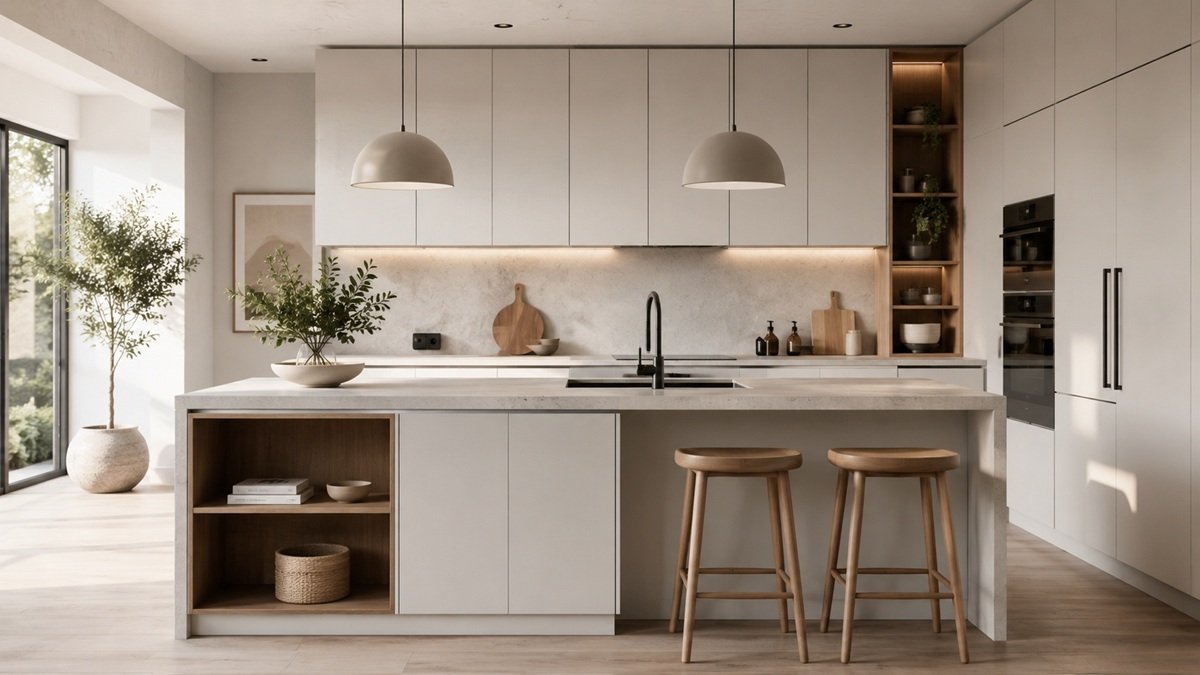
A cluttered kitchen can make even the simplest task feel stressful. Over the past few years, more homeowners have moved away from busy, overcrowded interiors towards cleaner, calmer spaces. This shift has made Minimalist Kitchen Design one of the most searched styles among people renovating or building a new home. It focuses on simplicity, functionality, and a sense of openness that makes cooking and gathering more enjoyable.
This guide walks through practical ideas that help you create a kitchen that feels spacious, organised, and effortlessly stylish, without spending a fortune or sacrificing comfort.
What Makes Minimalist Kitchen Design Work
The idea behind Minimalist Kitchen Design is simple: keep only what serves a purpose. Every cabinet, appliance, and surface should earn its place. This does not mean the kitchen should feel empty or cold. Instead, it should feel intentional, where each element contributes to a smoother, more efficient cooking experience.
A well-planned minimalist kitchen removes visual noise. Straight lines, hidden storage, and a limited colour palette work together to create a room that feels larger and calmer than it actually is. Homeowners often find that this approach also saves time, since fewer items mean less to clean and organise.
10 Best Minimalist Kitchen Design Ideas
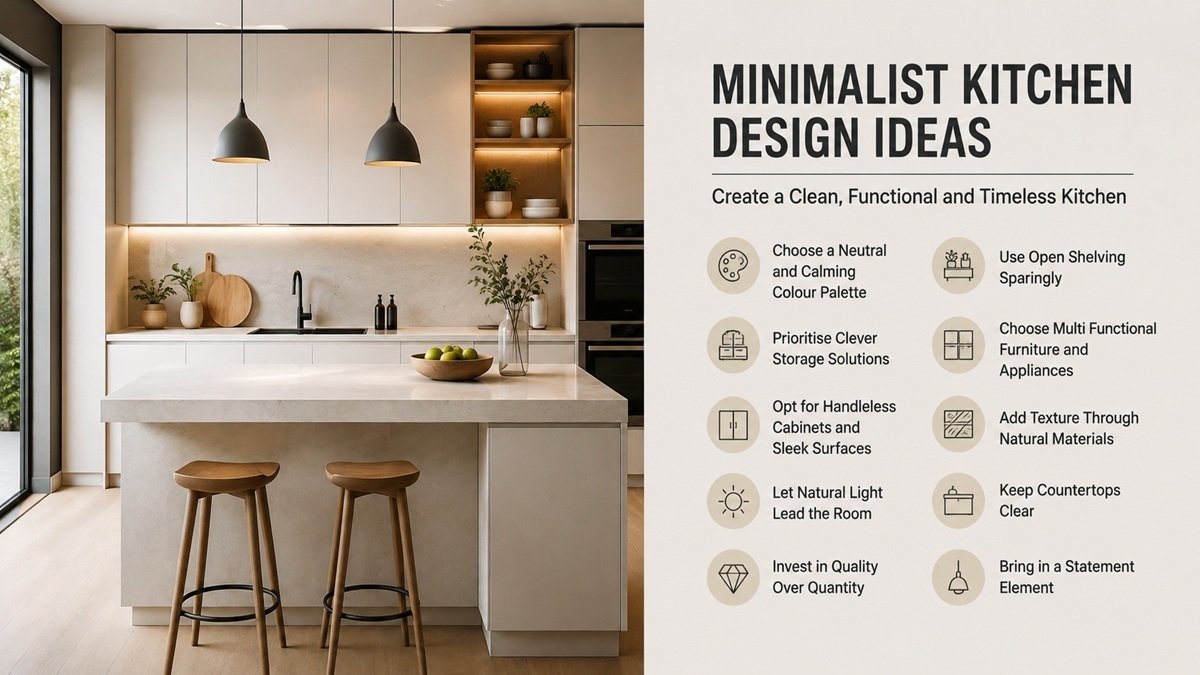
Choose a Neutral and Calming Colour Palette
Colour sets the tone for the entire room. Whites, soft greys, warm beiges, and muted earth tones remain the backbone of most minimalist kitchens. These shades reflect light well and make the space appear brighter and more open.
You do not need to stick to a single shade throughout. Pairing a light cabinet colour with a slightly darker countertop or backsplash adds depth without breaking the calm atmosphere. Matte finishes tend to suit this style better than glossy ones, as they soften harsh light and give the kitchen a more grounded, natural feel.
Avoid introducing more than two or three main colours. Too many tones compete for attention and work against the purpose of a clean, restful design.
Read More: Parallel Kitchen Design Ideas
Prioritise Clever Storage Solutions
Storage plays a central role in keeping a kitchen looking tidy. Deep drawers, pull-out pantries, and vertical dividers make it easier to store items out of sight while keeping them within easy reach. Corner units and tall cabinets that reach the ceiling also make use of otherwise wasted space.
When appliances such as microwaves, toasters, or blenders are tucked away in dedicated cupboards, the worktop stays free for actual cooking. This is one of the simplest ways to bring the principles of Minimalist Kitchen Design into a home that already has a busy layout.
Labelled containers and drawer organisers further reduce clutter inside cabinets, which keeps the entire kitchen feeling orderly even when it is well used.
Opt for Handleless Cabinets and Sleek Surfaces
Handleless cabinets have become a signature feature of contemporary kitchens. Push-to-open mechanisms or recessed grip rails remove the need for visible handles, giving cupboard fronts a smooth, uninterrupted look. This small change makes a noticeable difference to how streamlined the kitchen appears.
Flat-panel cabinet doors, integrated appliances, and flush countertops all support this seamless appearance. When surfaces blend into one another rather than standing apart, the kitchen naturally feels less busy.
Let Natural Light Lead the Room
Good lighting can transform even a small kitchen. Large windows, glass doors, or skylights allow daylight to fill the space, reducing the need for artificial lighting during the day. If natural light is limited, layered lighting, such as under-cabinet strips paired with recessed ceiling lights, can achieve a similar effect.
Warm, soft lighting in the evening keeps the room feeling welcoming rather than clinical. This balance between natural and artificial light is a key part of well-executed Minimalist Kitchen Design, as it supports both function and mood without adding visual clutter.
Invest in Quality Over Quantity
Rather than filling the kitchen with every gadget available, choose a smaller number of well-made tools and appliances that serve multiple purposes. A durable set of pans, one reliable oven, and a good knife often do more for your cooking than a dozen single-use items gathering dust in a drawer.
This approach also extends to furniture and fittings. A single, well-crafted dining table or island unit tends to have more impact than several smaller pieces competing for space. Buying fewer, better items supports the long-term goals of Minimalist Kitchen Design, since it reduces the temptation to accumulate clutter over time.
Use Open Shelving Sparingly
Open shelves can add character to a kitchen, but they need to be used with restraint. A few carefully chosen items, such as simple crockery, a small plant, or a stack of neutral-toned bowls, work well. Overloading shelves with mismatched objects quickly undoes the calm effect you are trying to achieve.
If you prefer a completely clean look, closed cabinetry may suit your lifestyle better than open shelving. Both options can support Minimalist Kitchen Design, so choose based on how tidy you can realistically keep an open display day to day.
Choose Multi Functional Furniture and Appliances
Space-saving furniture makes a real difference in smaller kitchens. Islands with built-in storage, extendable dining tables, and drawers that double as seating all help you get more use out of limited square footage.
Appliances that combine functions, such as a combination microwave and oven, also reduce the number of separate units needed on the worktop or in cabinets. This keeps the layout simple while still giving you everything required for daily cooking.
Add Texture Through Natural Materials
A minimalist kitchen does not need to feel plain. Wood, stone, and woven textures introduce warmth and depth without disrupting the simplicity of the design. A timber worktop, a stone splashback, or woven bar stools can soften the look of an otherwise streamlined space.
These natural materials also age well, which suits the long-term, low-maintenance philosophy behind Minimalist Kitchen Design. Choosing durable materials from the outset means fewer replacements and repairs down the line.
Keep Countertops Clear
An uncluttered worktop is one of the clearest signs of a well-organised kitchen. Store everyday items such as spice jars, cutting boards, and dish soap inside cabinets or drawers rather than leaving them on display. Keep only one or two functional items, such as a fruit bowl or a single plant, visible at any time.
This habit takes some adjustment if you are used to a busier kitchen, but it makes a significant visual difference and keeps the space easier to clean.
Bring in a Statement Element
Even the most pared-back kitchen benefits from one point of interest. This could be a bold pendant light above the island, a textured feature wall, or a striking tap fitting. A single statement piece draws the eye and adds personality without overwhelming the rest of the room.
The goal is balance. One thoughtful feature stands out far more effectively in a simple setting than it would in a busy, decorated one.
Final Thoughts
Creating a calm, functional kitchen does not require a complete renovation or a large budget. Small, deliberate choices, from colour and lighting to storage and materials, all add up to a space that feels organised and easy to live in. Minimalist Kitchen Design works because it removes distraction and puts function first, allowing the kitchen to support daily life rather than complicate it. Whether you are updating a few details or planning a full remodel, these ideas offer a practical starting point for a kitchen that stays both stylish and easy to maintain for years to come.
If you are planning a kitchen renovation or searching for more home design inspiration, Zen Nest Living offers practical guides, real estate insights, and styling ideas to help you create a home that suits your lifestyle. Explore our latest articles and start planning your dream space today.
Frequently Asked Questions
1. Is a minimalist kitchen more expensive to build?
Not necessarily. Choosing fewer, higher-quality materials and cabinets often costs less than filling a kitchen with multiple decorative elements and gadgets. Savings come from simplicity rather than excess.
2. Can a small kitchen suit this style?
Yes. Clean lines, light colours, and hidden storage actually help small kitchens feel more spacious, making this style particularly well suited to compact layouts.
3. Does a minimalist kitchen mean fewer appliances?
It means choosing appliances that serve real purposes and storing them out of sight when not in use, rather than eliminating them altogether.
4. What colours work best for this style?
Whites, soft greys, beige, and other muted neutrals tend to work well, often paired with one or two natural textures such as wood or stone for warmth.