
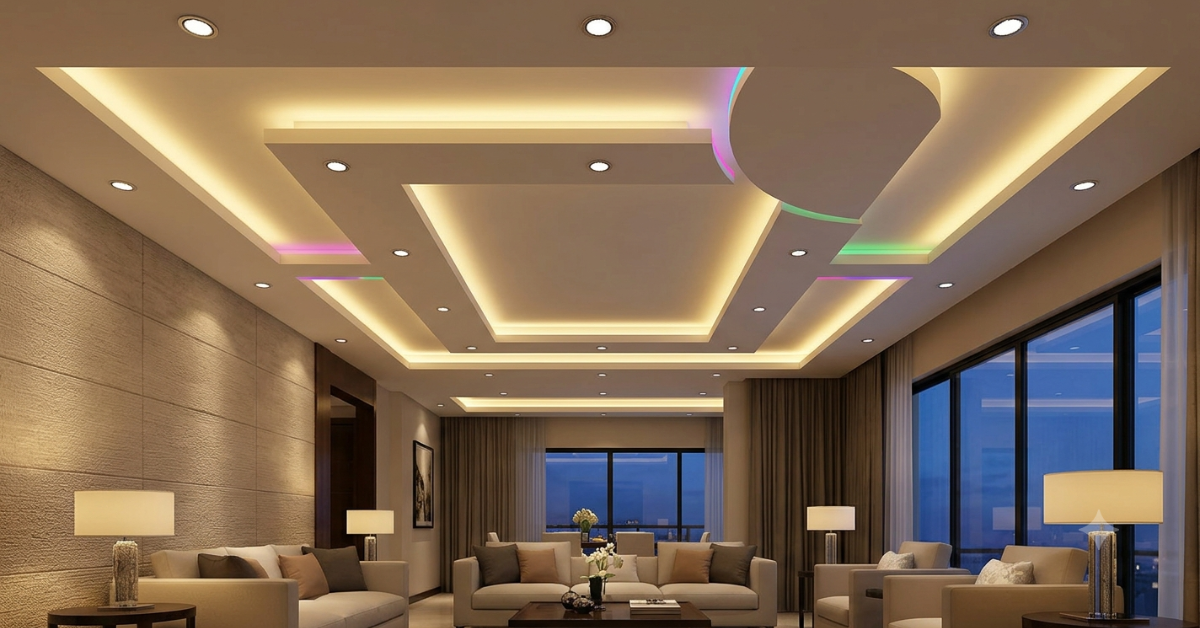
False ceiling lights transform ordinary rooms into elegant, well-lit spaces. Homeowners now prefer them over traditional lighting setups. These lights blend seamlessly with false ceiling designs. They create depth, warmth, and visual interest in any interior. This guide covers everything about false ceiling lights, their designs, colours, and cove lighting options.
What Are False Ceiling Lights
False ceiling lights are fixtures installed within a false ceiling structure. A false ceiling sits below the original ceiling. It hides wiring, ducts, and structural imperfections. Lights get embedded into this secondary ceiling layer. This creates a smooth, finished look overhead.
These lights serve both functional and decorative purposes. They illuminate rooms evenly without harsh shadows. They also highlight architectural features and ceiling patterns. Many homeowners choose them for living rooms, bedrooms, and dining areas.
Types of False Ceiling Lights
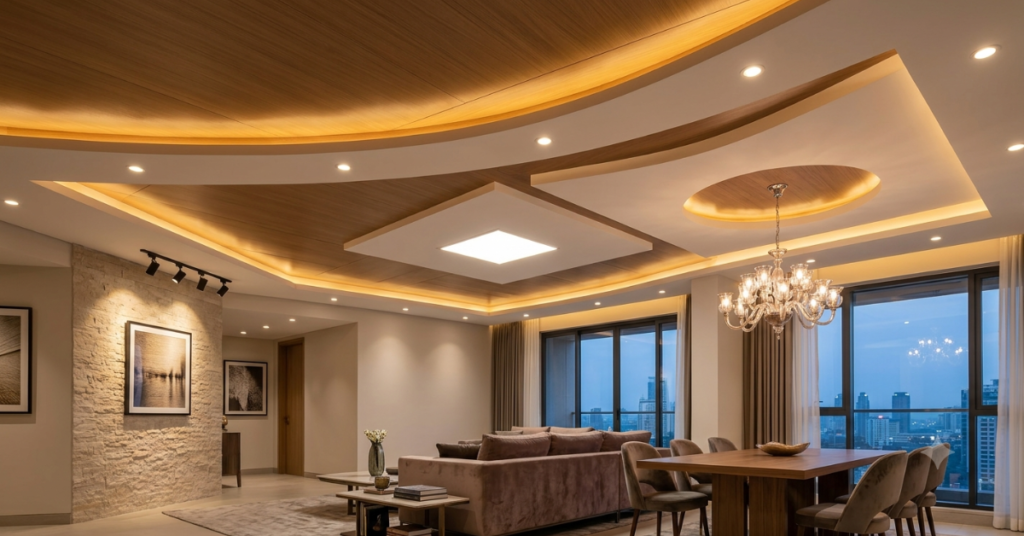
Several false ceiling light options suit different spaces and budgets.
- Recessed Lights: Recessed lights sit flush within the ceiling surface. They offer a clean, minimalist appearance. These lights work well for general room illumination.
- Cove Lights: Cove lights hide behind ceiling edges or curves. They create soft, indirect lighting effects. This type adds a dramatic touch to any room.
- Panel Lights: Panel lights come as flat LED fixtures. They fit into gypsum or POP ceiling frameworks. These lights provide bright, uniform illumination.
- Chandelier Cutouts: Some false ceilings include cutout sections for chandeliers. This combines a false ceiling with a statement lighting piece. It works well in dining rooms and foyers.
- Track Lights: Track lights allow adjustable, directional lighting. Homeowners can focus light on specific areas. This suits art displays or reading corners.
False Ceiling Light Design Ideas
Choosing the right false ceiling light design elevates a room’s overall appeal.
- Geometric Patterns: Circular, square, or hexagonal light cutouts add visual rhythm. Geometric designs suit modern and contemporary interiors. They work especially well in living rooms.
- Layered Ceiling Designs: Multi-tier false ceilings with embedded lights create depth. Each layer can hold a different light type. This design suits larger rooms with higher ceilings.
- Floating Ceiling Design: A floating false ceiling design uses a gap between layers. Hidden lights placed in this gap create a floating effect. This design looks striking in bedrooms and living spaces.
- Star Ceiling Design: Small LED lights scattered across a false ceiling mimic a starry sky. This design suits bedrooms and children’s rooms. It creates a calm, dreamy atmosphere.
- Curved and Wave Patterns: Curved false ceiling designs with linear lighting add softness. Wave patterns break the monotony of flat ceilings. These designs suit both traditional and modern homes.
False Ceiling Light Colour Options
False ceiling light colour affects the mood and function of a room.
- Warm White: Warm white light creates a cosy, inviting atmosphere. It suits bedrooms, living rooms, and dining areas. Most homeowners prefer this colour for daily use.
- Cool White: Cool white light offers a crisp, energising effect. It works well in kitchens, offices, and study rooms. This colour supports focused, task-oriented activities.
- RGB and Multicolour: RGB lights allow colour changes through remote controls. Homeowners use them for accent lighting or festive decor. These lights add a modern, playful touch.
- Neutral White: Neutral white balances warm and cool tones. It suits versatile spaces used for multiple purposes. This colour works well in hallways and multipurpose rooms.
Choosing the right colour depends on room function and personal preference. Combining two colour temperatures can also create layered lighting effects.
Read More: Wind Chimes for Home
False Ceiling Cove Light
False ceiling cove light adds a soft, indirect glow to rooms. Cove lighting hides the actual light source from direct view. It reflects light off the ceiling or walls instead.
- How Cove Lighting Works: Cove lights sit in a recessed channel along the ceiling edge. LED strips commonly serve as the light source. The light bounces upward or outward, creating ambient glow.
- Where to Use Cove Lights: Cove lights suit living rooms, bedrooms, and hallways. They highlight ceiling contours and architectural details. Many homeowners pair cove lights with layered false ceilings.
- Benefits of Cove Lighting: Cove lights reduce glare and harsh shadows. They create a relaxing, ambient mood. This lighting style also makes rooms appear larger and taller.
- Cove Light Colour Choices: Warm white cove lights suit relaxation spaces like bedrooms. Cool white works better in study or work areas. RGB cove lights suit entertainment rooms and party spaces.
Installation Tips
- Cove lighting requires careful planning during false ceiling construction.
- Electricians must plan wiring before installing the ceiling frame.
- Professional installation ensures even light distribution.
Benefits of False Ceiling Lights
False ceiling lights offer multiple advantages beyond aesthetics.
- They hide unsightly wiring and ductwork
- They improve room acoustics and insulation
- They allow flexible, layered lighting design
- They reduce energy consumption with LED options
- They increase property value and visual appeal
- They support smart home lighting integration
These benefits make false ceiling lights a practical investment. Modern homebuyers often look for well-designed lighting during property visits.
Tips to Choose the Right False Ceiling Lights
Selecting the right lighting requires careful thought and planning.
- Consider Room Size: Larger rooms need more light points for even illumination. Smaller rooms benefit from focused, minimal lighting.
- Match the Interior Style: Choose designs that complement existing furniture and decor. Modern homes suit geometric patterns and cool tones. Traditional homes suit warm, layered lighting designs.
- Plan for Energy Efficiency: LED lights consume less power than traditional bulbs. They also last longer, reducing maintenance costs.
- Hire Skilled Professionals: False ceiling installation requires technical expertise. Skilled contractors ensure proper wiring and safety standards. Poor installation can lead to electrical hazards.
- Balance Function and Design: Lighting should serve practical needs first. Decorative elements should enhance, not replace, functional lighting.
Conclusion
False ceiling lights combine style with practical benefits. They enhance room ambience through thoughtful design and colour choices. Cove lighting adds a soft, elegant touch to any space. Homeowners planning renovations should consider these lighting options carefully. The right false ceiling light design transforms an ordinary room into a stunning space.
Frequently Asked Questions
1. What is the best colour for false ceiling lights?
Warm white suits bedrooms and living rooms for a cosy feel. Cool white works better in kitchens and study areas. The choice depends on room function and mood.
Planning to upgrade your home with stylish false ceiling lighting? Contact us to explore modern lighting solutions. Zen Nest Living has experts to guide you to redefine the lightings at your home.
2. How much does false ceiling cove lighting cost?
Cove lighting costs vary based on room size and design complexity. LED strip lights and installation labour affect overall pricing. Consulting a local contractor gives accurate cost estimates.
3. Are false ceiling lights energy efficient?
Yes, most false ceiling lights use LED technology. LED lights consume less electricity than traditional bulbs. They also have a longer lifespan, reducing replacement costs.
4. Can false ceiling lights be installed in any room?
Yes, false ceiling lights suit most rooms including bedrooms, living rooms, and kitchens. Ceiling height and room layout affect design choices. Professional consultation helps determine the best setup.