
Buying property in Uttar Pradesh involves one crucial number. This number is the Circle Rate in UP. It decides how much stamp duty you pay. It also protects the government from revenue loss. Understanding the Circle Rate in UP helps you plan your budget correctly.
This guide explains everything about the Circle Rate in UP. You will learn what it means. You will also learn how it works and how to check it.
What Is Circle Rate in UP
The Circle Rate in UP is the minimum value fixed by the government. This value applies to land and property in a specific area. You cannot register a property below this rate. Even if your deal price is lower, registration happens at the Circle Rate in UP.
The Stamp and Registration Department of Uttar Pradesh sets this rate. It varies by district, tehsil, and even locality. Some states call this the ready reckoner rate. In UP, it is simply known as the circle rate.
Why Circle Rate in UP Matters for Buyers
The Circle Rate in UP directly affects your total buying cost. Stamp duty and registration charges depend on this rate. Authorities calculate these charges on whichever value is higher. This could be the actual deal price or the circle rate.
So if you negotiate a lower price, your charges may still stay high. The Circle Rate in UP becomes the base for your calculations. Ignoring this rate can lead to financial surprises during registration.
Banks also use the Circle Rate in UP for loan approvals. A property valued below circle rate may face loan restrictions. Buyers should always check this rate before finalising any deal.
Recent Update on Circle Rate in UP
The Circle Rate in UP has seen major changes recently. The state government is introducing a uniform system for setting circle rates across all 75 districts, starting from August 15, 2026. This new structure was meant to roll out from August 1, 2026, after district magistrates reviewed objections.
However, implementation has not been uniform everywhere. Many districts are still finalising their revisions and drafting new rates. Buyers should verify the latest Circle Rate in UP for their specific district before proceeding.
Cities like Lucknow have already seen sharp changes. Rates in Lucknow increased by up to 20 to 25 percent in 2025. Similar revisions and proposals have continued into 2026 in high-demand areas.
Noida has also revised its rates this year. The residential circle rate hike in Noida stands at a modest 3.58 percent. Officials kept this increase moderate to gradually align rates with actual market values.
These examples show that the Circle Rate in UP changes often. Staying updated protects you from unexpected costs.
How Circle Rate in UP Differs by City
The Circle Rate in UP is not one fixed figure. It changes based on location, infrastructure, and demand. Urban centres like Lucknow, Noida, and Ghaziabad carry higher rates. Rural and developing areas have comparatively lower rates.
Even within one city, rates differ by locality. Circle rates in Lucknow range from around 14,000 rupees per square metre in areas like Chinhat, to 76,000 rupees per square metre in premium zones like Hazratganj. This gap shows how much location influences the Circle Rate in UP.
Property type also affects the rate. Residential, commercial, and agricultural land all carry different values. Even within the same locality, these categories differ significantly.
How to Know Circle Rate of Land in UP
Many buyers ask how to know circle rate of land in UP before purchasing. The process is simple and fully online. The state government provides an official portal for this purpose.
Follow these steps to check the Circle Rate in UP:
- Visit the official IGRSUP website at igrsup.gov.in.
- Look for the valuation list or Maulyangan section on the homepage.
- Select your district from the dropdown menu.
- Choose the correct sub-registrar office for your area.
- Enter the property type, such as residential or agricultural.
- Submit the captcha code shown on screen.
- View or download the rate list in PDF format.
This method works for anyone wanting to know how to know circle rate of land in UP quickly. The portal updates rates whenever the government issues new notifications.
You can also visit your local sub-registrar office in person. Staff members there confirm the current Circle Rate in UP for your locality. Real estate consultants and property lawyers can offer additional guidance too.
Circle Rate vs Market Rate in UP
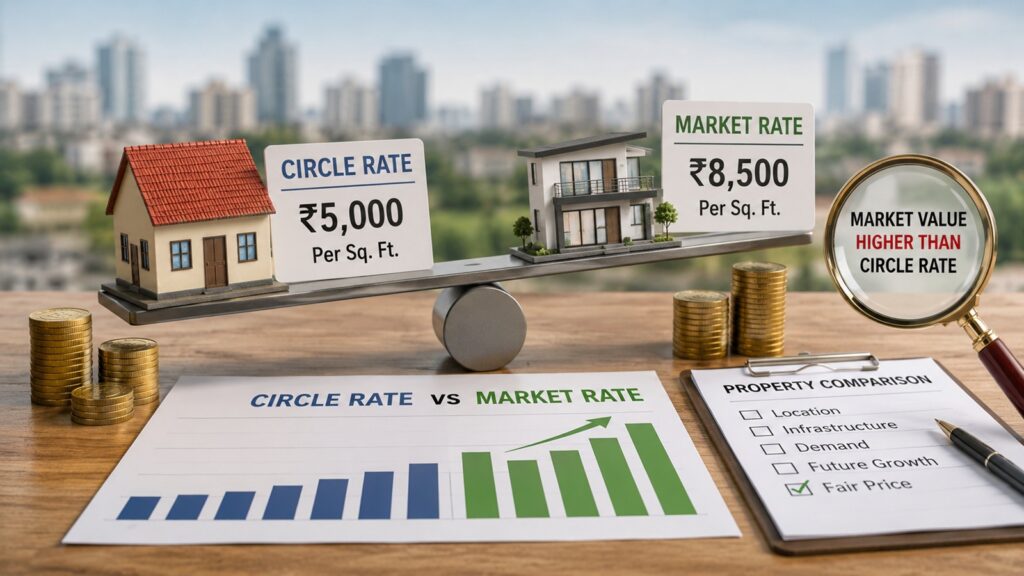
Many buyers confuse the Circle Rate in UP with the market rate. These two values often differ, sometimes significantly. The market rate reflects actual buyer demand and negotiation. The Circle Rate in UP reflects the government’s minimum valuation.
In premium locations, market rates often exceed circle rates. In developing areas, the gap remains smaller. Comparing both figures helps you judge whether a property is fairly priced.
A large gap between the two rates can indicate undervaluation risks. Always compare the Circle Rate in UP against nearby market transactions before buying.
Impact of Circle Rate in UP on Stamp Duty
Stamp duty in Uttar Pradesh depends heavily on the Circle Rate in UP. Current stamp duty rates are around 7 percent for male buyers and about 6 percent for female buyers. These charges apply to whichever value is higher between deal price and circle rate.
Registration fees add further cost on top of stamp duty. Buyers should factor in the Circle Rate in UP while budgeting for total expenses. A higher circle rate means higher upfront registration costs.
This system ensures fair revenue collection for the state. It also discourages underreporting of actual property values during registration.
How Circle Rate in UP Is Calculated for Flats
Flat buyers often wonder how authorities apply the Circle Rate in UP to apartments. The formula considers multiple factors together. These include land share, construction cost, and common area value.
The general formula works like this. Circle rate of a flat equals land ratio multiplied by land cost, plus flat area multiplied by construction cost, plus common area value. This calculation gives the minimum registrable value for your unit.
Builders and developers usually share this breakup during booking. Buyers should still verify figures against the official Circle Rate in UP before signing documents.
Tips for Buyers Regarding Circle Rate in UP
Always check the latest Circle Rate in UP before negotiating any deal. Rates change periodically, so outdated information can mislead you. Cross-check the online portal with your sub-registrar office when possible.
Factor stamp duty and registration costs into your total budget. These costs depend directly on the Circle Rate in UP, not just your deal price. Consult a property lawyer for high-value transactions.
Keep documentation ready before visiting the registrar office. This includes identity proof, property papers, and payment receipts. A clear understanding of the Circle Rate in UP saves time during registration.
Conclusion
The Circle Rate in UP plays a central role in every property transaction. It determines your stamp duty, registration cost, and legal property value. Rates vary by district, locality, and property type across the state.
Knowing how to know circle rate of land in UP protects you from overpaying or facing legal issues. Always verify the latest Circle Rate in UP through the official IGRSUP portal before finalising any deal.
Planning to buy your dream home in Uttar Pradesh? Zen Nest Living helps you explore trusted real estate insights, verified property guides, and expert tips to make confident buying decisions across the state today. Contact us now.
Frequently Asked Questions
1. What is the Circle Rate in UP?
The Circle Rate in UP is the minimum government-fixed value for property registration. Buyers cannot register property below this rate, regardless of the actual deal price.
2. How can I check the Circle Rate in UP online?
Visit igrsup.gov.in, select your district and sub-registrar office, choose the property type, and view the valuation list in PDF format.
3. Does Circle Rate in UP affect stamp duty?
Yes, stamp duty gets calculated on whichever value is higher between the deal price and the Circle Rate in UP.
4. Is the Circle Rate in UP the same across all cities?
No, it varies by district, locality, and property type. Urban areas generally carry higher rates than rural regions.
