
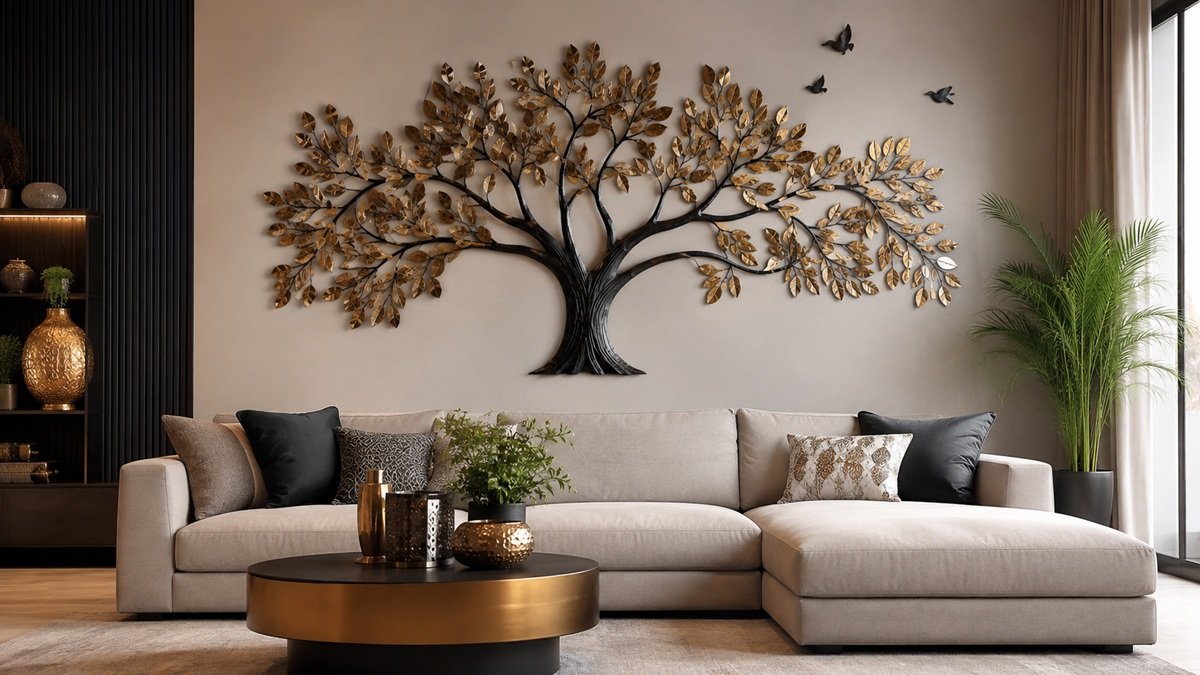
Metal wall art decor has become one of the most popular ways to add character to a home in 2026. Homeowners are moving away from generic prints and reaching for pieces that carry texture, dimension, and craftsmanship. This shift makes sense. A well-chosen piece does more than fill empty wall space; it sets the tone for an entire room and reflects the personality of the people who live there. It also tends to last far longer than paper prints, which means the investment continues to pay off years after installation.
This guide walks through the styles, materials, placement tips, and maintenance advice you need to bring these pieces into your own space with confidence, whether you are furnishing a new-build property or refreshing a period home.
Why Metal Wall Art Decor Works So Well
Metal wall art decor suits nearly every interior style, from minimalist apartments to rustic farmhouses. Unlike canvas prints or framed photographs, metal pieces catch and reflect light differently throughout the day, giving a room a sense of movement. The material also holds up better against humidity and temperature changes than paper or fabric, which makes it a practical choice for kitchens, bathrooms, and conservatories.
Designers favour metal because it bridges the gap between sculpture and traditional wall hanging. A single piece can act as a focal point, drawing the eye without overwhelming the rest of the room. Homeowners renovating in 2026 are increasingly asking for statement walls, and metal pieces answer that brief without requiring structural changes to the property.
Read More: Home Compound Wall Design: Ideas, Costs & Tips for 2026
Popular Styles To Consider
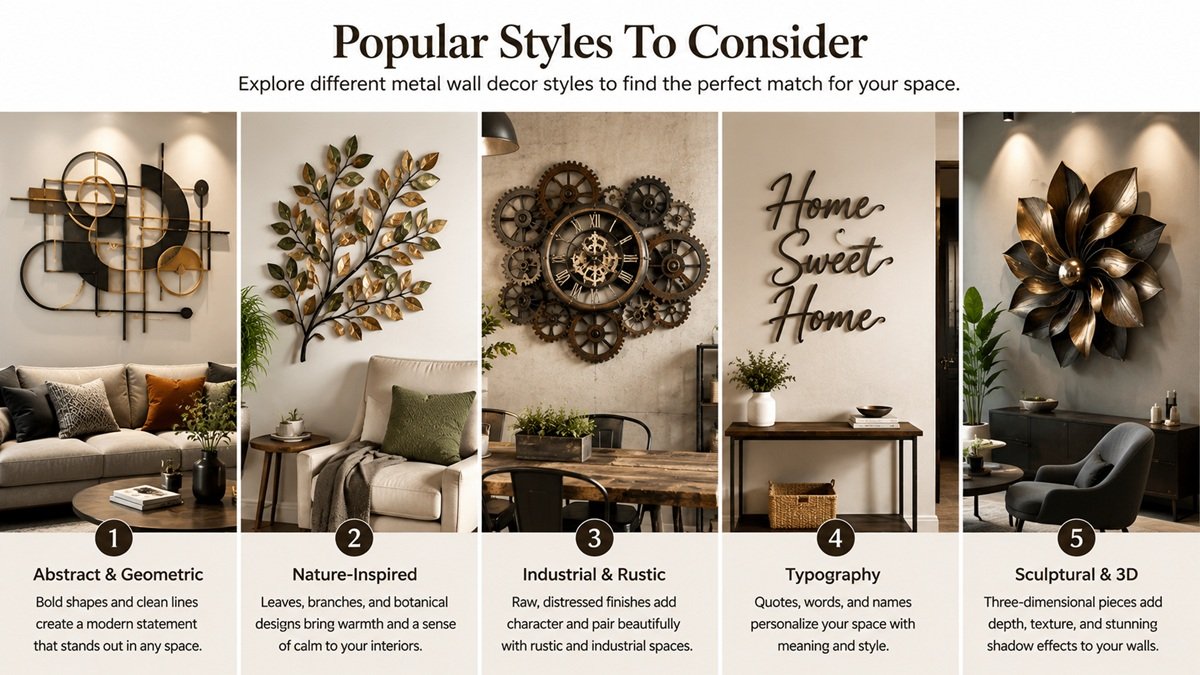
Choosing the right style is the first step in selecting metal wall decor that suits your home.
- Abstract and geometric designs remain a firm favourite. Interlocking shapes, circles, and angular patterns work particularly well in living rooms and hallways where a bold statement is welcome. These pieces pair naturally with neutral walls and let the metal do the talking.
- Nature-inspired designs, such as leaves, branches, and botanical silhouettes, bring warmth into a space. This style suits bedrooms and reading nooks where a softer, calmer mood is the goal.
- Industrial and rustic finishes, including raw or distressed metal, work well in kitchens, dining areas, and open-plan living spaces. They pair naturally with exposed brick, wood beams, and concrete flooring.
- Typography pieces, featuring quotes or family names cut from metal, have grown in popularity for hallways and entryways. They personalise a space without requiring a large budget.
- Sculptural or three-dimensional pieces add depth and shadow play, particularly when positioned near a light source. These work well as a single large installation rather than a grouped arrangement.
Materials and Finishes That Matter
The material behind any piece of metal wall decor affects both its appearance and its longevity. Iron and steel are common choices because they hold intricate cuts well and can be powder coated in almost any colour. Aluminium is lighter and resists corrosion, making it a sensible option for outdoor or semi-outdoor spaces such as covered patios.
Copper and brass finishes have returned to favour in 2026, particularly in warm, jewel-toned interiors. These metals develop a natural patina over time, which many homeowners find adds character rather than detracting from the piece.
When comparing finishes, consider how much natural light the room receives. Polished or mirrored metal reflects light and can brighten a darker room, while matte or brushed finishes suit spaces that already receive plenty of sunlight and do not need additional glare.
Thickness of the metal also plays a part in how a piece performs over time. Thinner gauge sheets are lighter and easier to hang but can be more prone to denting or warping if knocked. Thicker gauge pieces cost more and weigh more, requiring sturdier wall fixings, but they tend to hold their shape better and feel more substantial in person. It is worth asking a supplier about gauge thickness before purchasing a larger installation, particularly if the piece will hang in a high-traffic area such as a hallway or staircase.
Also Read: Wall Texture Design Ideas That Elevate Every Room
Where To Place Metal Wall Art Decor
Placement makes a significant difference to how a piece reads within a room.
- In living rooms, hanging a large piece above the sofa at eye level, roughly fifteen centimetres above the backrest, creates a balanced focal point.
- In dining rooms, positioning artwork above a sideboard or centred on the main wall draws the eye without competing with the table setting.
- Hallways and staircases benefit from a series of smaller pieces arranged in a line or grid, guiding movement through the space.
- Bedrooms suit softer, smaller installations above the headboard, chosen to complement rather than dominate the room.
- Outdoor spaces, including gardens, courtyards, and covered terraces, increasingly feature weather-resistant metal wall decor as homeowners extend their living areas outside. Rust-resistant coatings and marine-grade finishes make this possible without sacrificing style.
Lighting deserves equal attention when planning placement. A small directional spotlight or a discreet strip of LED lighting positioned above or below a piece can dramatically change how it reads after dark, casting shadows that add depth to flat or embossed designs. Even without dedicated lighting, positioning a piece near a window so it catches natural light during the day can be enough to make it stand out without any additional fittings.
Getting The Size Right
Proportion matters as much as style when choosing metal wall art decor. A piece that is too small will look lost on a large wall, while an oversized piece can overwhelm a compact room. As a general guide, artwork should cover between sixty and seventy five percent of the width of the furniture beneath it, such as a sofa, console table, or bed frame.
For blank walls without furniture nearby, measure the available space and aim for a piece that occupies roughly two thirds of the wall height. Grouping several smaller pieces together can achieve a similar visual weight to one large installation, while offering more flexibility to rearrange later.
Colour and Finish Trends For 2026
This year has seen a clear shift towards warmer metal tones. Brushed gold, aged brass, and copper are replacing the cooler silvers and chromes that dominated previous years. Matte black remains a strong choice for contemporary interiors, particularly when paired with warm wood tones and soft textiles.
Mixed metal pieces, combining two or more finishes within a single design, have also grown in popularity. This approach allows a single piece of metal wall decor to tie together multiple metal accents already present in a room, such as door handles, light fixtures, and tapware.
Caring For Your Metal Wall Art Decor
Maintenance is straightforward but should not be ignored. Dust pieces regularly with a soft, dry cloth to prevent buildup in detailed cuts and grooves. For outdoor installations, check for signs of rust or coating wear at least twice a year, particularly after harsh weather.
Avoid harsh chemical cleaners on painted or powder coated finishes, as these can strip the protective layer and dull the colour over time. A damp cloth with mild soap is usually sufficient for indoor pieces. Untreated iron benefits from an occasional light coat of wax to slow oxidation and maintain its appearance.
Budgeting For Metal Wall Art Decor
Prices vary widely depending on size, material, and craftsmanship. Smaller, mass-produced pieces can cost relatively little, while large, handcrafted, or custom-designed installations command a higher price. Custom pieces, cut to a specific size or design, typically take several weeks to produce, so plan ahead if you are working towards a renovation deadline or a specific event.
Buying from independent metalworkers or small studios often results in a more distinctive piece than mass-market alternatives, and many offer bespoke sizing to fit an exact wall or alcove.
Before committing to a purchase, ask about delivery and installation. Larger or heavier pieces may require professional fitting, particularly on plasterboard walls where additional bracing is needed to support the weight safely. Some suppliers include installation guidance or hardware with the purchase, while others expect the buyer to arrange fitting separately, so it is worth clarifying this upfront to avoid unexpected costs closer to delivery.
Bringing It All Together
Choosing the right metal wall art decor for a home comes down to balancing style, scale, and placement. Start by identifying the mood you want a room to convey, then select a finish and design that supports that goal. Whether the choice is a bold abstract sculpture for a living room or a delicate botanical piece for a bedroom, it offers a durable and versatile way to personalise a space in 2026 and beyond. Take time to measure the wall, consider the room’s lighting, and choose a finish that will age well before committing to a final design.
Ready to bring a bold, personalised feature into your home? Get in touch with Zen Nest Living today, and our team will help you plan, source, and style the perfect statement piece for every room, tailored to your taste.
Frequently Asked Questions
1. Is metal wall art decor suitable for humid rooms such as bathrooms?
Yes, provided the piece has a rust-resistant or powder coated finish. Aluminium and treated steel handle humidity well, making them sensible choices for bathrooms and kitchens.
2. How high should a piece be hung above furniture?
A general rule is to hang artwork so its centre sits at eye level, roughly fifteen to twenty centimetres above the top of the furniture beneath it, such as a sofa or console table.
3. Can metal wall art decor be used outdoors?
Yes, many pieces are designed specifically for outdoor use with marine-grade coatings and rust-resistant finishes, making them suitable for gardens, patios, and courtyards.
4. What is the easiest way to clean metal wall art?
Dust regularly with a soft, dry cloth, and use a damp cloth with mild soap for a deeper clean. Avoid harsh chemical cleaners, which can damage painted or powder coated surfaces.