
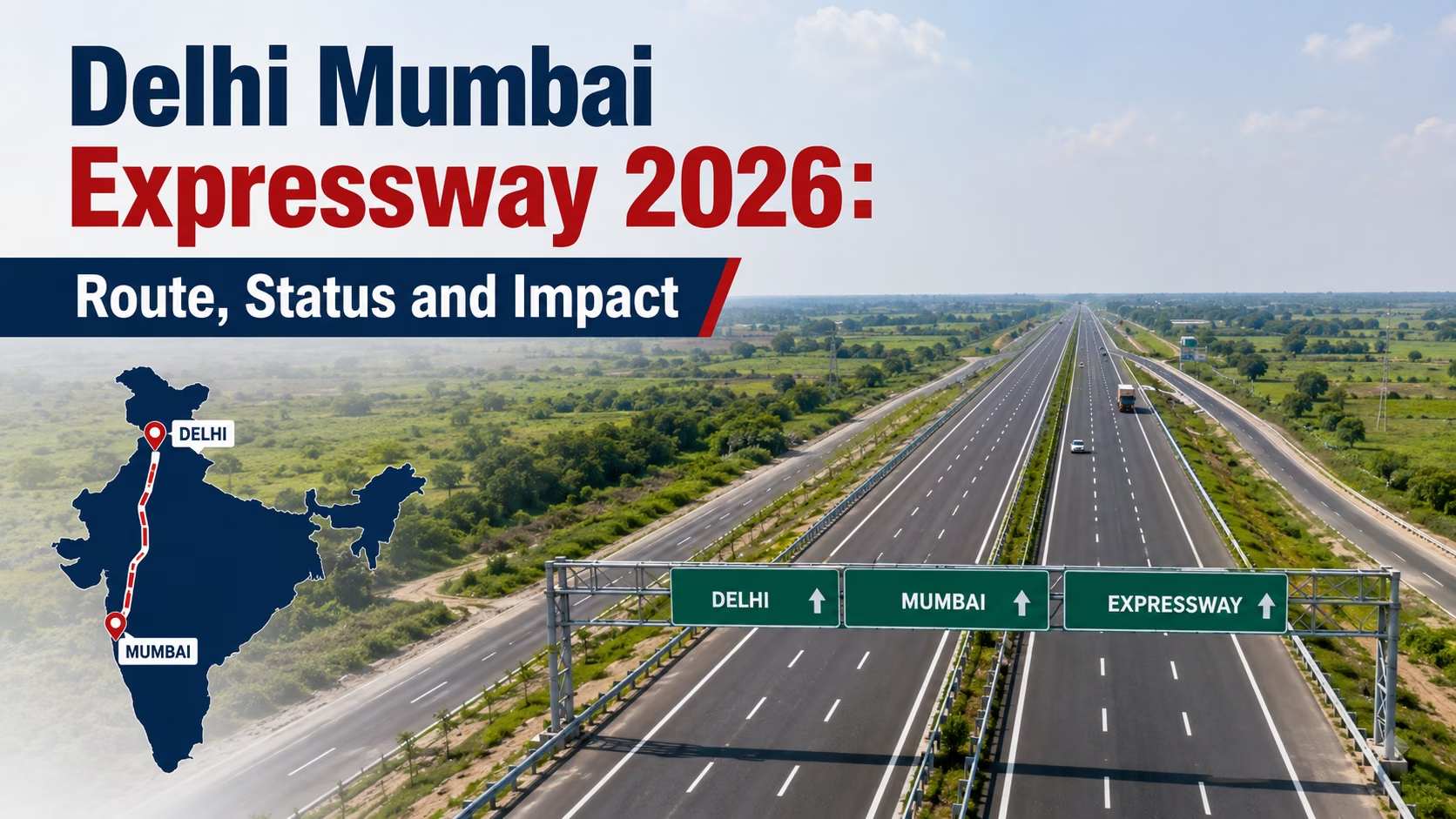
The Delhi Mumbai Expressway has become one of the most talked about infrastructure projects in India, and rightly so. Once fully open, it will connect the national capital with the country’s financial capital through a modern, high speed corridor that cuts travel time dramatically. For homebuyers, investors, and anyone tracking India’s growth story, the Delhi Mumbai Expressway is not just a road. It is a catalyst reshaping real estate, logistics, and urban development along its entire stretch.
In this guide, we walk through everything worth knowing about the Delhi Mumbai Expressway as it stands today, including its route, current construction status, key features, and the wider impact it is having on towns and cities along the way.
What Is the Delhi Mumbai Expressway
The Delhi Mumbai Expressway is an eight lane, access controlled highway built by the National Highways Authority of India under the Bharatmala Pariyojana programme. It runs for roughly 1,350 kilometres, connecting Delhi and Mumbai through six states. The corridor is designed for a speed of 120 kilometres per hour and has been planned with future expansion to twelve lanes in mind, allowing it to handle rising traffic volumes for decades to come.
Once every stretch opens to the public, the journey between Delhi and Mumbai will take around twelve hours by road, down from roughly twenty four hours on the older National Highway 48 route. That single change alone explains why the project carries so much weight in conversations about India’s infrastructure ambitions.
Route of the Delhi Mumbai Expressway
The Delhi Mumbai Expressway begins near Maharani Bagh in Delhi, linking with the DND Flyway and the Ring Road, before travelling south through Haryana, Rajasthan, Madhya Pradesh, and Gujarat, and finally reaching Maharashtra, where it terminates near the Jawaharlal Nehru Port Trust in Mumbai.
Here is a rough breakdown of the corridor by state:
- Delhi (around 12 km): The starting stretch links Maharani Bagh with the DND Flyway and connects smoothly into the city’s existing ring road network.
- Haryana (around 129 km): The route passes through Faridabad, Ballabhgarh, Sohna, and Palwal, and links to the Kundli Manesar Palwal Expressway near Khalilpur.
- Rajasthan (around 373 km): This is the longest state wise stretch, running through Alwar, Bandikui, Dausa, Sawai Madhopur, and Kota, and connecting with several major national highways.
- Madhya Pradesh (around 244 km): The corridor passes through Mandsaur, Garoth, Jaora, Ratlam, and Thandla, providing improved connectivity to central India.
- Gujarat (around 250 km): Key towns along this section include Dahod, Godhra, Vadodara, Bharuch, and Surat, an area that already hosts significant industrial activity.
- Maharashtra (around 170 km): The final leg runs through Valsad, Vapi, Palghar, and Virar, before reaching the outskirts of Mumbai near Bhiwandi and connecting to the JNPT port.
This route makes the Delhi Mumbai Expressway one of the most geographically significant road projects ever undertaken in India, touching industrial belts, agricultural regions, and fast growing residential markets in almost equal measure.
Current Construction Status as of August 2026
As of August 2026, the Delhi Mumbai Expressway is in the final stages of completion. According to figures shared in Parliament, the corridor and its spur roads span roughly 1,445 kilometres across 54 construction packages, with the vast majority already operationalised.
The Delhi to Vadodara section, which covers about 912 kilometres, has been targeted for full completion by June 2026, with most of it already open to traffic. Sections such as Sohna to Dausa in Rajasthan, Kota to Ratlam, and stretches through Madhya Pradesh have been functional for some time, easing travel for commuters and freight operators alike.
Further south, the Vadodara to Mumbai stretch has also seen major progress. The Godhra to Vadodara section opened on a trial basis in April 2026, and the Mumbai to Vadodara leg has been readied to open shortly after, cutting travel time between the two cities from around eight hours to close to four. This particular stretch matters enormously for Gujarat and Maharashtra, since it links two of the country’s most active commercial regions directly through the Delhi Mumbai Expressway.
A small number of packages, particularly three sections in Gujarat’s Vadodara to Virar stretch, have faced delays due to land acquisition issues and contractor related challenges. These are now expected to be completed by March 2028. Aside from these pockets, the government has indicated that the rest of the Delhi Mumbai Expressway should be fully open to traffic by the end of 2026, making this one of the final milestones for a project that has been years in the making.
Key Features of the Delhi Mumbai Expressway
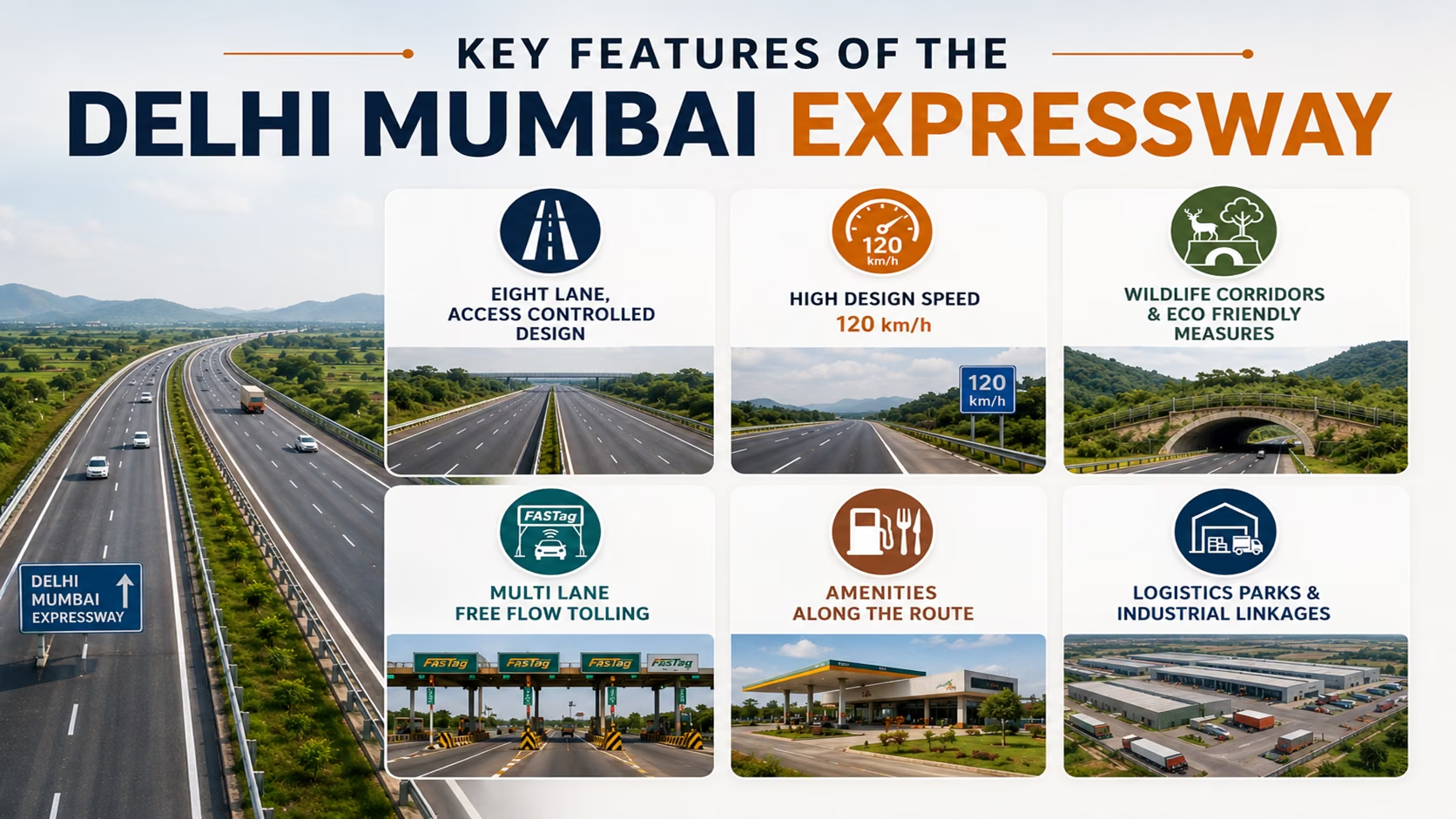
The Delhi Mumbai Expressway is not simply a longer version of an existing highway. It has been engineered with several features that set it apart from older road infrastructure in India.
- Eight lane, access controlled design: Entry and exit points are limited to designated interchanges, which keeps traffic flowing smoothly and reduces the risk of accidents caused by unregulated access.
- High design speed: With a design speed of 120 kilometres per hour, the corridor is built to modern highway standards, comparable to expressways found in developed economies.
- Wildlife corridors and eco friendly measures: The Delhi Mumbai Expressway passes near ecologically sensitive zones, including the Mukundra Hills Tiger Reserve in Rajasthan. To protect wildlife movement, the project includes animal underpasses and a long tunnel section through the reserve, reducing the impact of the highway on local ecosystems.
- Multi Lane Free Flow tolling: Several newer sections use barrier free tolling technology, allowing vehicles to pass through toll points without stopping, which further reduces travel time and congestion.
- Amenities along the route Wayside amenities, including fuel stations, food courts, and rest areas, are being developed at regular intervals, a feature that has been largely absent on many older Indian highways.
- Logistics parks and industrial linkages: The Delhi Mumbai Expressway has been planned alongside multi modal logistics parks, including one near Indore, which will help streamline freight movement between manufacturing hubs and ports.
How the Delhi Mumbai Expressway Reduces Travel Time
One of the most compelling reasons people are following this project closely is the sheer reduction in travel time it promises. The current road journey between Delhi and Mumbai via NH48 typically takes over twenty hours, factoring in traffic, tolls, and stretches of congested single or double lane roads.
Once the Delhi Mumbai Expressway is fully operational, that same journey is expected to take around twelve hours. For freight operators, this translates into faster turnaround times, lower fuel costs, and reduced wear on vehicles. For passenger travel, it means road trips between the two metros become genuinely feasible in a single day, something that was previously impractical for most travellers.
Shorter regional trips along the corridor have already improved. The Mumbai to Vadodara stretch, for example, is expected to fall from eight hours to roughly four once fully open, a change that benefits both business travellers and families visiting relatives across state lines.
Economic Impact of the Delhi Mumbai Expressway
Large infrastructure projects rarely stay confined to transport statistics, and the Delhi Mumbai Expressway is a clear example of that. The corridor is expected to boost economic activity across the states it passes through by improving access to markets, reducing logistics costs, and encouraging new investment along its length.
Industrial hubs such as Surat, Vadodara, and Bharuch in Gujarat stand to benefit from faster connections to both Delhi and Mumbai, strengthening their position as manufacturing and export centres. In Rajasthan and Madhya Pradesh, towns that were previously somewhat isolated from major trade routes are gaining direct access to a high speed corridor linking two of India’s largest consumer markets.
Freight movement is expected to see particular gains. With reduced transit times, businesses along the Delhi Mumbai Expressway can shorten supply chains, lower transportation costs, and improve delivery reliability, which in turn supports warehousing, cold storage, and logistics park development in previously underserved areas.
Read More: Delhi Dehradun Expressway Plots
Real Estate Impact Along the Delhi Mumbai Expressway
For anyone tracking property markets, the Delhi Mumbai Expressway has already begun to influence land values and development plans in several regions. Improved connectivity tends to widen the radius within which people are willing to live, work, or invest, and this corridor is no exception.
Areas closer to interchanges in Haryana, particularly around Sohna and Faridabad, have seen growing interest from residential and commercial developers. Better access to Delhi through the expressway makes these locations more attractive for people who want a quieter setting without sacrificing connectivity to the capital.
Further along the route, towns in Rajasthan such as Alwar and Dausa are being positioned as emerging logistics and warehousing hubs, given their proximity to the Delhi Mumbai Expressway and existing highway networks. In Gujarat, cities like Vadodara and Surat, already established commercial centres, are likely to see continued demand for both residential and industrial real estate as travel times to Mumbai and Delhi shrink further.
This is exactly the kind of shift that makes infrastructure projects worth watching closely if you are planning a property purchase, whether for personal use or investment. Locations that once seemed peripheral can quickly become viable, well connected options once a corridor like the Delhi Mumbai Expressway becomes fully functional.
Toll Structure on the Delhi Mumbai Expressway
Toll rates on the Delhi Mumbai Expressway follow a distance based structure, meaning charges depend on how far a vehicle travels along the corridor, along with the vehicle category. Cars, commercial vehicles, and heavy trucks are charged differently, in line with standard NHAI practices used across other national highways and expressways.
Several sections now use Multi Lane Free Flow tolling, which reads vehicle details electronically as they pass through toll points, removing the need to stop and pay at a barrier. This is expected to become more widespread as additional sections of the Delhi Mumbai Expressway open, further reducing delays during peak travel periods.
Challenges Faced During Construction
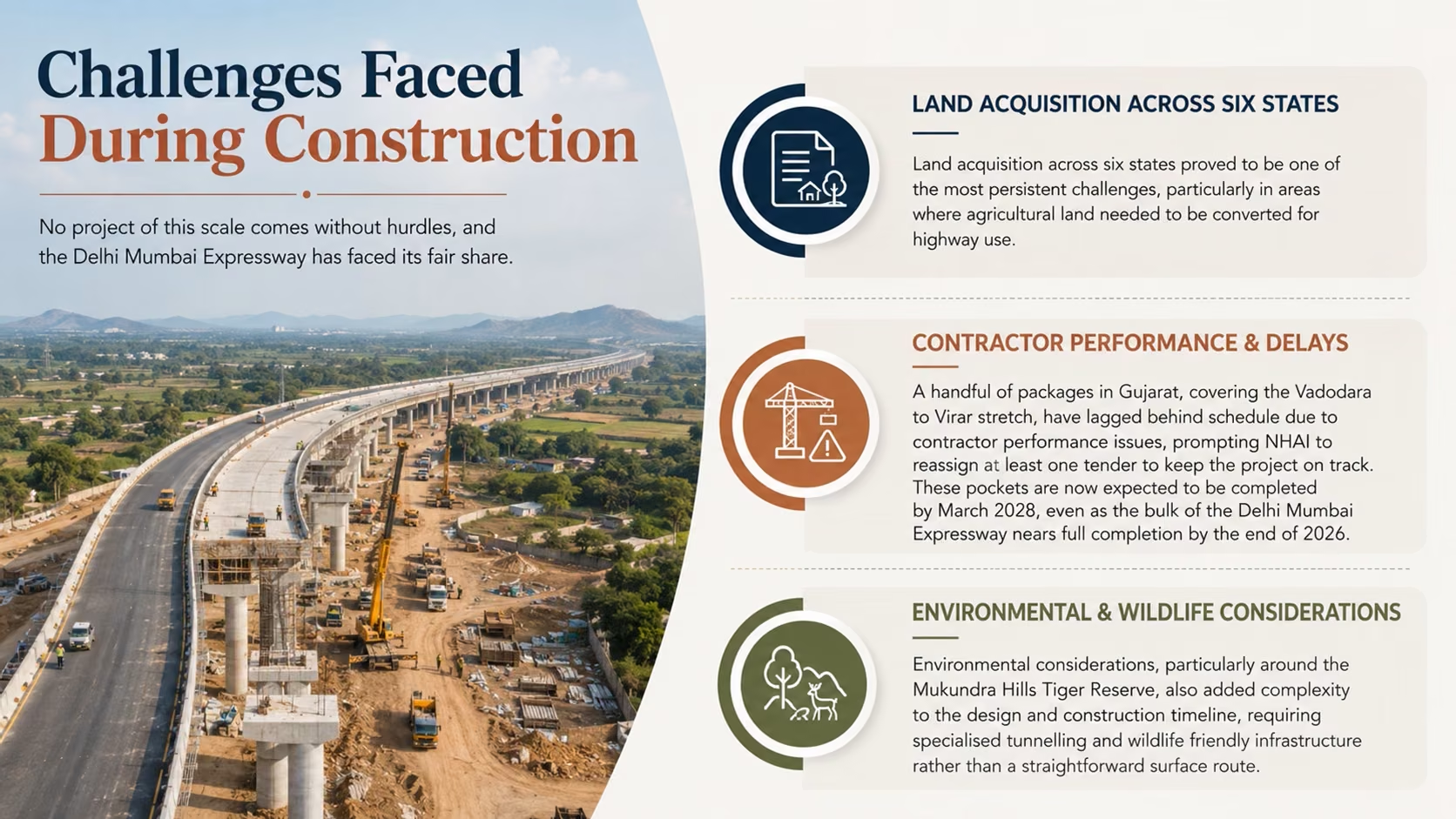
No project of this scale comes without hurdles, and the Delhi Mumbai Expressway has faced its fair share. Land acquisition across six states proved to be one of the most persistent challenges, particularly in areas where agricultural land needed to be converted for highway use.
A handful of packages in Gujarat, covering the Vadodara to Virar stretch, have lagged behind schedule due to contractor performance issues, prompting NHAI to reassign at least one tender to keep the project on track. These pockets are now expected to be completed by March 2028, even as the bulk of the Delhi Mumbai Expressway nears full completion by the end of 2026.
Environmental considerations, particularly around the Mukundra Hills Tiger Reserve, also added complexity to the design and construction timeline, requiring specialised tunnelling and wildlife friendly infrastructure rather than a straightforward surface route.
Why the Delhi Mumbai Expressway Matters for the Future
Beyond the immediate benefits of faster travel, the Delhi Mumbai Expressway represents a broader shift in how India is approaching infrastructure. It reflects a move towards long distance, high speed corridors that prioritise safety, efficiency, and reduced environmental disruption, rather than incremental widening of older highways.
For businesses, the corridor opens up new possibilities for supply chain planning, warehousing locations, and manufacturing hubs that were previously limited by poor connectivity. For everyday travellers, it offers a safer, faster, and more predictable journey between two of India’s most important cities. And for the real estate sector, it is already reshaping where people choose to live, work, and invest, as towns along the route gain fresh relevance in the national economy.
As remaining sections of the Delhi Mumbai Expressway open through the rest of 2026, its full impact on connectivity, trade, and property markets will likely become even clearer.
Planning a move to a location gaining new connectivity through the Delhi Mumbai Expressway, or simply want expert guidance on real estate and home decor decisions along India’s growing infrastructure corridors? Get in touch with Zen Nest Living today, and let our team help you find the right property or design solution for your needs.
Frequently Asked Questions
1. How long is the Delhi Mumbai Expressway?
The Delhi Mumbai Expressway runs for approximately 1,350 kilometres, connecting Delhi and Mumbai through Haryana, Rajasthan, Madhya Pradesh, Gujarat, and Maharashtra. Including spur roads and linked sections, the total network extends to around 1,445 kilometres.
2. When will the Delhi Mumbai Expressway be fully completed?
Most sections are expected to be operational by the end of 2026, with the Delhi to Vadodara stretch targeted for June 2026. A small number of packages in Gujarat, affected by earlier delays, are expected to be completed by March 2028.
3. How much time will the Delhi Mumbai Expressway save on travel?
Once fully open, the journey between Delhi and Mumbai is expected to take around twelve hours by road, compared with roughly twenty four hours on the existing NH48 route.
4. Which states does the Delhi Mumbai Expressway pass through?
The corridor passes through six states, namely Delhi, Haryana, Rajasthan, Madhya Pradesh, Gujarat, and Maharashtra, connecting major cities and industrial hubs along the way.