
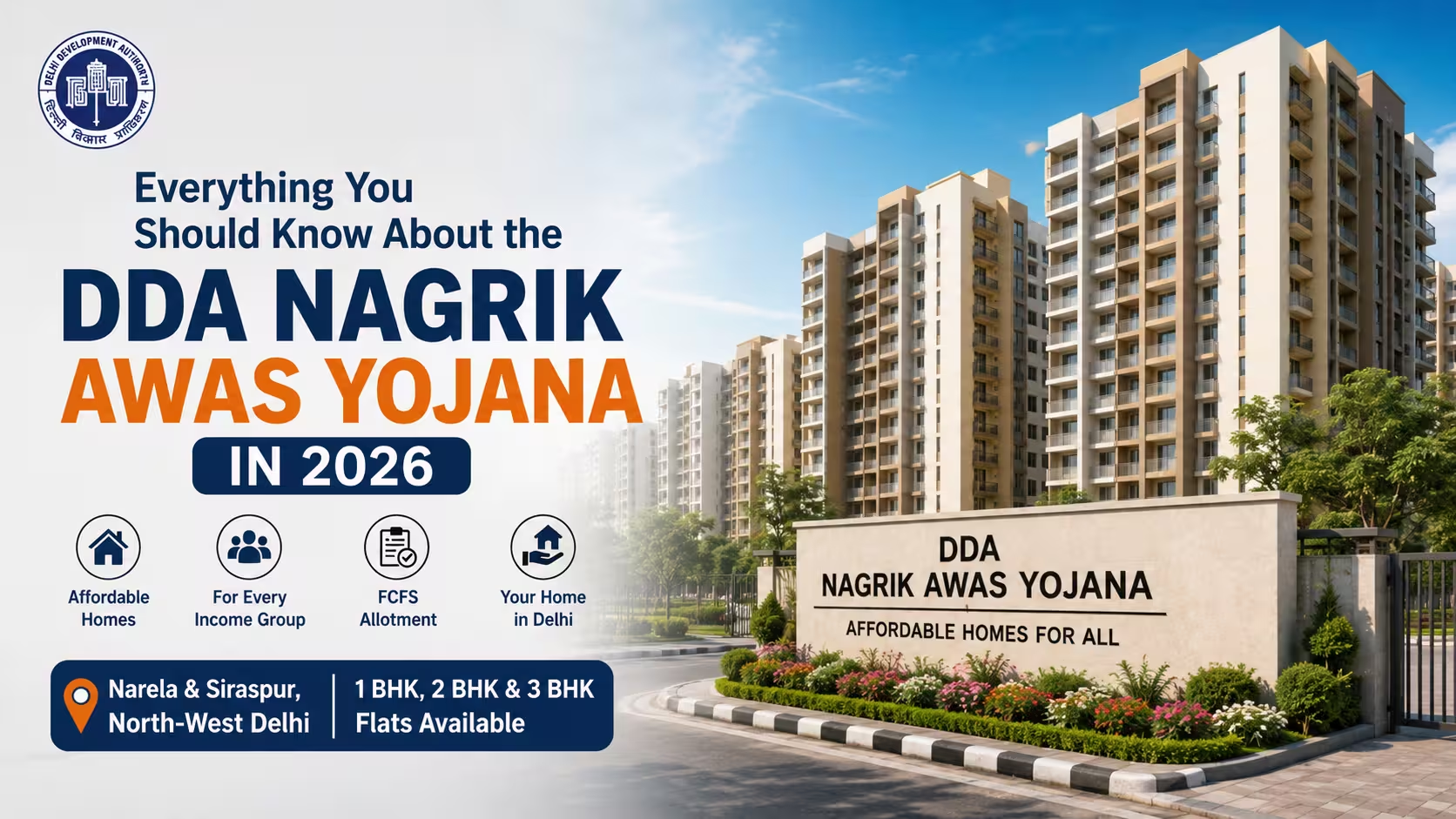
Delhi remains one of the toughest property markets in the country, and owning a home in the capital feels out of reach for many middle-class families. The DDA Nagrik Awas Yojana changes that equation by offering government-backed flats at prices well below the open market rate. Launched by the Delhi Development Authority, this scheme gives ordinary citizens a genuine shot at homeownership without the usual bidding wars or inflated builder margins.
This guide walks you through what the scheme offers, who can apply, how the booking process works, and what makes it different from other DDA housing launches.
A Quick Overview of DDA Nagrik Awas Yojana 2026
The table given below offers a quick look to the scheme by DDA. Please have a look.
| Scheme Detail | Information |
|---|---|
| Launched by | Delhi Development Authority (DDA) |
| Launch date | 23 January 2026 |
| Location | Narela and Siraspur, North-West Delhi |
| Total flats (initial phase) | 1,174 (298 HIG, 459 MIG, 892 LIG, 63 EWS) |
| Additional LIG flats added | 1,944 (25% discount, Narela) |
| Allotment type | First-Come-First-Served (FCFS) |
| Application portal | eservices.dda.org.in (DDA Awaas Portal) |
| Current booking deadline | 31 August 2026 (as per circular dated 31 July 2026) |
| Eligibility | Indian citizen, 18 years or above, with no existing residential property in Delhi |
| Required documents | PAN card, Aadhaar card, passport-size photograph, bank account details |
What Is the DDA Nagrik Awas Yojana 2026
The DDA Nagrik Awas Yojana is a housing scheme run by the Delhi Development Authority, a statutory body that has managed planned development in Delhi since 1957. The scheme offers flats across the Economically Weaker Section (EWS), Low Income Group (LIG), Middle Income Group (MIG), and High Income Group (HIG) categories, mainly in Narela and Siraspur in north-west Delhi.
Unlike older DDA schemes that relied on a computerised draw of lots, this scheme follows a first-come-first-served, or FCFS, allotment method. Applicants who register early and complete payment promptly secure their preferred flat, which removes the element of chance that frustrated buyers in earlier lottery-based schemes.
The Delhi Development Authority originally opened the scheme on 23 January 2026 with 1,174 flats spread across HIG, MIG, LIG, and EWS categories. Since then, the authority has added further inventory, including 1,944 ready-to-move LIG flats in Narela offered at a flat 25 per cent discount. The scheme has proved popular enough that DDA has extended the booking window several times to accommodate demand, with the latest circular pushing the deadline to 31 August 2026.
Read More: Karmajeevi Awaas Yojana
Why the FCFS Model Matters
The FCFS structure is arguably the biggest draw of this scheme. Under a traditional lottery system, buyers register, pay a registration amount, and then wait for a draw that may or may not favour them. Under FCFS, an organised applicant who registers on the DDA Awaas portal and pays the booking amount promptly walks away with a confirmed flat in the pocket and category of their choice, subject to availability.
This model rewards preparation. Buyers who research the available pockets, keep their documents ready, and monitor the DDA website closely stand a far better chance of securing a unit than those who wait until the last moment. Because the scheme runs on FCFS, popular pockets and lower-priced units tend to sell out first, so timing genuinely matters here.
Flat Categories and Indicative Pricing
The DDA Nagrik Awas Yojana caters to a wide income spectrum. Broadly, the price bands look like this:
- EWS flats: roughly Rs 10 lakh to Rs 20 lakh
- LIG flats: roughly Rs 20 lakh to Rs 35 lakh
- MIG flats: roughly Rs 40 lakh to Rs 70 lakh
- HIG flats: roughly Rs 80 lakh to Rs 1.5 crore
Some LIG units in specific Narela pockets have been priced even lower, around Rs 18 lakh to Rs 19 lakh, after the discount DDA applied to clear ready-to-move inventory. Prices vary depending on the pocket, floor, and carpet area, so applicants should always check the latest price list on the official portal before booking, since figures change with each new phase of the scheme.
Location and Connectivity
Most flats under the DDA Nagrik Awas Yojana sit in Narela, a developing sub-city in north-west Delhi, along with some units in nearby Siraspur. Narela has seen steady infrastructure investment over recent years, including improved road connectivity and metro links along the Outer Ring Road corridor. While it is not as centrally located as areas like Dwarka or Rohini, the lower price point and improving civic infrastructure make it an attractive option for first-time buyers who prioritise affordability over proximity to the city centre.
Buyers considering the scheme should factor in commute times to their workplace, since Narela sits at the northern edge of the city. That said, ongoing development projects in the area are expected to improve accessibility further over the next few years.
Also Read: DDA TOD Scheme
Eligibility Criteria
The eligibility conditions for the DDA Nagrik Awas Yojana are fairly straightforward:
- The applicant must be an Indian citizen aged 18 years or above.
- The applicant, or their spouse or dependent children, should not already own a residential flat or plot in Delhi.
- Applicants must have a valid PAN card and Aadhaar-linked bank account to complete registration and payment.
- Each applicant can typically apply for one flat per category, though the specific scheme notification should always be checked for the latest rules on multiple applications.
DDA occasionally revises these conditions for specific phases, so applicants should read the official notification carefully before registering.
How to Apply: Step by Step
Applying under the DDA Nagrik Awas Yojana involves a fully digital process through the DDA Awaas portal. Here is how the process generally works.
- Visit the official DDA Awaas portal and create an account using your mobile number and email address. Returning applicants from earlier DDA schemes can usually log in with their existing credentials.
- Complete your KYC by uploading your PAN card, Aadhaar card, and a passport-size photograph.
- Browse the available flats by pocket, category, and floor, and shortlist units that match your budget and preference.
- Pay the registration fee, which ranges from around Rs 10,000 for EWS flats to Rs 50,000 for HIG flats, depending on the category.
- Once registration is confirmed, pay the booking amount, typically around Rs 1 lakh, to lock in your chosen flat under the FCFS process.
- After booking, applicants receive a provisional allotment, followed by a formal allotment letter once DDA verifies all documents.
- Complete the balance payment as per the payment schedule mentioned in the allotment letter to finalise possession.
Because the scheme runs on FCFS, delays at any stage can mean losing a preferred unit to another applicant, so it helps to keep all documents ready before the booking window opens.
Payment Structure
Buyers who book under the DDA Nagrik Awas Yojana can typically pay for their flat either as a lump sum, which usually attracts a rebate, or through an instalment plan spread over a defined period. Buyers taking a home loan should confirm with their bank whether the lender accepts DDA’s payment schedule and allotment letter as sufficient documentation, since this affects loan disbursement timelines.
Why Consider This Scheme
Several factors make the DDA Nagrik Awas Yojana worth serious consideration for Delhi homebuyers.
First, the pricing sits meaningfully below private market rates for comparable flats in Delhi, particularly for the EWS and LIG categories. Second, the government backing offers a level of transparency and legal assurance that many private projects cannot match, since DDA properties come with clear titles and established construction standards. Third, the FCFS process, while demanding quick action, removes the uncertainty of a lottery draw and rewards applicants who plan ahead.
For families who have struggled to save enough for a down payment on a private property, or who want to avoid the legal complications sometimes associated with resale flats, this scheme offers a practical and relatively low-risk route to ownership.
Things to Keep in Mind Before Booking
Before applying, prospective buyers should inspect the specific pocket and tower they intend to book, either in person or through DDA’s virtual tour facilities, since flat sizes and layouts can vary within the same category. It also helps to confirm the exact carpet area, floor rise charges, and any additional costs such as parking or club membership fees, since the base price advertised may not include everything.
Buyers should also keep an eye on the official DDA website for the latest circulars, since booking deadlines and available inventory under the DDA Nagrik Awas Yojana have changed multiple times since the scheme launched. Relying on outdated information from unofficial sources can lead to missed deadlines or incorrect price expectations.
Final Thoughts
The DDA Nagrik Awas Yojana stands out as one of the more accessible and transparent routes to homeownership in Delhi today. With flats spread across income categories, a straightforward FCFS booking process, and pricing that undercuts the private market, it offers genuine value for first-time buyers and families looking to upgrade from rented accommodation. As with any government housing scheme, success depends on staying informed, preparing documents in advance, and acting quickly once the booking window opens.
Looking to make sense of Delhi’s housing schemes, compare locations, or plan your next property move with confidence? Explore Zen Nest Living for clear, well-researched real estate guides that help you make informed decisions before you invest your hard-earned savings in a home.
Frequently Asked Questions
1. What does FCFS mean under the DDA Nagrik Awas Yojana?
FCFS stands for first-come-first-served. Instead of a lottery draw, flats are allotted to applicants in the order they complete registration and payment, so early applicants get priority access to their preferred units.
2. Who is eligible to apply for the DDA Nagrik Awas Yojana?
Any Indian citizen aged 18 or above who does not already own a residential flat or plot in Delhi, either individually or through a spouse or dependent children, can apply, subject to the specific conditions listed in the current scheme notification.
3. Where are the flats under this scheme located?
Most flats sit in Narela, with additional units in Siraspur, both located in north-west Delhi. The area offers improving road and metro connectivity along with significantly lower prices compared to central Delhi.
4. What is the last date to book a flat under the current phase?
DDA has extended the booking deadline multiple times through 2026, with the latest circular pushing it to 31 August 2026. Applicants should check the official DDA Awaas portal for the most current deadline before applying.