
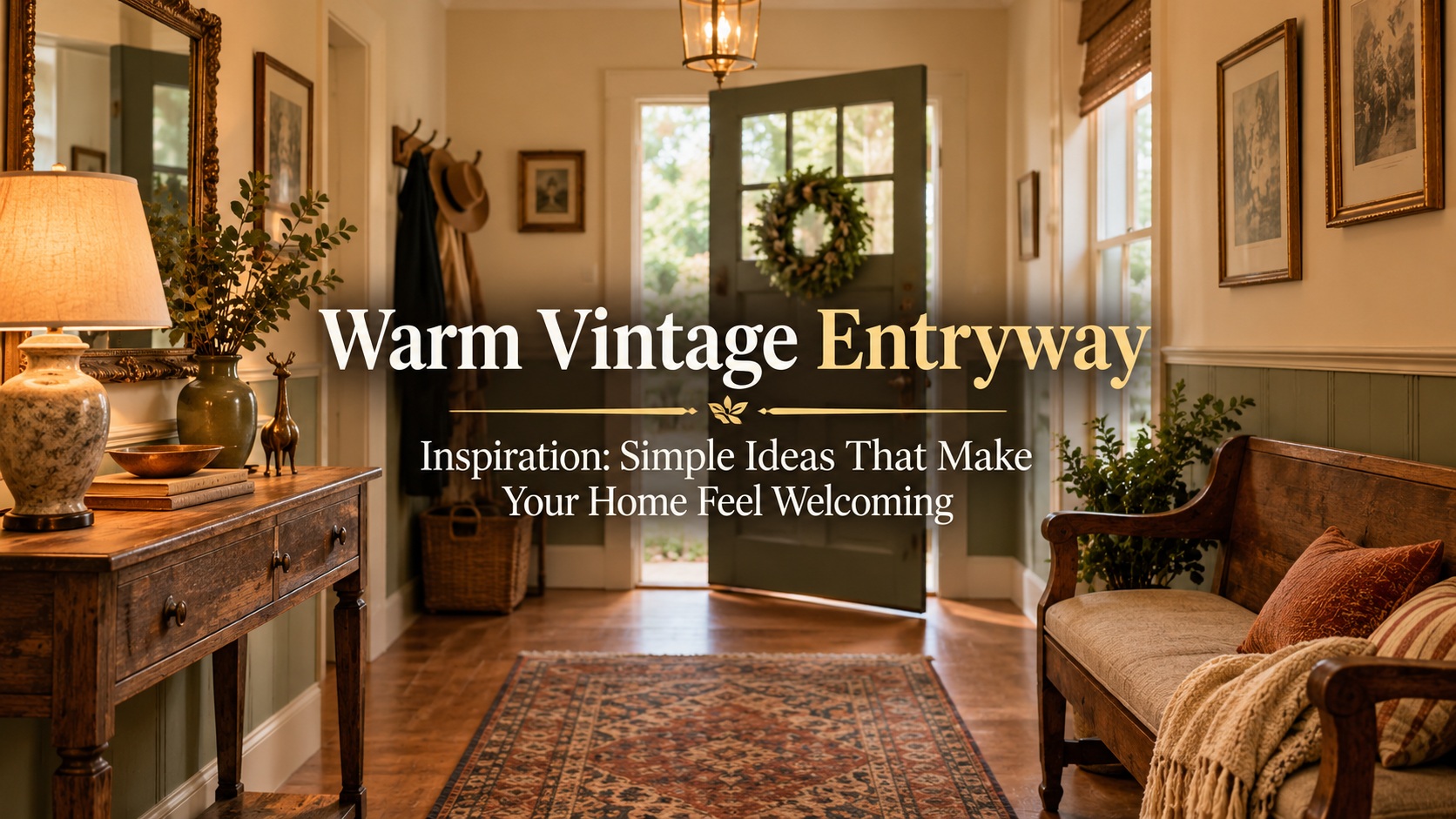
A warm vintage entryway is a front hall styled with aged wood, soft golden light, earthy colours, and pieces with a past. The goal is a space that feels collected over time rather than bought in one weekend.
Think about the last time you walked into a home and felt relaxed within seconds. It was rarely the size of the room. It was usually the little things: a lamp glowing in the corner, a worn wooden bench, a rug with faded colour, a mirror with a slightly tarnished frame.
Your entryway is the first space anyone sees and the last one you pass through each day. This guide covers how to build that feeling with simple steps, whether you have a wide foyer or a narrow strip by the door.
Why the Entryway Deserves Your Attention
Most people decorate the living room first and leave the entrance for later. That is understandable, but it means the first impression of your home is often a pile of shoes and a bare wall.
An entryway does more than look nice. It handles daily jobs: holding keys, bags, coats, umbrellas, and mail. A good one makes mornings calmer because everything has a place. A warm vintage one adds something extra. It sets a mood that carries into the rest of the house.
Vintage style also suits entrances well. Older furniture is usually solid, and solid pieces handle the daily wear of a busy doorway better than flat-pack alternatives.
Read More: Teak Wood Main Door Design Ideas
What Makes an Entryway “Warm” and “Vintage”
These two words do different work, so it helps to separate them.
Warm is about how the space feels. It comes from colour temperature, lighting, and texture. Cream, honey, rust, and soft brown feel warm. Cool greys and stark whites do not.
Vintage is about character. It means pieces that carry age: a carved console, brass hardware, a woven runner, a framed print with a soft patina. Vintage does not mean a museum. It means a few honest, aged items mixed with practical modern ones.
Together, they create a space that feels lived-in and kind. Neither word requires expensive antiques.
Start With a Warm Colour Palette
Colour is the fastest way to change the mood of an entrance. Because entryways are small and often have little natural light, the right shade matters even more.
Good wall colours for a warm vintage look:
- Creamy off-white with a yellow undertone
- Soft butter or pale sand
- Warm beige or oatmeal
- Muted terracotta or clay
- Deep olive green for a moodier feel
- Dusty mustard on a single wall or the lower half only
A simple example: paint the upper wall a soft cream and the lower third a muted clay or olive, then add a wooden picture rail or a thin moulding line between them. This two-tone approach is common in older homes and instantly adds depth.
If you rent and cannot paint, use colour through other items: a rust-toned rug, an amber glass lamp, or a framed print with warm tones.
One tip: test paint samples on the wall and look at them in the morning, noon, and evening. Entryway light changes a lot through the day, and a shade that looks lovely at noon can turn muddy at night.
Choose Vintage Furniture That Works Hard
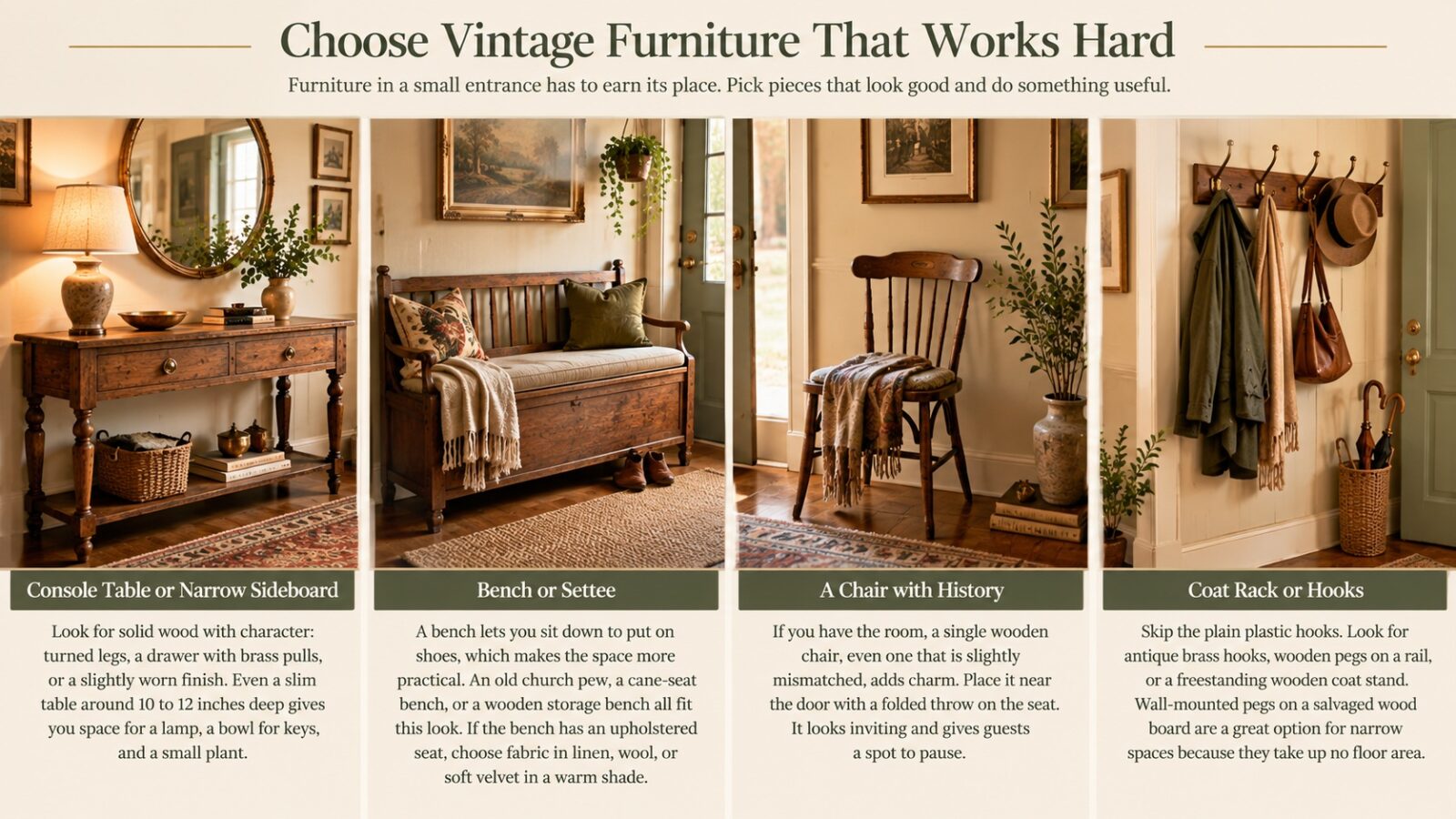
Furniture in a small entrance has to earn its place. Pick pieces that look good and do something useful.
A console table or narrow sideboard
This is the anchor of most entryways. Look for solid wood with some character: turned legs, a drawer with brass pulls, or a slightly worn finish. Even a slim table around 10 to 12 inches deep gives you space for a lamp, a bowl for keys, and a small plant.
A bench or settee
A bench lets you sit down to put on shoes, which makes the space more practical. An old church pew, a cane-seat bench, or a wooden storage bench all fit this look. If the bench has an upholstered seat, choose fabric in linen, wool, or soft velvet in a warm shade.
A chair with history
If you have the room, a single wooden chair, even one that is slightly mismatched, adds charm. Place it near the door with a folded throw on the seat. It looks inviting and gives guests a spot to pause.
A coat rack or hooks
Skip the plain plastic hooks. Look for antique brass hooks, wooden pegs on a rail, or a freestanding wooden coat stand. Wall-mounted pegs on a salvaged wood board are a great option for narrow spaces because they take up no floor area.
Read More: French Door Design Ideas
Light the Space Like a Cosy Room, Not a Hallway
This is where many entryways go wrong. A single bright overhead bulb makes a space feel like a corridor. Warm vintage style depends on softer, layered light.
Try a mix of these:
- A table lamp on the console with a fabric shade. It adds a glow at eye level.
- A vintage pendant or lantern overhead, ideally with a bulb around 2200K to 2700K, which gives a golden light.
- Wall sconces on either side of a mirror, if you can wire them or choose plug-in versions.
- Candles or LED flameless candles on a shelf for evening ambiance.
Brass, bronze, and aged copper finishes suit this style well. Amber or milk glass shades add warmth even when the bulb is off.
A practical point: use warm white bulbs only. A cool white bulb can ruin even the most beautiful setup, because it flattens wood tones and makes cream walls look gray.
Use a Mirror to Add Depth and Light
A mirror is one of the best things you can put in a small entrance. It bounces light around, makes the space feel larger, and gives you a place for a last-second check before you leave.
For a vintage feel, choose one with an ornate gilded frame, a dark wood frame, or an arched shape. A mirror with age spots or slightly foggy glass can look beautiful, since the softness fits the style.
Hang it above the console table, or place a large leaning mirror on the floor against the wall. If the mirror faces a window or a lamp, it will multiply that light.
Layer Rugs and Flooring
The floor sets the tone. Hard, bare floors can feel cold. A rug fixes that.
Look for a runner or small rug in a faded oriental, Persian-style, or kilim pattern. Muted reds, deep blues, and warm browns all work. A rug that looks a little worn is better than one that looks brand new and stiff.
Some practical advice:
- Choose a low-pile rug so the door can open and close freely.
- Add a non-slip pad underneath for safety.
- Pick a rug that can be shaken out or vacuumed easily, because entrances collect dirt.
- If your floor is wood, let it show at the edges. If it is plain tile, a rug does most of the style work.
For a bolder look, a checkerboard floor in black and cream, or terracotta tiles, creates an old-world feel on its own.
Bring In Natural Textures and Materials
Texture makes a space feel warm even when the colors are simple. A vintage entryway should feel like you could touch every surface and enjoy it.
Materials that fit well:
- Wood: oak, walnut, pine, or mango wood with visible grain
- Rattan and cane: on benches, mirrors, or baskets
- Wool and linen: for throws, cushions, and runners
- Brass and copper: for hooks, lamp bases, and trays
- Ceramic and stoneware: for vases and bowls
- Leather: for a bench seat, a strap on a hook, or a worn satchel hung on a wall
You do not need all of these. Pick three or four and repeat them. Repetition makes a space feel planned rather than crowded.
Style the Details Like You Mean It
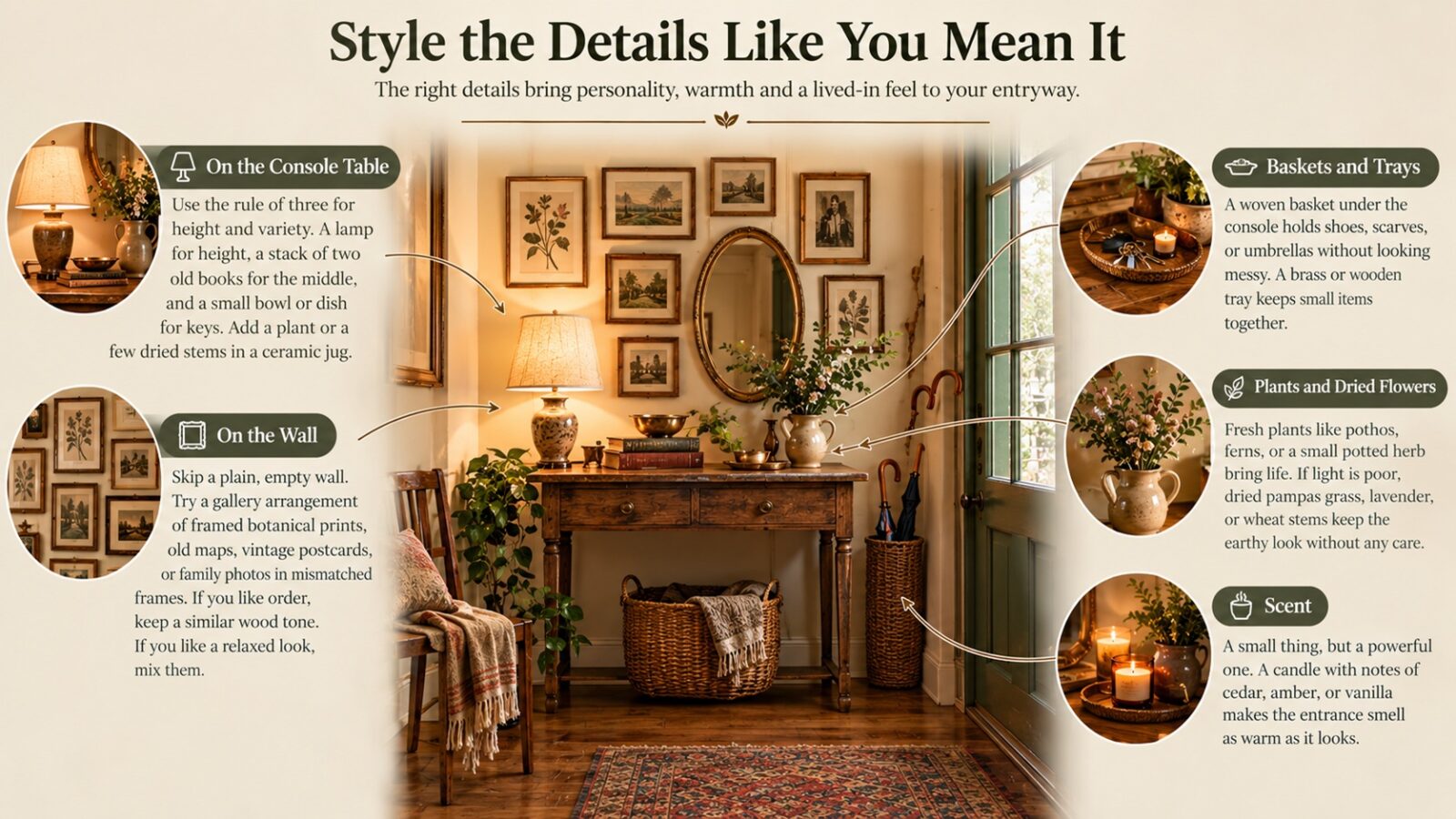
Once the main pieces are in, the small details bring the personality.
On the console table
Use the “rule of three” for height and variety. For example: a lamp for height, a stack of two old books for the middle, and a small bowl or dish for keys. Add a small plant or a few dried stems in a ceramic jug.
On the wall
Skip a plain, empty wall. Try a gallery arrangement of framed botanical prints, old maps, vintage postcards, or family photographs in mismatched frames. If you like order, keep the frames in a similar wood tone. If you like a more relaxed look, mix them.
Baskets and trays
A woven basket under the console holds shoes, scarves, or umbrellas without looking messy. A brass or wooden tray keeps small items together.
Plants and dried flowers
Fresh plants like pothos, ferns, or a small potted herb bring life. If light is poor, dried pampas grass, lavender, or wheat stems keep the earthy look without any care.
Scent
A small thing, but a powerful one. A candle with notes of cedar, amber, or vanilla makes the entrance smell as warm as it looks.
Warm Vintage Entryway Ideas for Small Spaces
Not everyone has a spacious foyer. Many homes have just a narrow patch of wall by the front door. The good news is that this style works in small spaces too.
Here is a simple setup for a tiny entrance:
- Mount a row of brass hooks or wooden pegs at eye level.
- Add a slim wall shelf above them for keys and a small lamp or candle.
- Hang a round or arched mirror beside the hooks.
- Place a narrow wooden bench or a stool below, with a basket tucked underneath.
- Roll out a small runner or a doormat in a warm tone.
This takes up almost no floor space but still gives you storage, seating, light, and character.
For apartments, use a floating shelf in place of a console table and a leaning mirror instead of wall-mounted ones, so nothing needs heavy drilling.
Build in Storage Without Losing the Charm
Clutter kills the warm vintage look faster than anything else. A beautiful entryway that is buried in shoes and bags will never feel welcoming.
Some storage ideas that blend in:
- A wooden trunk or blanket chest that doubles as a bench
- A cabinet with doors to hide shoes
- A rattan or wicker basket for each family member
- A wall-mounted key holder in carved wood
- A vintage-style umbrella stand in ceramic or metal
Set a simple routine too. Give each person one hook and one basket, and the space stays tidy with little effort.
Common Mistakes to Avoid
Even with good ideas, a few things can undo the look.
- Overcrowding: Vintage style is about character, not quantity. If you can’t walk through comfortably, remove something.
- Matching everything: A full matching set looks like a showroom. Mix wood tones, finishes, and eras for a collected feel.
- Cold lighting: As mentioned, harsh white bulbs flatten the mood.
- Ignoring scale: A huge sideboard in a tiny hall blocks the way. Measure first, and leave at least 30 to 36 inches of walking space.
- Treating “vintage” as “dusty”: Aged does not mean neglected. Clean, polish, and care for your pieces so they look loved, not abandoned.
- Forgetting function: A pretty entryway with nowhere to put your keys will not stay pretty for long.
How to Find Vintage Pieces on a Budget
You do not need a large budget to get this look. Some of the best items are inexpensive if you know where to look.
- Flea markets and weekend bazaars: Great for brass hooks, frames, and small decor.
- Thrift and second-hand shops: Good for solid wood furniture that needs only a clean.
- Local online marketplaces: Search for terms like “solid wood console,” “carved bench,” or “brass mirror.”
- Family homes: Older relatives often have items they no longer use.
- Refinishing: A tired wooden table can look new again with sanding, a coat of wax, or a fresh stain.
When buying second-hand wood furniture, check for wobbly legs, signs of insects, and strong odors. A small repair is fine, but structural damage can cost more than it is worth.
A Simple Weekend Plan to Get Started
If this feels like a lot, break it into small steps.
- Saturday morning: Clear the entrance. Remove anything that doesn’t belong.
- Saturday afternoon: Swap the bulb for a warm one, add a lamp, and hang a mirror.
- Sunday morning: Add a rug and a bench or stool.
- Sunday afternoon: Style the surfaces with a bowl, a plant, and one or two framed pieces.
By Sunday evening, you will have a noticeably warmer entrance, with almost no big spending.
Final Thoughts
A warm vintage entryway is not about copying a certain era or buying expensive antiques. It is about creating a first impression that feels kind: a soft light, a sturdy wooden piece, a rug with some history, and a place for everything.
Start small. Change the bulb. Add a mirror. Hang a few good hooks. Each step makes the space feel more like you, and every time you walk through the door, you will feel the difference.
Ready to give your front door the welcome it deserves? Zen Nest Living shares practical interior design ideas, room-by-room guides, and styling tips to help your home feel calm and lived-in. Browse our latest posts, pick one idea from this guide, and start with a single corner this very weekend.
Frequently Asked Questions
What colours work best for a warm vintage entryway?
Cream, beige, sand, terracotta, olive green, and soft mustard all work well. Pair them with natural wood and brass for a balanced, warm look.
How do I make a small entryway look vintage without clutter?
Use wall space instead of floor space. Add hooks, a floating shelf, and a mirror, then keep one or two meaningful decor pieces. Edit regularly and remove anything that does not serve a purpose.
What kind of lighting suits a vintage entryway?
Warm white bulbs in table lamps, lantern-style pendants, or sconces. Aim for soft, layered light instead of one strong overhead bulb.
Can I create this look in a rented home?
Yes. Use removable hooks, a leaning mirror, a rug, plug-in lamps, and freestanding furniture. None of these need permanent changes to the walls or floor.
Is vintage style expensive?
Not necessarily. Second-hand markets, family pieces, and simple refinishing can cost far less than new furniture, and older solid wood pieces tend to last longer.
How do I mix vintage and modern pieces?
Keep a consistent color palette and repeat one or two materials. For instance, a modern bench in light oak looks right next to a vintage brass mirror if the tones agree.