
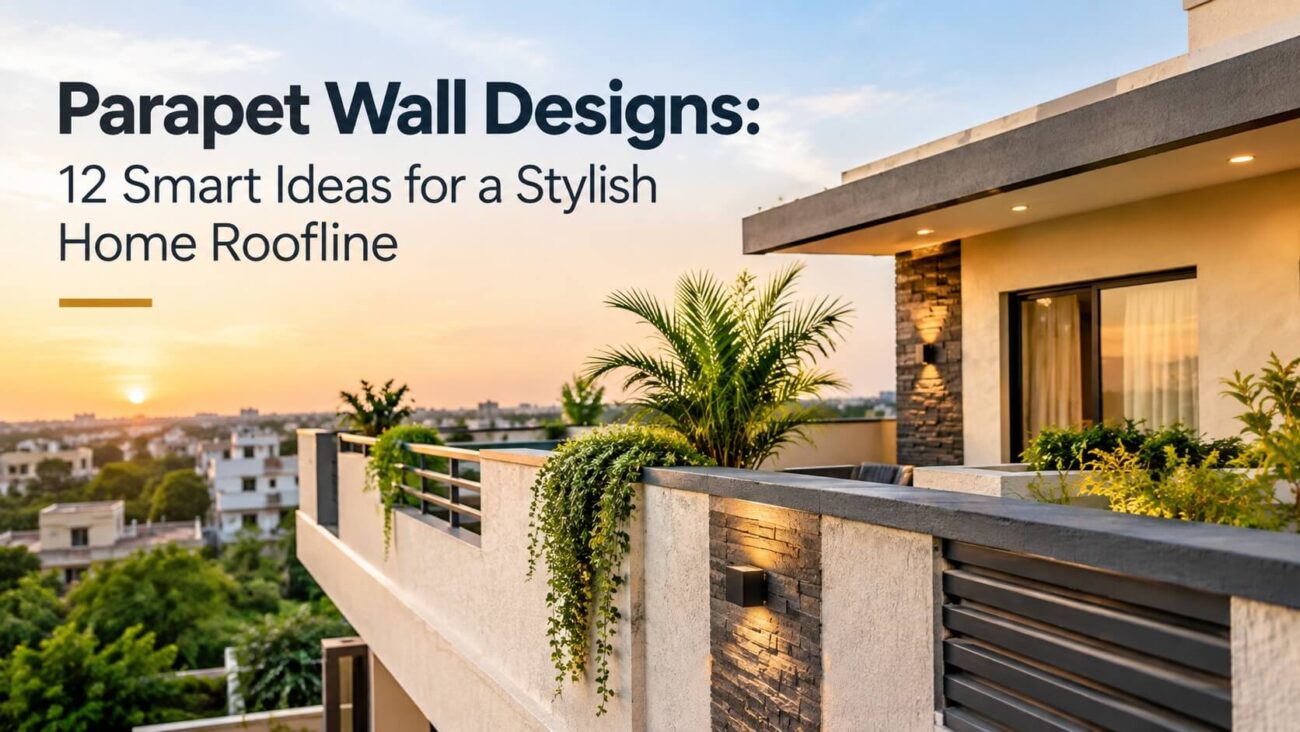
Stand across the road and look at your house. Your eye lands on the roofline first. That edge frames the entire facade.
Most owners treat the parapet as an afterthought. They choose tiles, paint and windows with great care. Then the roof edge gets a plain plastered strip. That is a missed chance.
Good parapet wall designs do three jobs at once. They protect people, hide rooftop clutter and lift the look of the whole home.
This guide covers styles, materials, heights, Vastu views and upkeep. You will also find two handy tables. A few small details here appear in very few other guides.
What Is a Parapet and Why Does It Matter?
A parapet is the low wall along the edge of a roof, terrace or balcony. The word comes from the Italian parapetto. It roughly means a guard for the chest.
Old forts used parapets to shield soldiers from arrows. Today, a home parapet shields your family from a fall instead.
The wall also does quieter work. It guides rainwater towards the drains. It hides water tanks, solar panels and dish antennas. It even adds visual weight to a flat roof.
So when you explore parapet wall designs, think about function first. Looks come second, and they come easier once the basics are right.
Check the Basics Before You Pick a Parapet Design
Start with height. Most building rules in India expect a terrace parapet near one metre. Some local bodies ask for 1.1 to 1.2 metres on upper floors. Rules vary by city, so confirm with your local authority.
Next, think about thickness. A brick parapet usually runs 115 mm or 230 mm thick. A tall, thin wall needs reinforcement. Ask your structural engineer before you finalise the plan.
Then study the weather. Delhi NCR swings from fierce summer heat to heavy monsoon rain. Dust and pollution also stain light surfaces fast.
Here is a lesson that masons repeat often. Most parapet wall designs fail because of water, not looks. Plan the drainage first and the decoration later.
Use this quick checklist when you meet your contractor.
| Factor | What to Check | Why It Matters |
|---|---|---|
| Height | About 1.0 to 1.2 metres, subject to local rules | Safety and legal compliance |
| Thickness | At least 115 mm for brick, plus reinforcement for tall walls | Strength against wind and impact |
| Coping | Slight slope with a drip groove | Stops water from seeping down the face |
| Drainage | Weep holes or outlets at the base | Lets rainwater leave the roof quickly |
| Waterproofing | Membrane at the roof and wall joint | Prevents damp patches inside the house |
| Finish | Weather-resistant paint, tile or stone | Handles heat, rain and dust |
Parapet Design Ideas You Can Use Today
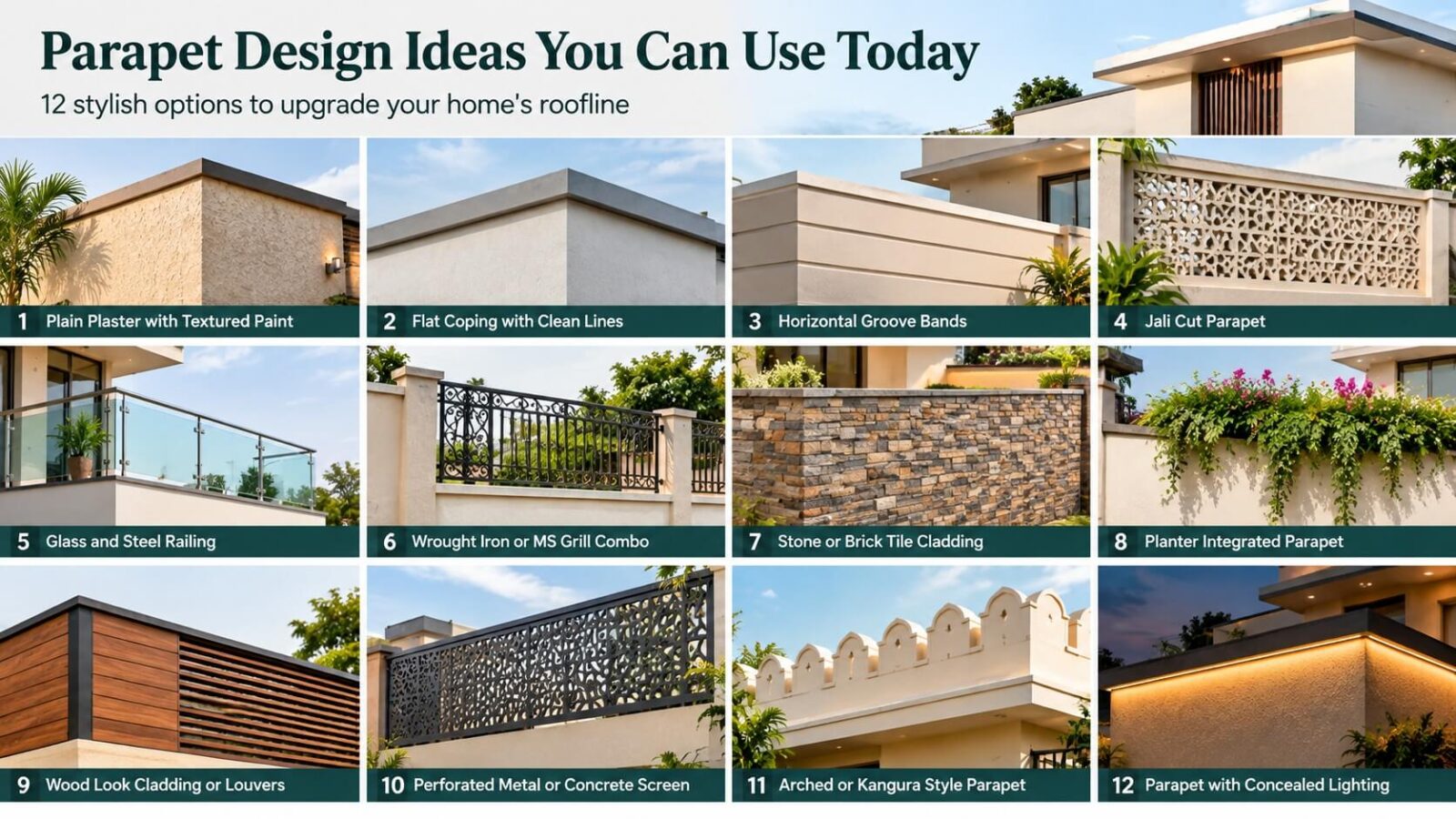
Here are twelve parapet design ideas for Indian homes. Each one suits a different taste and budget. These parapet wall designs range from simple to bold.
1. Plain Plaster with Textured Paint
This is the classic choice. A smooth plaster wall with textured paint looks neat and costs little. It suits compact plots and budget builds.
Try a two-tone finish for extra depth. A light body with a darker top edge sharpens the outline.
2. Flat Coping with Clean Lines
A flat or slightly sloped cap gives a crisp finish. Concrete, stone and precast caps all work well. This feature sits at the heart of any modern parapet design.
Keep the cap slightly wider than the wall. The overhang throws rainwater away from the face and protects your paint.
3. Horizontal Groove Bands
Shallow grooves cut into plaster create strong horizontal lines. They make the house look wider and more grounded.
Masons can form them with simple wooden battens. The effect looks custom, yet the cost stays low.
4. Jali Cut Parapet
Among traditional parapet wall designs, jali work stands out. Perforated blocks or cast panels let air and light pass through.
They also protect privacy. Passers-by see patterns, while you enjoy the breeze. Jali suits terraces where you spend long evenings.
5. Glass and Steel Railing
A low solid base with a glass panel above feels open and premium. Stainless steel posts hold the glass firmly.
This option works well on balconies with a view. It needs regular cleaning, especially in dusty cities.
6. Wrought Iron or MS Grill Combo
A half-height wall topped with a metal grill is a trusted favourite. It keeps the view open and adds a decorative touch.
Choose simple geometric patterns for a clean look. Ornate scrolls suit classic or colonial facades. Repaint the metal every two or three years to stop rust.
7. Stone or Brick Tile Cladding
Natural stone and textured brick tiles give instant character. Sandstone, slate and limestone all weather well.
Use cladding on the front parapet only. This keeps costs in check, and the facade still stands out.
8. Planter Integrated Parapet
Build a planter box into the top of the wall. Trailing plants like bougainvillea or money plant soften the hard edge.
Add a waterproof lining and a drain outlet. Without them, damp will creep into the wall below.
9. Wood Look Cladding or Louvers
WPC and HPL panels bring warmth without the upkeep of real timber. Louvers also screen the terrace from nosy neighbours.
Check the UV rating before you buy. Cheap panels fade quickly under strong Indian sun.
10. Perforated Metal or Concrete Screen
Laser-cut metal sheets and concrete screens create bold shadow patterns. The facade looks different at every hour of the day.
This idea suits contemporary villas and builder floors. It also hides rooftop utilities neatly.
11. Arched or Kangura Style Parapet
Curves soften a boxy structure. Mughal arches, scalloped edges and rounded corners add a graceful rhythm.
Kangura work is another option. These small battlement shapes crown many Rajput and Mughal buildings. A subtle version looks striking on a heritage-inspired home.
A skilled mason is essential here. Clean curves need steady hands and a good template.
12. Parapet with Concealed Lighting
Tuck a slim LED strip under the coping. The wall glows softly after sunset, and the light washes down the facade.
This works beautifully during festive weeks. It also adds a gentle security glow without glare. Use waterproof strips with a proper IP rating.
Modern Parapet Wall Designs for Contemporary Homes
Modern parapet wall designs lean towards minimal lines, mixed materials and muted tones. Fewer decorations make the house look calm and confident.
Designers now pair concrete grey with warm wood. Others mix white plaster with black metal edges. Dark coping caps are also popular.
Slim parapets with hidden gutters are another trend. They keep the roofline sharp and drain water out of sight.
Want a modern parapet design on a tight budget? Stay simple. Choose one strong feature, such as a clean cap or a single accent band.
Glass-based parapet wall designs also suit modern villas. Pair them with a solid base so the wall still feels secure.
Read More: Texture Layering Ideas
Borrow Ideas from Indian Architecture
Indian buildings offer plenty of inspiration. You do not need to copy them fully. A small nod is often enough. Pick one of the parapet design ideas above and add a single heritage touch.
Rajasthani havelis use jali screens and kangura tops. Mughal gardens favour arches and symmetry. Colonial bungalows in Lutyens Delhi often show balustrade parapets with rounded pillars.
You can blend these ideas into modern parapet wall designs with clean lines. Try a plain white wall with one jali panel above the entrance. The mix feels fresh and rooted at the same time.
Compare Materials Before You Decide
Materials shape cost, upkeep and style. Compare the main options before you finalise parapet wall designs for your plot.
| Material | Look | Durability | Upkeep | Cost Level |
|---|---|---|---|---|
| Plastered brick | Plain and flexible | Good | Repaint every 4 to 5 years | Low |
| RCC concrete | Sleek with sharp edges | Very high | Low | Medium |
| Natural stone | Rich and earthy | Very high | Occasional sealing | High |
| MS railing | Light and airy | Medium | Repaint every 2 to 3 years | Medium |
| Glass with steel | Open and modern | High | Frequent cleaning | High |
| Jali blocks | Traditional and breezy | High | Low | Medium |
| WPC cladding | Warm wood effect | Medium | Low, but may fade | Medium |
Many homes use a mix. Brick forms the body, stone covers the front, and metal makes the railing.
Read More: Archway Designs for Indian Homes
How to Choose the Best Parapet Design for Your House
No single best parapet design suits every home. Test every shortlist of parapet wall designs against five things.
- Facade style: Match the parapet with your windows, doors and main wall finish.
- Climate: Dusty and rainy areas need low maintenance surfaces.
- Privacy: Busy lanes may call for solid or jali sections.
- Budget: Spend more on the front side, which people see most.
- Upkeep: Be honest about how often you will repaint or clean.
A house parapet design should also match your neighbourhood. A bold glass railing may look odd in a lane of classic homes. Blend in, but add one signature detail.
Apartments and builder floors offer fewer choices. Society rules often control colour and material. Check the guidelines before you order anything.
Owners of independent homes have more freedom. Use it wisely. Plan the home parapet design along with the facade, not after it.
Read More: Warm Minimalism
Vastu Tips for Parapet Walls
Many families follow Vastu while planning the roof edge. Treat these as traditional guidelines, not engineering rules.
Vastu guidance can shape parapet wall designs too. Experts often suggest keeping the south and west parapets higher and heavier. They prefer a lighter, lower wall on the north and east sides. This lets morning light and fresh air enter the home.
Avoid cracks, broken sections and dumped junk along the wall. Keep the north east corner clean and open. Many believe this keeps positive energy flowing.
If Vastu matters to you, discuss it early. Your architect can then balance heights without hurting safety. Never reduce the safe height for a Vastu reason.
Colour Ideas for Parapet Wall Designs
Colour decides how the wall ages. A modern parapet design looks best with a restrained palette of two shades. Light shades reflect heat and keep the roof cooler. White, cream and pale grey are safe picks.
Dark shades look striking, but they absorb heat and fade sooner. Use them for accents only.
Try these combinations for a home parapet design:
- Off white body with a charcoal cap
- Beige wall with terracotta bands
- Pale grey with natural wood panels
- Soft yellow with white trim for a cheerful look
Choose weatherproof exterior emulsion with anti-algae properties. Monsoon moss can ruin a fresh coat within months.
Festive homes can add a coloured accent band. Marigold orange and deep maroon look lovely during Diwali. Repaint it in a neutral shade later if you prefer.
Little Details Most People Miss
Smart parapet wall designs rely on small details. These points rarely appear in design blogs. Yet they decide how long your wall lasts.
The Drip Groove
Ask your mason to cut a thin groove under the coping edge. Builders call it a drip mould or throating. It stops water from running back along the underside.
The Roof Junction
The joint between the roof slab and the parapet is the most common leak point. Rainwater collects there first.
Waterproof this corner with care. Turn the membrane up the wall by at least 150 mm.
Expansion Joints
Long concrete or masonry walls expand in summer heat. Without joints, they crack. Ask for a control joint every few metres.
The Weight Rule
Never overload a thin parapet. Heavy planters, banners and satellite dishes add stress. Mount them on the roof slab instead.
The Sample Patch
Paint a one metre patch before you finish the entire wall. View it in the morning, at noon and at dusk. Colours change a lot with the light.
Pigeon Proofing
Pigeons love flat ledges. A slightly sloped coping gives them less room to perch. That keeps droppings off your facade.
Common Mistakes to Avoid
Even good parapet wall designs fail when the basics get skipped. Watch out for these errors.
- Choosing a height for looks alone instead of safety
- Skipping waterproofing to save money
- Using interior paint on an outside wall
- Ignoring drainage, so water stains the front face
- Copying a design without checking if it suits your facade
Fixing these later costs far more than doing them right at the start.
A Simple Maintenance Plan
A parapet needs little care, but a yearly check pays off. Do it before the monsoon arrives.
- Look for hairline cracks and seal them early
- Clear weep holes and drain mouths
- Scrub algae and moss with a soft brush
- Repaint metal railings at the first sign of rust
- Recoat the top surface every few years
Well kept parapet wall designs last for decades. A little attention each year saves a large repair bill later.
What Affects the Cost
Parapet wall designs vary widely in cost. Material choice drives most of the price in any house parapet design. Stone and glass cost the most. Plaster and paint cost the least. Custom metal and jali work fall in the middle.
Labour rates also change from city to city. Complex shapes need skilled workers, and that adds to the bill.
Ask for at least three quotes. Compare the material grade, not just the total. Also confirm who handles waterproofing, since some contractors leave it out.
Final Thoughts
Great parapet wall designs balance safety, style and upkeep. Start with the right height and drainage. Then pick a look that suits your home, your climate and your budget.
Small choices make a big difference. A neat cap, a clean colour and a tidy drainage plan can transform a plain terrace edge.
Looking for more home decor ideas, Vastu tips and housing guidance? Visit Zen Nest Living for practical, easy to follow articles. We help you plan a home that looks beautiful, feels balanced and stays comfortable through every season.
Frequently Asked Questions
What is the ideal height for a parapet wall?
Most Indian homes use a height of about one metre. Upper floors and balconies often need 1.1 to 1.2 metres. Local building rules decide the exact figure. Always confirm it with your architect or municipal authority before construction.
Which parapet wall designs suit small houses?
Simple parapet wall designs work best on small houses. Plain plaster with a flat cap, horizontal grooves or a slim metal grill all look neat. Light colours also make a compact facade feel larger and brighter.
Which material is best for a house parapet design?
Reinforced concrete and good quality brick offer the best strength for a home parapet. You can then finish them with paint, stone or tiles. Metal and glass add style, but they need more regular care.
How often should I maintain parapet wall designs?
Repaint the wall every four to five years. Inspect it every year before the monsoon. Seal hairline cracks early, clear drain openings and check metal parts for rust. Early care prevents costly leaks.
