
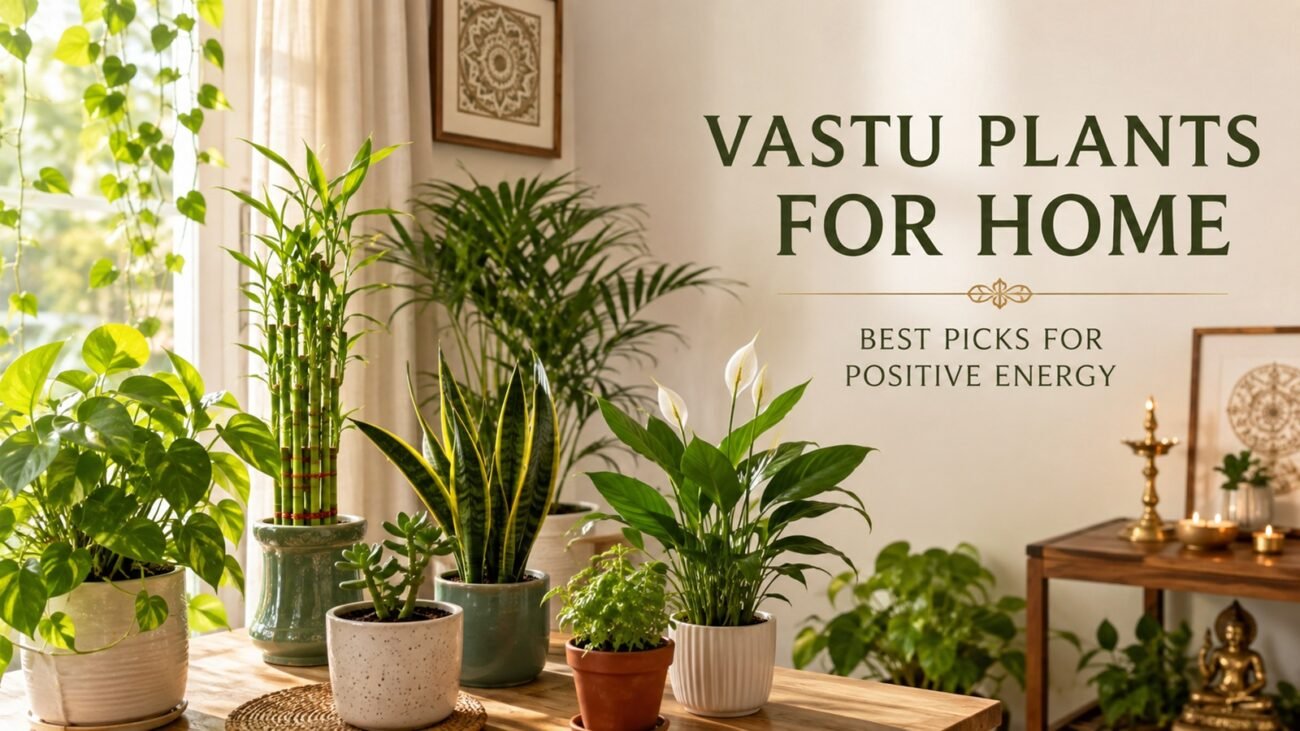
Plants do more than decorate your living space. Certain plants also carry deep meaning in Vastu Shastra. These plants, called vastu plants, balance energy flow inside homes. They connect nature with ancient Indian architectural wisdom. This guide explains everything about choosing and placing these plants correctly.
What Are Vastu Plants
Vastu plants are greenery chosen based on Vastu Shastra principles. Each plant carries specific energy linked to elements like air, water, and earth. Placing them correctly can improve harmony within a household. Wrong placement, however, may disrupt the balance you seek. Understanding basic rules helps you make better choices for your home.
Ancient texts describe how nature influences human wellbeing directly. Ancient practitioners believed certain plants absorb negative energy from surroundings. Modern homeowners still follow these principles for peace and prosperity. Many interior designers now blend Vastu wisdom with contemporary decor. This combination creates homes that feel both stylish and spiritually balanced.
Why People Choose Plants Based on Vastu Principles
Homeowners select these plants for several practical reasons. First, greenery naturally purifies indoor air quality. Second, many plants are believed to attract wealth and abundance. Third, some varieties reduce stress and promote calmness. Fourth, correct placement supposedly strengthens family relationships and health.
Beyond spiritual beliefs, plants offer genuine environmental benefits too. They increase oxygen levels and reduce indoor pollutants effectively. Greenery also adds visual appeal to any room instantly. Combining aesthetics with tradition makes these plants a popular choice. Many buyers now ask real estate agents about garden space specifically for this purpose.
Best Plants for Wealth and Prosperity
- Money plant tops the list for attracting financial abundance. Its round leaves symbolize coins and continuous growth. Keep it in the southeast corner of your living room. This direction relates to wealth according to Vastu principles. Avoid placing it in bedrooms, as some believe it disturbs sleep.
- Bamboo plant is another popular choice for prosperity. Lucky bamboo stalks are often gifted during festivals and housewarmings. Place bamboo in the east or southeast section of your home. Even numbers of stalks are considered more auspicious than odd ones. This plant requires minimal care, making it ideal for busy households.
- Jade plant also symbolizes financial growth and stability. Its thick, coin-shaped leaves represent accumulating wealth over time. Position jade plants near entrances or in living rooms. Morning sunlight helps this succulent thrive indoors easily.
Plants for Positive Energy and Peace
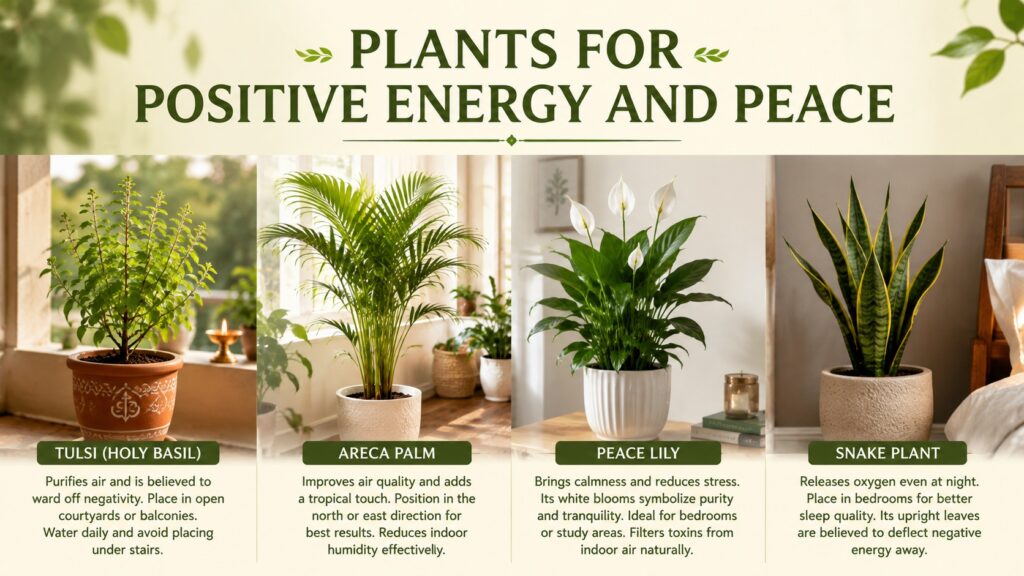
- Tulsi, or holy basil, holds sacred status in Indian households. Many families place tulsi in open courtyards or balconies. This plant purifies air and is believed to ward off negativity. Water it daily and avoid placing it under stairs.
- Areca palm improves air quality and adds a tropical touch. Position it in the north or east direction for best results. This plant also reduces indoor humidity effectively during warmer months.
- Peace lily brings calmness and reduces stress within living spaces. Its white blooms symbolise purity and tranquility. Keep peace lilies in bedrooms or study areas for focus. This plant also filters toxins from indoor air naturally.
- Snake plant releases oxygen even during nighttime hours. Place it in bedrooms for improved sleep quality. Its upright leaves are believed to deflect negative energy away.
Vastu Plants for Health and Harmony
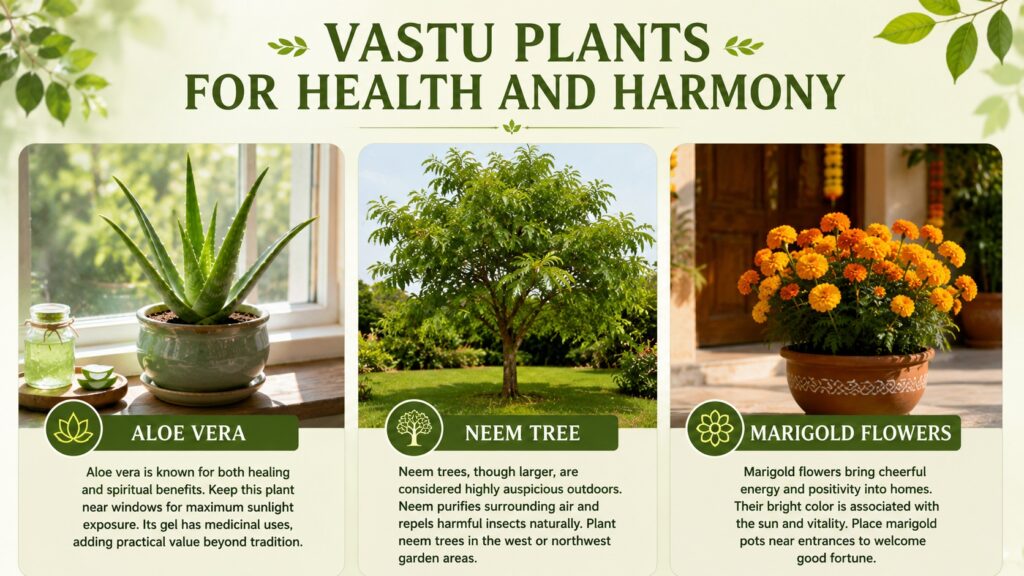
- Aloe vera is known for both healing and spiritual benefits. Keep this plant near windows for maximum sunlight exposure. Its gel has medicinal uses, adding practical value beyond tradition.
- Neem trees, though larger, are considered highly auspicious outdoors. Neem purifies surrounding air and repels harmful insects naturally. Plant neem trees in the west or northwest garden areas.
- Marigold flowers bring cheerful energy and positivity into homes. Their bright color is associated with the sun and vitality. Place marigold pots near entrances to welcome good fortune.
Read More: Rubber Plant Vastu
Plants to Avoid Indoors
Not every plant suits indoor spaces according to Vastu beliefs. Cactus plants are generally avoided because of their sharp thorns. Thorny plants supposedly create tension and conflict within families. Keep cactus plants outdoors if you wish to grow them.
Bonsai trees, despite their beauty, are also discouraged indoors. Bonsai represents stunted growth, which some believe limits opportunities. Consider full-sized plants instead for better symbolic meaning.
Dead or dried plants should never remain inside your home. They represent stagnant energy and neglect within the household. Replace withering plants promptly to maintain positive vibrations.
Correct Placement Tips
Placement matters as much as plant selection in Vastu practices.
- The northeast direction suits plants requiring more sunlight and water. This zone is associated with clarity and spiritual growth.
- The southeast corner works well for fire-element plants like money plants.
- Avoid placing large plants directly in the center of rooms. This central space, called Brahmasthan, should remain open and clutter-free. Keep pathways clear so energy can flow freely throughout the home.
- Balconies and windowsills work well for most decorative plants. Ensure plants receive adequate sunlight based on their specific needs. Regular watering and pruning keep energy channels active and healthy.
Vastu Plants According to Direction
Each direction in your home supports different plant types. The east direction favors plants that need morning sunlight. Tulsi and areca palm thrive well in this zone. The north direction relates to wealth and career growth. Bamboo and money plants suit this area perfectly.
The west direction supports flowering plants like jasmine and marigold. These flowers add fragrance and beauty to outdoor spaces. The south direction is less favorable for delicate indoor plants. Choose hardy varieties like snake plants for this zone instead.
Combining Vastu Plants with Modern Home Decor
Today’s homeowners blend tradition with contemporary interior styles seamlessly. Decorative pots and stands enhance the visual appeal of plants. Choose ceramic or brass containers for a traditional touch. Minimalist planters work well in modern apartment settings too.
Group plants by height and texture for balanced visual interest. Mix flowering and foliage plants for varied color throughout the year. This approach satisfies both aesthetic preferences and spiritual beliefs simultaneously.
Maintaining Plants for Long-Term Benefits
Regular care ensures plants continue providing their intended benefits. Water plants according to their specific moisture requirements consistently. Trim dead leaves and branches to maintain healthy growth. Repot plants when roots outgrow their current containers.
Sunlight exposure varies significantly between different plant species. Research each plant’s needs before choosing its final location. Proper care extends a plant’s life and symbolic value considerably.
Conclusion
Choosing the right vastu plants can transform your living space meaningfully. These plants combine natural beauty with centuries-old wisdom effectively. Correct placement enhances both aesthetics and positive energy simultaneously. Whether you seek wealth, health, or peace, there’s a plant suited to your needs. Start small, research thoroughly, and watch your home flourish naturally.
Ready to bring balance and prosperity into your home? Explore expert guides on plant placement, home decor, and Vastu-friendly living tips. Transform your space today with practical advice designed for modern Indian homes and lasting harmony. Contact us today to get expert advice on Vastu, Home Decor, Housing schemes, Property, and more.
Frequently Asked Questions
1. Which plant is best for wealth according to Vastu?
Money plant is considered the top choice for wealth. Place it in the southeast corner of your home.
2. Can I keep plants in my bedroom?
Yes, plants like peace lily and snake plant suit bedrooms well. They improve air quality and support better sleep.
3. Which direction is best for planting tulsi?
Tulsi grows best in open courtyards or east-facing balconies. Morning sunlight helps this sacred plant thrive properly.
4. Are artificial plants acceptable in Vastu practices?
Live plants are generally preferred over artificial ones in Vastu. Real plants carry natural energy that artificial versions lack.
