
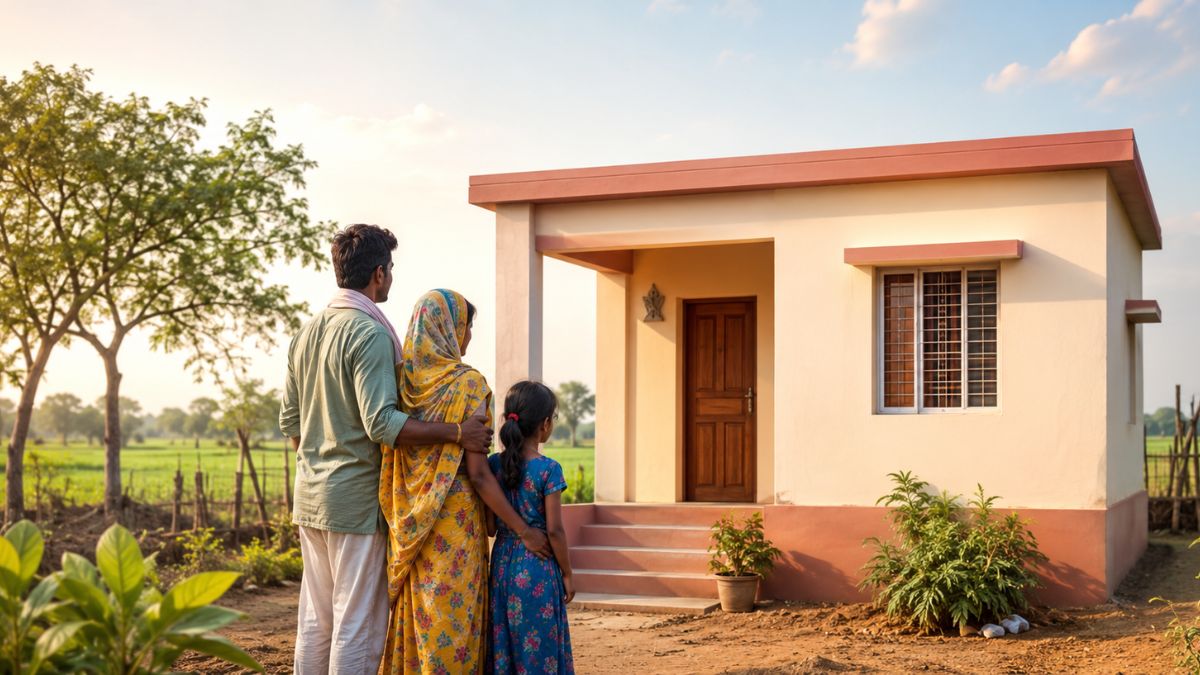
Every rural family deserves a safe, permanent home. The Pradhan Mantri Awas Yojana Gramin makes this possible. This central government scheme funds house construction for eligible rural households. It replaces kutcha and dilapidated homes with pucca structures. As of July 2026, PMAY Gramin (Pradhan Mantri Awas Yojana Gramin) continues under its second phase. This guide explains eligibility, application steps, and the beneficiary list process.
What Is Pradhan Mantri Awas Yojana Gramin
Pradhan mantri gramin awas yojana is the rural housing arm of India’s national housing mission. The Ministry of Rural Development runs this scheme. It targets families without permanent homes in villages across India. The scheme also supports access to sanitation, electricity, and clean drinking water. It works alongside other welfare schemes for complete household development.
PMAY gramin currently operates under its 2.0 phase. This phase covers the period from 2024 to 2029. The government aims to build nearly five crore additional rural homes under this extended target. The scheme identifies beneficiaries through survey data and local verification. Gram Panchayats play a central role in this process.
Objectives of PMAY Gramin
The scheme pursues several core goals for rural India.
- Provide pucca houses to homeless rural families
- Replace dilapidated houses with safe, durable structures
- Ensure access to toilets, water, and electricity
- Prioritize weaker sections, including SC, ST, and minorities
- Reduce housing shortage across Indian villages
These objectives connect housing with broader rural development. A pucca house improves safety and dignity for families. It also reduces health risks linked to poor housing conditions.
Eligibility Criteria for PMAY Gramin
Eligibility depends on Socio-Economic and Caste Census data. The Awaas+ survey also plays a role in identification. Under PMAY-G 2.0, the government has relaxed several older rules. Families earlier excluded may now qualify for assistance.
Key eligibility points include the following.
- The applicant must be a rural household without a pucca house
- Households living in kutcha or severely damaged homes qualify
- Monthly income should not exceed the revised ceiling of ₹15,000
- Owning a two-wheeler or refrigerator no longer disqualifies a family
- Priority goes to SC, ST, minorities, and economically weaker households
- The family should not already benefit from another housing scheme
These relaxed norms bring more families into the eligible pool. Many households rejected in earlier survey rounds can now reapply. Local Gram Sabha meetings validate the final list of names.
Read More: Pradhan Mantri Awas Yojana Urban 2026
Financial Assistance Under PMAY Gramin
The scheme provides direct financial support for house construction. Beneficiaries in plain areas receive ₹1.20 lakh. Those in hilly, difficult, or IAP districts receive ₹1.30 lakh. This amount reaches beneficiaries through Direct Benefit Transfer.
The government releases funds in installments, not as a lump sum. Each installment links to a verified construction stage. Officials confirm stages through geo-tagged photographs uploaded on the AwaasSoft portal. Construction generally follows seven stages, from sanction to final completion.
Beneficiaries also receive additional support beyond the housing amount.
- Up to 95 days of unskilled labor wages under MGNREGA
- ₹12,000 for toilet construction under Swachh Bharat Mission Gramin
- Convergence benefits for LPG connections and electricity access
These combined benefits reduce the overall financial burden on families. Beneficiaries should actively request MGNREGA wage linkage at the Gram Panchayat. This benefit does not apply automatically to every case.
How to Apply for PMAY Gramin Online
Families can apply for pradhan mantri gramin awas yojana through the Awaas+ survey. This survey identifies households missed in earlier SECC-based lists. The application process involves the following steps.
- Download the Awaas+ 2024 mobile application on a smartphone
- Register using Aadhaar details and mobile verification
- Fill in household information, including income and housing status
- Submit documents such as bank details and MGNREGA job card
- Complete the survey and wait for Gram Panchayat verification
State authorities review Awaas+ submissions on a quarterly basis. Families can also visit their Gram Panchayat office for direct registration. Officials there guide applicants through the survey process. This offline route helps families without smartphone access.
Documents Required for PMAY Gramin Application
Applicants need specific documents to complete registration smoothly. Missing documents often delay verification and fund disbursement.
- Aadhaar card of all family members
- Bank account details linked with Aadhaar
- MGNREGA job card, where available
- SECC or Awaas+ survey reference details
- Income certificate, if requested by local authorities
- Land ownership documents, where applicable
Applicants should keep names consistent across all documents. A mismatch between Aadhaar and bank records often causes payment delays. Correcting these details early prevents longer disbursement gaps later.
PMAY Gramin List 2026: How to Check Your Name
The PMAY gramin list shows all approved households for the current financial year. Checking this list confirms whether the government has sanctioned your application. Families can verify their status through the official PMAY-G portal.
Follow these steps to check the PMAY gramin list online.
- Visit the official PMAY-G portal at pmayg.nic.in
- Go to the Stakeholders menu and select IAY/PMAYG Beneficiary
- Choose Advanced Search for a detailed lookup
- Select your State, District, Block, and Gram Panchayat
- Enter your registration number or Aadhaar details
- Click Search to view your beneficiary status
Families can also check the full village list through a separate route. Visit the RH Reporting portal for social audit reports. Select Beneficiary Details for Verification under this section. Choose your state, district, block, and panchayat, then submit the form. This method shows the complete list for your area.
The UMANG mobile application offers another verification option. Search for PMAY-G within the app and select Beneficiary Details. Enter your Aadhaar or registration number to view your status. This app also displays panchayat-wise waiting lists.
Understanding Installment and Payment Status
Appearing on the beneficiary list is only the first step. Actual fund release depends on construction progress verification. Officials upload geo-tagged photographs at each construction stage. The system releases the next installment only after approval.
If a beneficiary sees no installment despite listed status, verification delay is often the cause. Contact the Gram Panchayat or Block Development Officer immediately. Request a physical inspection to unlock the pending installment. This step resolves most stalled payment cases quickly.
What to Do If Your Name Is Missing
Sometimes eligible families do not find their name on the list. This does not always mean rejection of the application. Document mismatches or pending verification often explain the gap.
Applicants have three escalation routes available.
- Visit the Gram Panchayat office for written confirmation of your reference number
- Submit a fresh application at the Block Development Office with required documents
- Register through the Awaas+ 2024 application for renewed consideration
Following up consistently improves the chances of correction. Local officials can resolve most issues within a few review cycles.
PMAY Gramin vs PMAY Urban
Many applicants confuse the rural and urban versions of this scheme. PMAY Gramin serves rural households through direct construction assistance. PMAY Urban serves city residents through an interest subsidy on home loans. Both schemes operate under separate portals and separate eligibility rules. Understanding this difference helps applicants choose the correct application route.
Why PMAY Gramin Matters for Rural India
This scheme addresses a fundamental need across Indian villages. Millions of families still live in unsafe or temporary structures. Pradhan mantri gramin awas yojana replaces these homes with durable, permanent housing. It also connects families to sanitation, electricity, and clean water access.
The scheme’s extended target reflects continued government commitment. Nearly five crore homes remain the goal through 2029. This scale of investment shapes rural housing patterns for years ahead. Families gain not just shelter, but improved health and safety outcomes.
For those exploring housing options beyond rural schemes, urban real estate offers structured alternatives. Well-planned residential projects provide long-term value and modern amenities. Understanding both rural assistance schemes and urban housing markets helps families make informed decisions.
Planning to invest in a home instead of building one? Zen Nest Living offers expert help and guides you to it. Contact us now.
Frequently Asked Questions
1. Who is eligible for PMAY Gramin in 2026?
Rural households without a pucca house qualify for PMAY Gramin. The scheme prioritizes homeless families and those in kutcha structures. Monthly income should not exceed ₹15,000 under the revised norms.
2. How much financial assistance does PMAY Gramin provide?
Beneficiaries in plain areas receive ₹1.20 lakh for construction. Those in hilly or difficult terrain receive ₹1.30 lakh. The government releases this amount in installments tied to construction progress.
3. How can I check the PMAY Gramin beneficiary list online?
Visit pmayg.nic.in and select IAY/PMAYG Beneficiary under Stakeholders. Enter your registration number or use Advanced Search with location details. The UMANG app also offers this verification option.
4. What should I do if my installment has not arrived?
Contact your Gram Panchayat or Block Development Officer for help. Delays usually occur due to pending construction verification. A physical inspection at your site typically resolves the issue.